Bring PLY Scans into the Real-Time Web Pipeline as GLB
Convert PLY meshes from photogrammetry, 3D scanning, and research pipelines into compact binary GLB and make them viewable in web browsers, AR experiences, Unity, Unreal, and any real-time pipeline that speaks the glTF standard.
Convert Now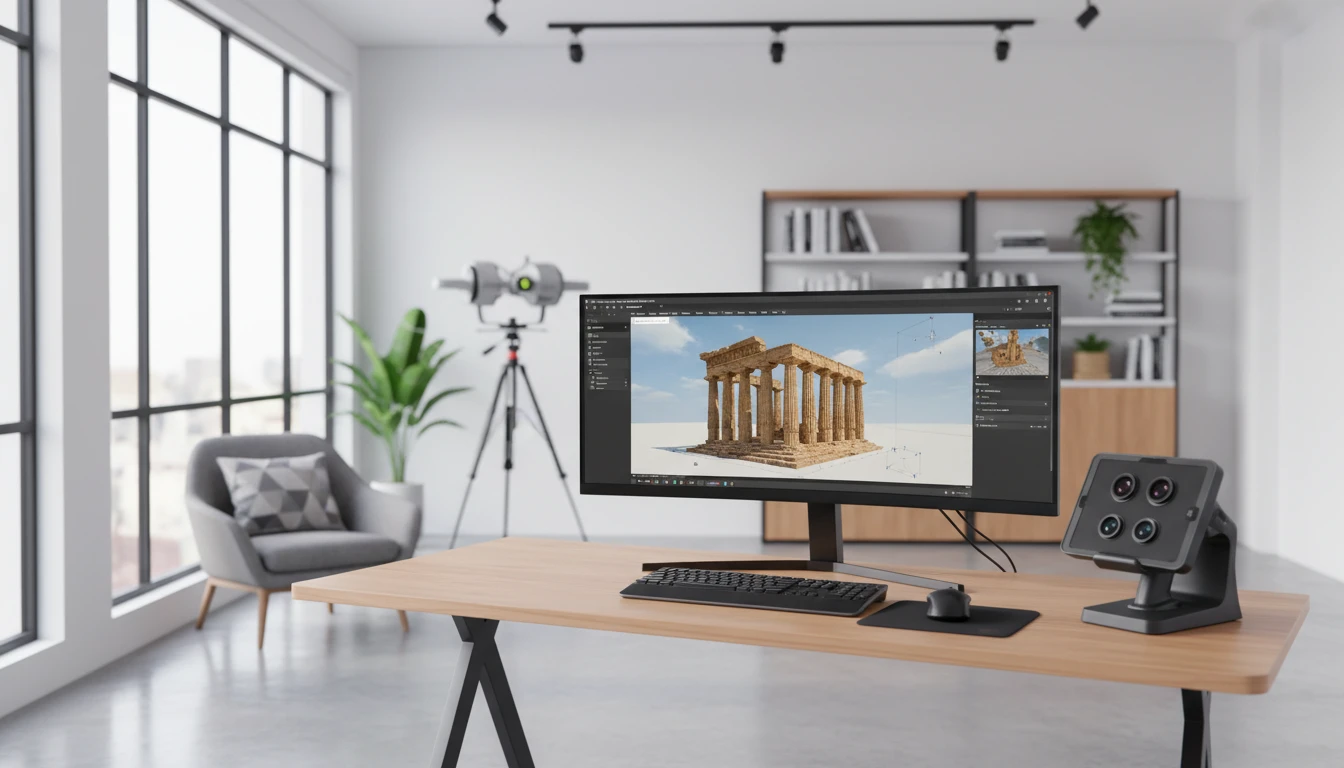
Convert PLY to GLB
Upload a PLY file and download the converted GLB — all processing happens on the server.
Drop your PLY file here
or click to browse
Accepts .ply files
From Scan Output to Compact Web Delivery
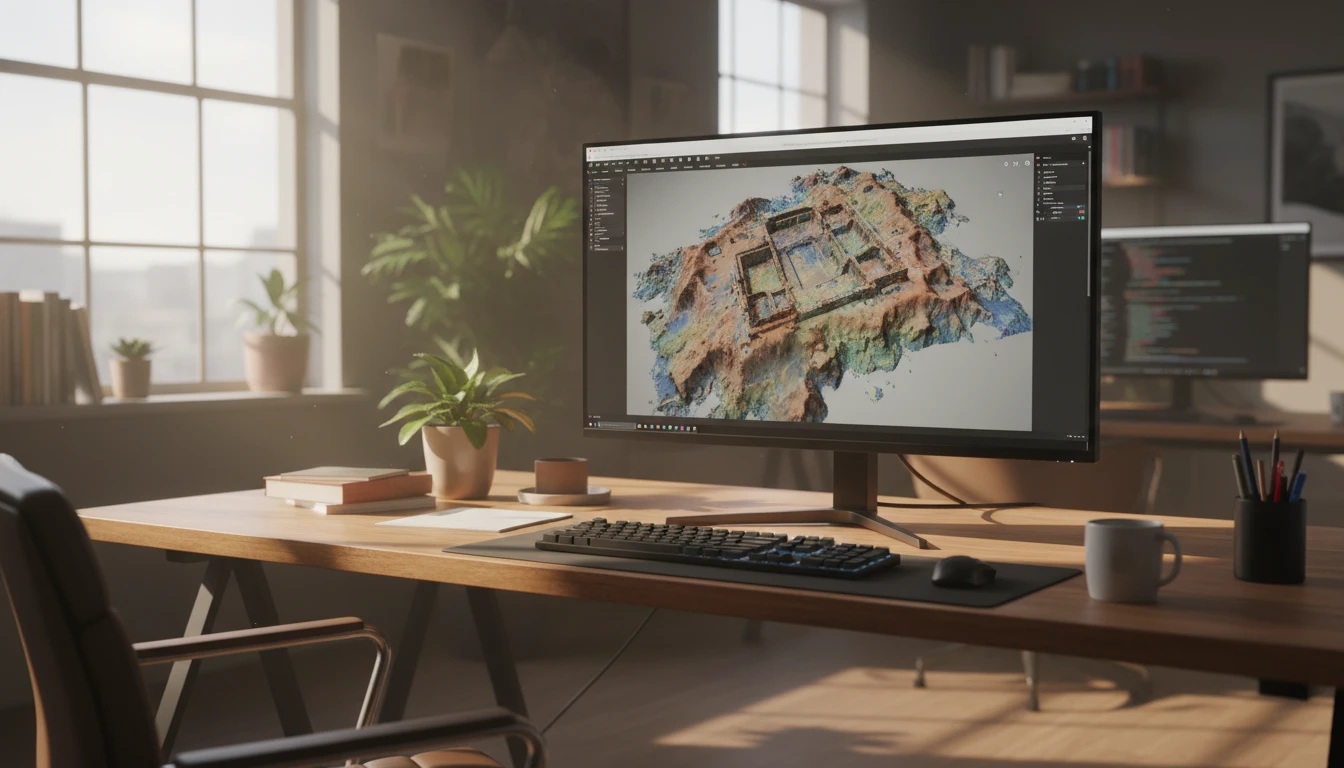
PLY is the native output of 3D scanners and photogrammetry pipelines, but its ASCII variant is large and slow to load in browsers. GLB is the binary glTF container — compact, fast to parse, and natively loaded by Three.js, Babylon.js, and model-viewer. Converting PLY to GLB makes scan geometry instantly viewable in any modern browser.
Convert Now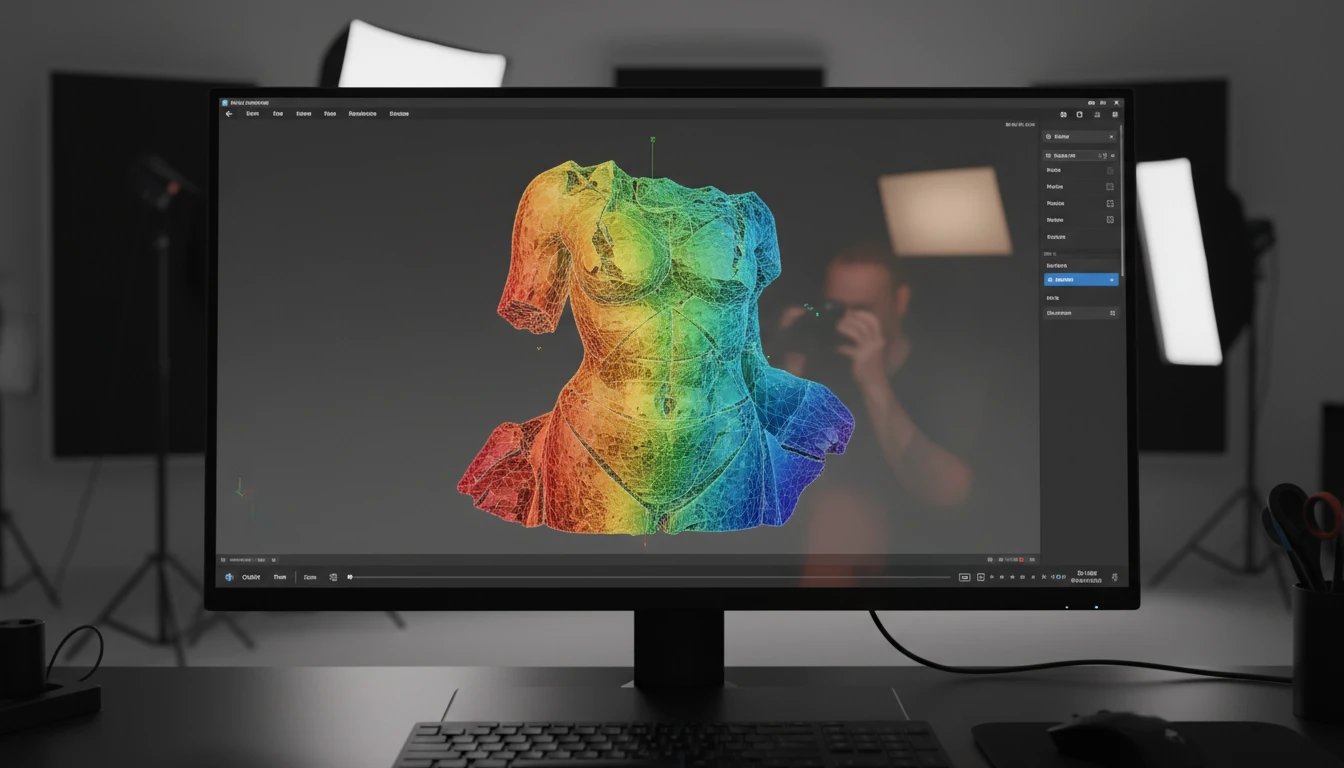
Vertex Colors and Normals in GLB
PLY scan files typically carry per-vertex RGB colors from camera texture projection and vertex normals from the scanning pipeline. The converter maps both to GLB vertex color and normal attributes, so the scan renders correctly with color and smooth shading in Three.js, Babylon.js, model-viewer, Unity, and Unreal.
Convert Now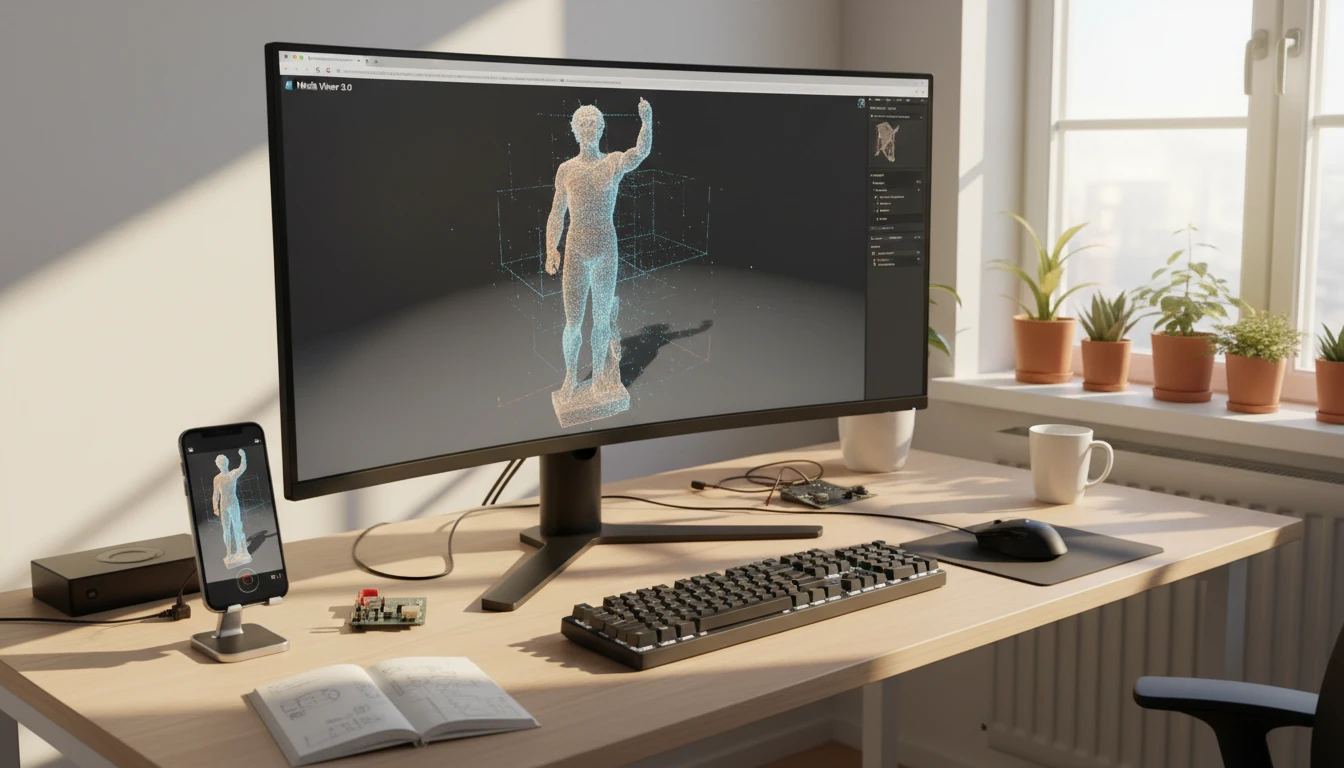
AR and Real-Time Engine Ready
GLB is the format of choice for iOS AR Quick Look, Android Scene Viewer, Three.js, Babylon.js, Unity, and Unreal. Converting PLY to GLB gives photogrammetry and scan assets a single-file delivery format that works across every major real-time platform without plugins or companion asset dependencies.
Convert NowHow to Convert PLY to GLB
Upload Your PLY File
Drag and drop a PLY file into the upload zone or click to browse. Both ASCII and binary PLY files up to 100 MB are supported.
Sign In and Convert
Sign in to start the conversion. The server parses the PLY geometry, vertex colors, and normals, then packs them into a compact binary GLB container.
Download the GLB
Once ready, click Download. The single-file GLB is immediately loadable in Three.js, Babylon.js, model-viewer, Unity, Unreal, iOS AR Quick Look, and Android Scene Viewer.
Deep Dive
PLY and GLB: Scan Data Format vs. Real-Time Binary

Why Use It
No Software to Install
The conversion runs on the server. No MeshLab batch scripts, Blender export pipelines, or local Assimp CLI tools needed. Upload and download directly from your browser.
Vertex Colors and Normals
Per-vertex RGB colors and normals from PLY scan files are written as GLB vertex color and normal attributes, preserving scan appearance and smooth shading across all glTF renderers.
Compact Single-File Output
GLB packs geometry, vertex attributes, and scene data into one binary file — far more compact than ASCII PLY and with no companion asset dependencies to manage for web or engine deployment.
Scan to Web and AR Pipeline
PLY is the scan world's data format. GLB is the web's delivery standard. Converting PLY to GLB bridges photogrammetry and scan captures directly into web viewers, AR apps, and real-time engines.
Who Uses It
Who Converts PLY to GLB

Frequently Asked Questions
Are both ASCII and binary PLY files supported?
Yes. The converter handles both ASCII PLY and binary PLY (little-endian and big-endian). Binary PLY is more compact and the standard output of most scan and photogrammetry tools for large meshes.
Does the GLB output include vertex colors from the PLY file?
Yes. Per-vertex RGB or RGBA color properties from the PLY file are written as GLB vertex color attributes. These are visible in Three.js, Babylon.js, model-viewer, Unity, and any other glTF renderer that supports vertex colors.
Are vertex normals from the PLY file preserved in the GLB?
Yes. Vertex normals stored in the PLY file are written as GLB normal attributes, preserving smooth shading information for correct rendering in web viewers and game engines.
What is the difference between GLB and GLTF?
GLTF is a JSON text file that references external BIN geometry buffers and texture files. GLB is the binary container that packs the JSON, BIN, and optionally textures into a single file. GLB is easier to deploy because it has no external dependencies and is typically smaller due to binary encoding.
What is the maximum PLY file size?
The converter supports PLY files up to 100 MB. The resulting GLB will typically be more compact than an ASCII PLY source of the same geometry due to binary encoding.
Convert Your PLY File to GLB Now
Upload your PLY scan or mesh and get a compact, web-ready GLB in seconds. No install, no manual steps.