Inspect 3D Print Files Before You Slice
Upload an STL file and explore it from every angle. Pick a model color, toggle wireframe, cycle through lighting environments, and take a PNG screenshot — all in your browser.
Open Viewer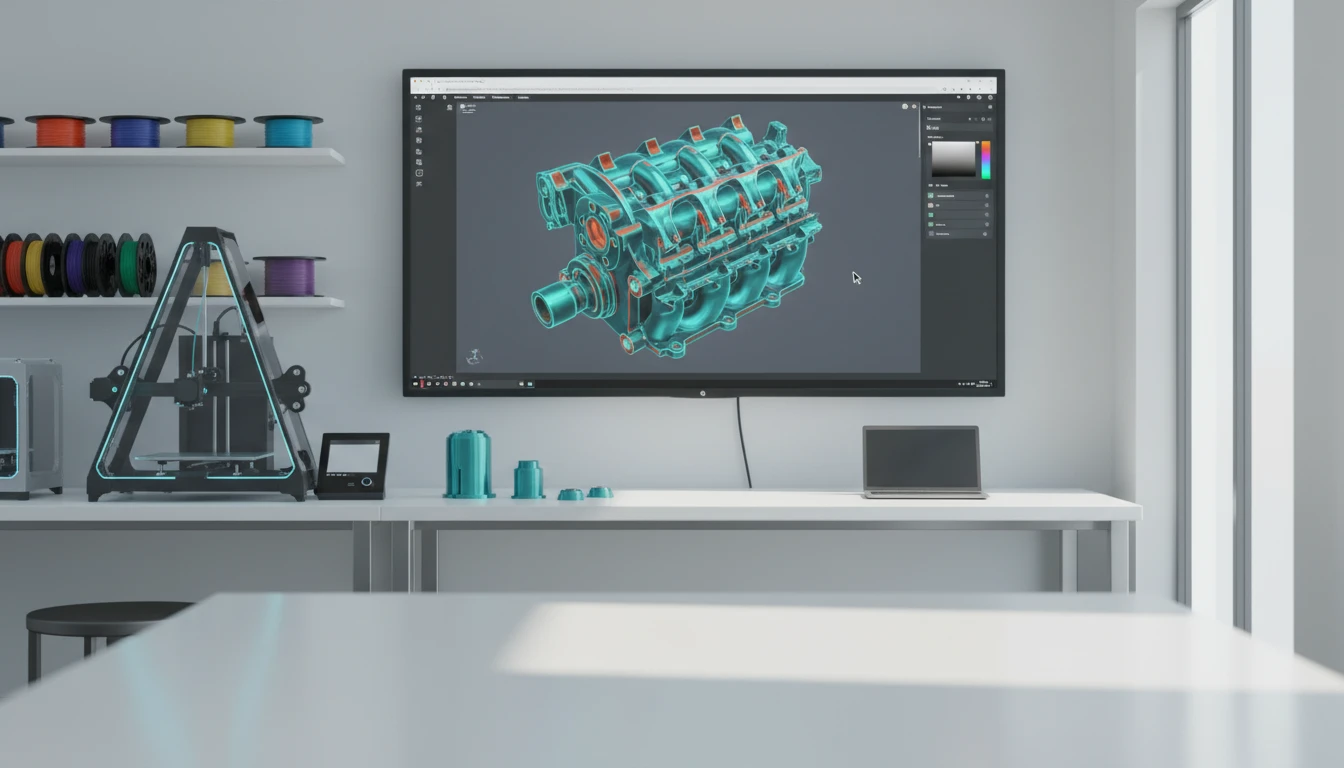
STL 3D Model Viewer
Upload an STL file, pick a model color, orbit and inspect. Toggle wireframe, switch lighting presets, and export a screenshot.
Drop your STL file here
or click to browse your files
Supports .stl (binary and ASCII)
Binary and ASCII STL Support
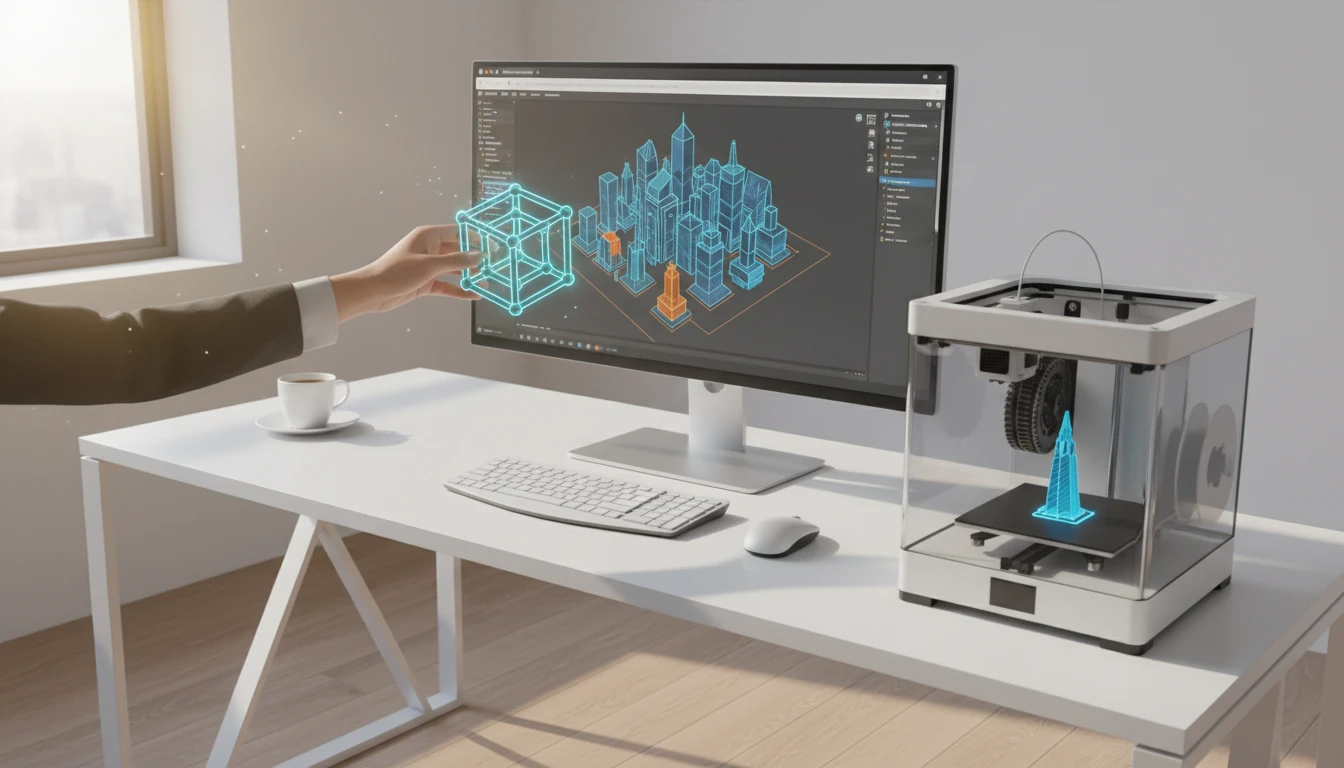
Drop any STL file — binary or ASCII — and it renders immediately using WebGL. The viewer auto-detects the format. No file size limit imposed by a server.
Open Viewer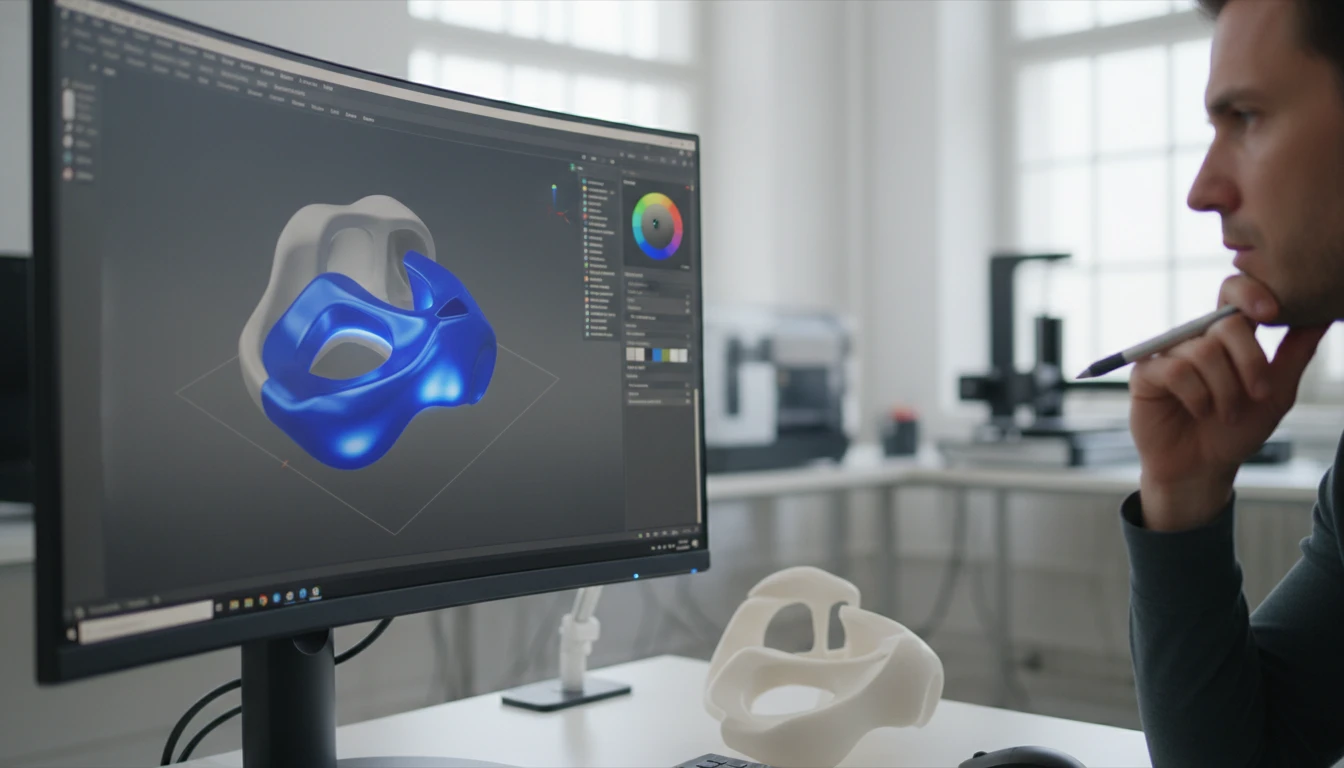
Pick the Model Color
STL files carry no color data. Choose any color from the palette to visualize your model in a meaningful hue — match your filament color, highlight a design team, or just improve readability.
Open Viewer
Wireframe, Lighting, and Screenshot
Toggle wireframe to inspect the triangle mesh topology. Cycle through ten environment lighting presets for different visual contexts. Take a PNG screenshot at any camera angle.
Open ViewerView an STL model in three steps
Upload your STL file
Drag an STL file onto the drop zone or click to browse. The model renders in the WebGL canvas using your GPU. Both binary and ASCII STL formats are detected automatically.
Set a color and navigate
Pick any color for the model surface to match your filament or improve visibility. Orbit with left-click drag, zoom with scroll, pan with right-click drag. Snap to Front, Top, or Right with camera preset buttons.
Switch lighting and capture
Try different environment presets to see how the model reads under various lighting. Toggle wireframe to inspect mesh density. Take a PNG screenshot when satisfied with the angle.
Deep Dive
What the STL Viewer Supports
Purpose-built for the 3D printing workflow: inspect geometry, verify mesh topology, and preview your model color before committing to a print.
Why Use the STL Viewer
Custom Model Color
Pick any color for the model surface. Preview your exact filament color or distinguish parts before slicing.
Full Geometry Inspection
Orbit, zoom, and pan around every surface. Toggle wireframe to check mesh topology and triangle density.
Lighting Environments
Cycle through ten environment presets to verify how your chosen color reads under studio, outdoor, and architectural lighting.
Screenshot Export
Save any camera angle as a PNG for print logs, design documentation, or sharing with collaborators.
Who Uses It
Who Uses a Browser-Based STL Viewer
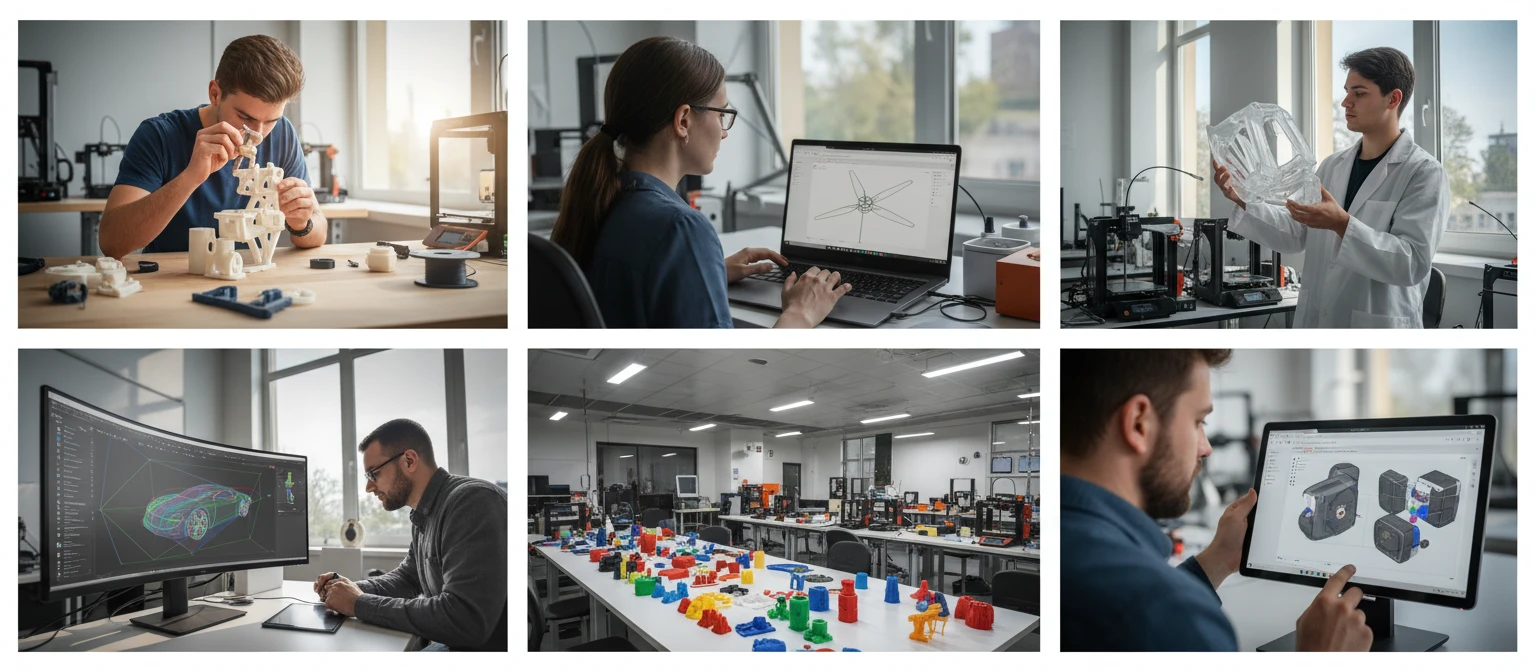
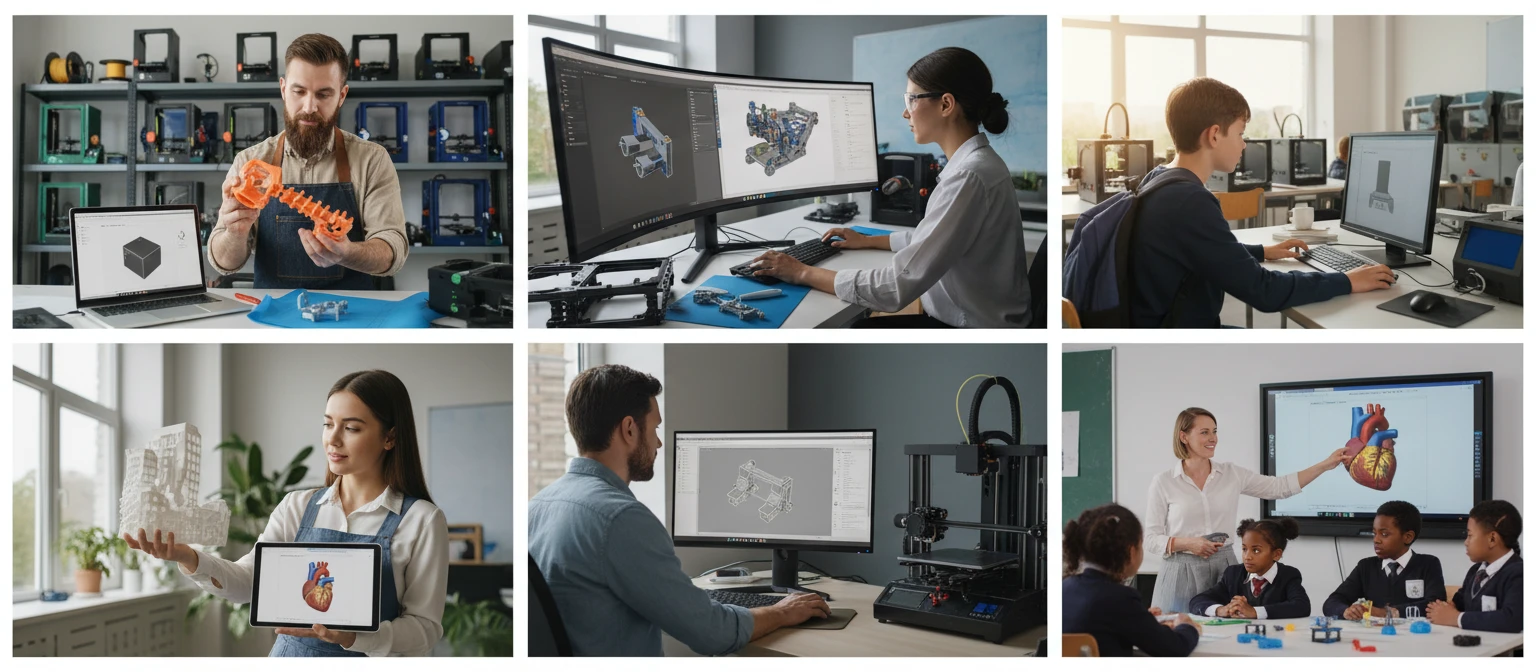
Previewing an STL model before slicing saves time and filament for makers, engineers, print bureaus, and educators.
Related Tools
Frequently Asked Questions
What is an STL file?
STL (Stereolithography) is a 3D geometry format invented by 3D Systems in 1987 for the first commercial stereolithography machines. It represents a model as a mesh of triangular facets, each defined by three vertices and a surface normal. It stores geometry only — no color, material, or unit information. Despite its age, it remains the most widely used format for 3D printing.
Are both binary and ASCII STL files supported?
Yes. The viewer uses the Three.js STLLoader which automatically detects and parses both binary STL (compact, 50 bytes per triangle) and ASCII STL (human-readable "solid … endsolid" text format). Both render identically.
How do I change the model color?
STL files do not store color information, so the viewer lets you assign one using the color swatch button in the toolbar. Click it to open the native browser color picker and choose any color. The material updates in real time without reloading the geometry.
How do I navigate the model?
Left-click and drag to orbit around the model. Scroll the mouse wheel to zoom in and out. Right-click and drag to pan the camera. On touch devices, use one finger to orbit, pinch to zoom, and two fingers to pan. Use the P/F/T/R buttons to snap to Perspective, Front, Top, and Right camera presets.
What does wireframe mode do?
Wireframe mode renders only the triangle edges of the mesh, hiding solid surfaces. This is useful for checking triangle density, detecting non-manifold geometry, verifying that the mesh is watertight, and understanding how a slicer will interpret the model.
Why does my model appear at a different size than expected?
STL files carry no unit information — a model exported in millimetres will appear 1000 times smaller than one exported in metres. The viewer automatically scales every model to fit a consistent 2-unit bounding box, so it always renders at a readable size.
Is there a file size limit?
There is no server-imposed size limit because all processing happens in your browser using your GPU. Very large STL files (over 50 MB) may load slowly on lower-powered devices. Most print-ready models under 20 MB load and render smoothly.
Which browsers are supported?
The viewer works on Chrome, Firefox, Edge, and Safari on desktop and mobile. WebGL 2.0 support is required. All modern browser versions from the past two years support this.
Ready to Inspect Your STL File?
Upload an STL file, pick a color, orbit around it, check the mesh, then download a screenshot.