Move Your STL Models into the Modern Web 3D Pipeline
Convert STL meshes from 3D printing and CAD tools to GLTF and make them accessible in web viewers, AR product configurators, and any pipeline that speaks the modern glTF standard.
Convert Now
Convert STL to GLTF
Upload a STL file and download the converted GLTF — all processing happens on the server.
Drop your STL file here
or click to browse
Accepts .stl files
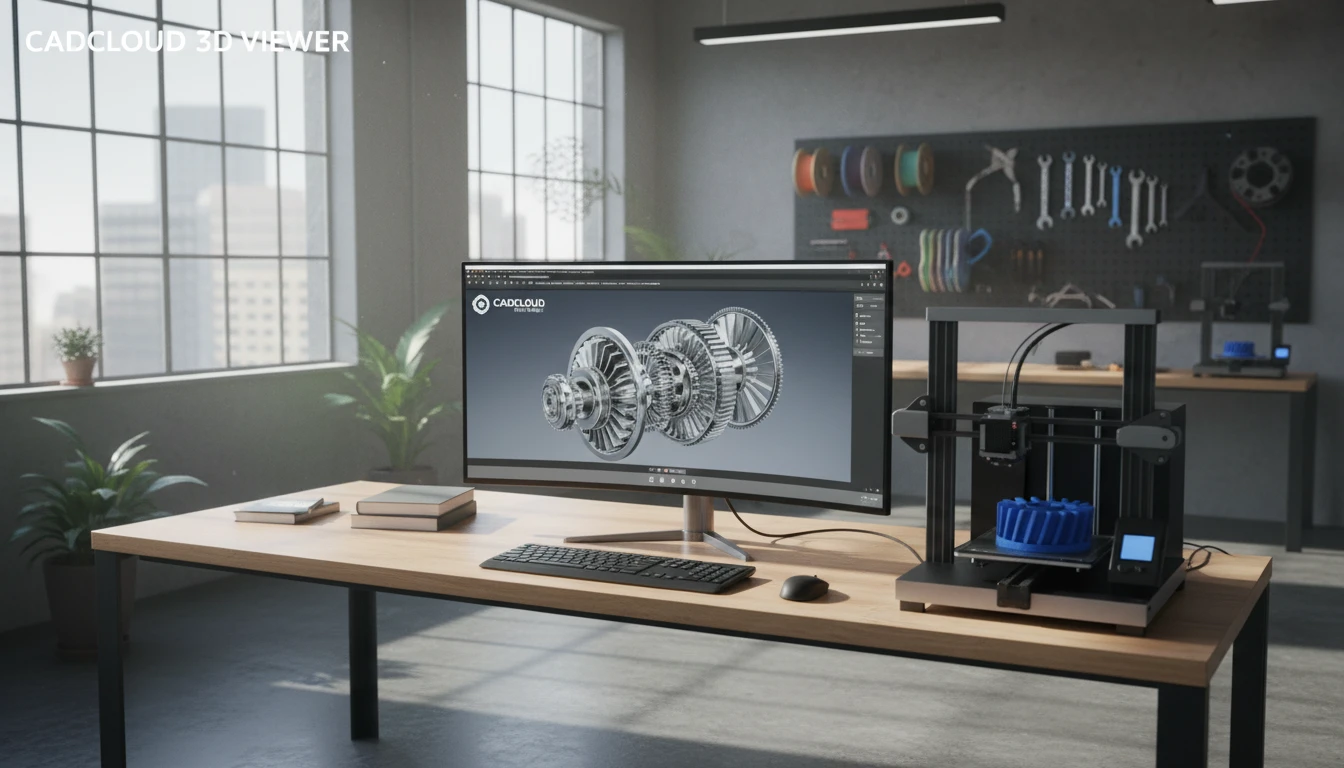
From 3D Printing to the Web
STL is the universal language of 3D printing — every slicer, CAD tool, and printer accepts it. But STL is geometry only: no materials, no hierarchy, no colors. Converting to GLTF adds web-viewer compatibility, PBR material slots, and the full glTF extension ecosystem.
Convert Now
Normals Rebuilt for Accurate Rendering
STL stores flat face normals that produce faceted shading in smooth-surface models. The converter recalculates smooth vertex normals during conversion, so curved surfaces like product enclosures and organic shapes render correctly in web viewers and game engines.
Convert Now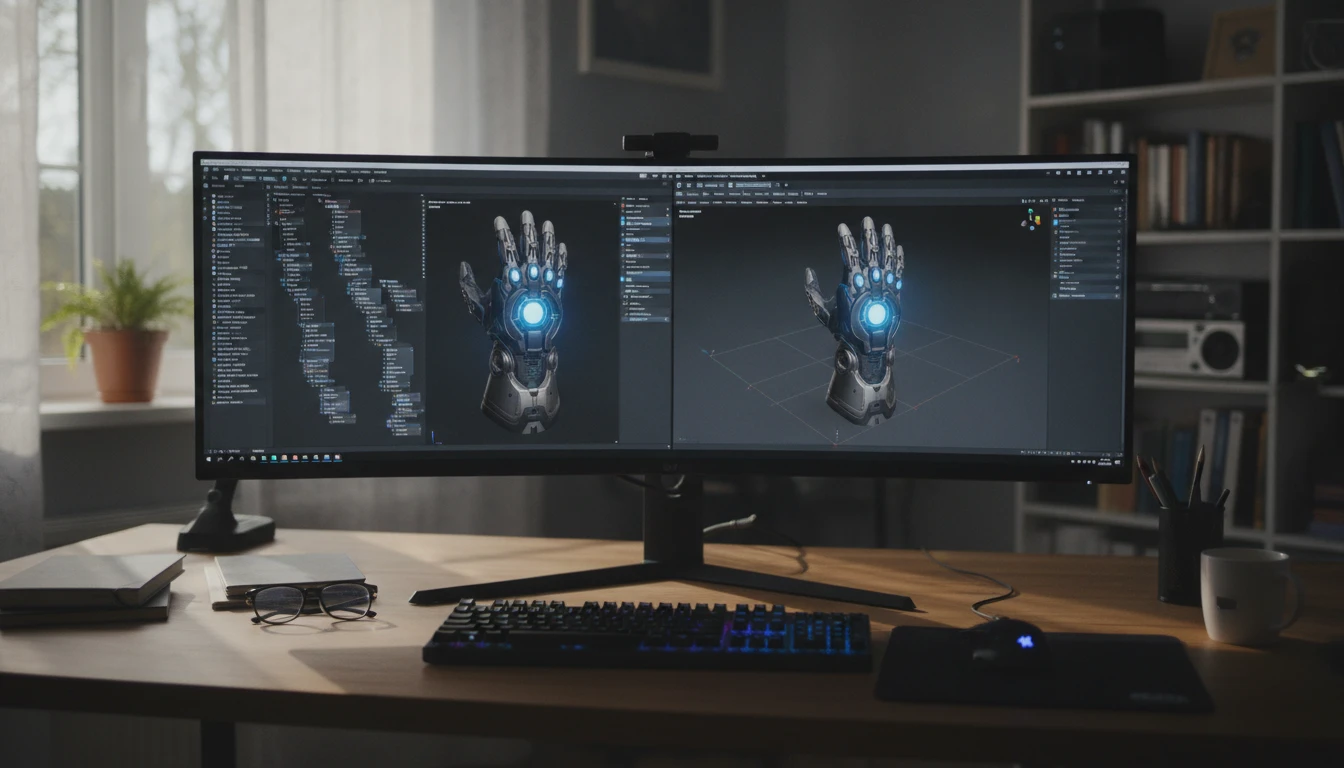
Full glTF Ecosystem Access
Once in GLTF format, apply Draco geometry compression, add PBR materials in Blender or Substance, run the Khronos glTF Validator, and deploy to Three.js, Babylon.js, model-viewer, iOS AR Quick Look, or Android Scene Viewer.
Convert NowHow to Convert STL to GLTF
Upload Your STL File
Drag and drop an STL file into the upload zone or click to browse. Both ASCII and binary STL files up to 100 MB are supported.
Sign In and Convert
Sign in to start the conversion. The server parses the STL geometry, rebuilds smooth vertex normals, and writes a GLTF document with an accompanying BIN buffer.
Download the GLTF
Once ready, click Download. The GLTF is immediately usable in Three.js, Babylon.js, model-viewer, Unity, Unreal, or any further glTF processing tool.
Deep Dive
STL and GLTF: Print Format vs. Web Standard

Why Use It
No Software to Install
The conversion runs on the server. No Blender, MeshLab, or local Assimp CLI pipelines needed. Upload and download directly from your browser.
Smooth Normal Reconstruction
STL flat face normals are replaced with smooth vertex normals during conversion, so curved surfaces render correctly in glTF viewers and game engines without manual post-processing.
Web Ready Instantly
The output GLTF loads directly in Three.js, Babylon.js, model-viewer, and any WebXR runtime without additional conversion, plugin, or slicer software.
CAD to Production Pipeline
STL is the native export format of most CAD and 3D printing tools. Converting to GLTF bridges the gap between engineering geometry and production web or AR deployment.
Who Uses It
Who Converts STL to GLTF

Frequently Asked Questions
What is the STL file format?
STL (Stereolithography) is a 3D file format that represents geometry as a mesh of triangular facets, each with a normal vector. It supports both ASCII and binary encoding and carries no color, material, or hierarchy data. It is the universal format for 3D printing and is exported by virtually all CAD tools.
Are both ASCII and binary STL files supported?
Yes. The converter handles both ASCII STL and binary STL. Binary STL is more compact and the standard output of most slicer and CAD software for large models.
Does the GLTF have materials applied?
The converted GLTF uses a default neutral PBR material since STL carries no color or material data. You can assign materials in Blender, Substance, or any GLTF editor after conversion.
Are the normals correct in the GLTF output?
Yes. STL stores flat face normals that produce faceted shading. The converter reconstructs smooth vertex normals during conversion, so curved surfaces render correctly without additional post-processing.
What is the maximum STL file size?
The converter supports STL files up to 100 MB. Dense meshes from high-resolution 3D scans or complex CAD models produce correspondingly large GLTF and BIN outputs.
Convert Your STL File to GLTF Now
Upload your STL mesh and get a web-ready GLTF in seconds. No install, no manual steps.