Convert STL Models to GLB for Real-Time Rendering and Web 3D
Convert STL models into the binary glTF format for use in real-time game engines, web-based 3D viewers, and AR/VR experiences. GLB is the GPU-optimized, web-native 3D format used by Three.js, Babylon.js, Unity, Unreal Engine, and every major platform that renders 3D content in real time.
Convert Now
Convert STL to GLB
Upload a STL file and download the converted GLB — all processing happens on the server.
Drop your STL file here
or click to browse
Accepts .stl files
From 3D Print Format to Real-Time 3D
STL was designed for 3D printing and contains only triangle geometry with no material, texture, or rendering data. GLB is the binary glTF container format designed specifically for real-time rendering. Converting STL to GLB unlocks the model for Three.js, Babylon.js, Unity, Unreal, and every other real-time platform without manual DCC export steps.
Convert Now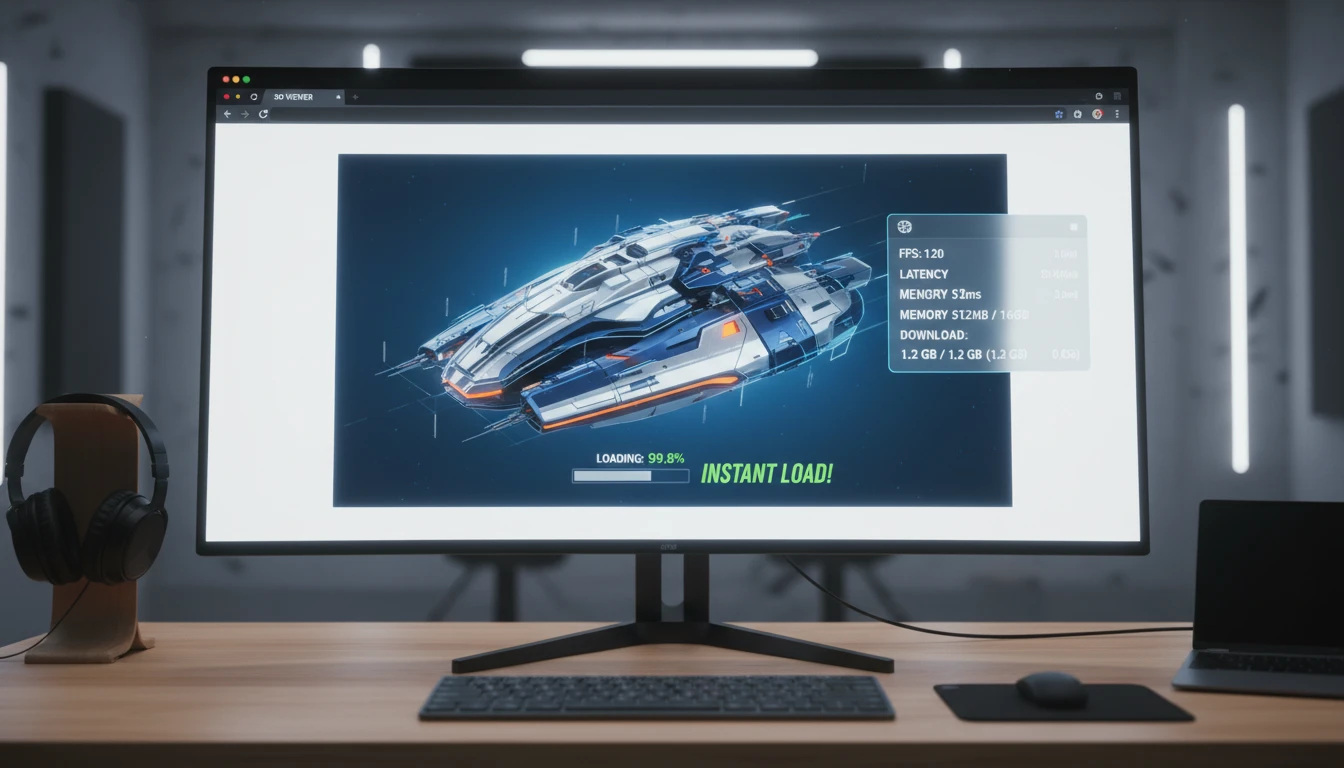
GPU-Optimized Binary Format for Fast Loading
GLB stores geometry, materials, and textures in a single compact binary file that is optimized for GPU upload. Unlike ASCII STL, which requires parsing on the CPU before rendering, GLB data maps directly to GPU buffer structures. This makes GLB significantly faster to load and render in browsers and game engines, especially for large or complex models.
Convert Now
AR/VR and Spatial Computing Ready
GLB is the required or preferred 3D format for Apple AR Quick Look, Google Scene Viewer, Meta Quest, and WebXR-based AR/VR experiences. Converting STL to GLB makes 3D print models immediately deployable in spatial computing and augmented reality contexts, from product visualization to interactive AR presentations.
Convert NowHow to Convert STL to GLB
Upload Your STL File
Drag and drop an STL file into the upload zone or click to browse. Both ASCII and binary STL files up to 100 MB are supported.
Sign In and Convert
Sign in to start the conversion. The server reads the STL triangle geometry and packages it into a binary GLB container ready for real-time rendering.
Download the GLB
Once ready, click Download. The GLB file is immediately usable in Three.js, Babylon.js, Unity, Unreal Engine, Blender, and any platform that supports the glTF 2.0 standard.
Deep Dive
STL and GLB: Print Triangle Soup vs. Real-Time Binary glTF

Why Use It
No Software to Install
The conversion runs on the server. No Blender Python export scripts, Unity importer workflows, or local Assimp CLI tools needed. Upload and download directly from your browser.
Web and Engine Native
GLB is the standard import format for Three.js, Babylon.js, Unity, Unreal Engine, and every major real-time platform. The converted file works without plugins or converters on the target platform.
Single Binary File
GLB packages all geometry data into one self-contained binary file with no external references. Unlike STL with companion MTL or texture files, GLB is always a single portable file.
AR/VR Ready
GLB is the required format for Apple AR Quick Look, Google Scene Viewer, and WebXR experiences. Converting STL to GLB gives 3D print models an immediate path into spatial computing and augmented reality.
Who Uses It
Who Converts STL to GLB

Frequently Asked Questions
Are both ASCII and binary STL files supported?
Yes. The converter handles both ASCII and binary STL input. Binary STL is more compact and the standard output of most CAD tools, but ASCII STL is also fully supported.
Will the GLB output include materials or textures?
Standard STL does not carry material or texture information. The converted GLB will contain the geometry from the STL file with a default material. Materials and textures can be added to the GLB after import in Blender or another DCC tool.
Is the GLB output compatible with Three.js and Babylon.js?
Yes. The converter produces a valid glTF 2.0 GLB file that is compatible with Three.js, Babylon.js, model-viewer, Unity, Unreal Engine, Blender, and any other platform that supports the glTF 2.0 standard.
Can I use the GLB in Apple AR Quick Look?
Yes. Apple AR Quick Look on iOS and macOS supports GLB files. Upload the converted GLB to your web server and link it with the correct MIME type to enable AR Quick Look previews on Apple devices.
What is the maximum STL file size?
The converter supports STL files up to 100 MB. Very large binary STL files with high polygon counts are supported within this limit.
Convert Your STL File to GLB Now
Upload your STL model and get a real-time-ready GLB in seconds. No install, no manual steps.