Bring OBJ Models into the Modern 3D Pipeline
Convert Wavefront OBJ files into compact GLB format. GLB is the standard for real-time rendering, AR, web 3D, and modern game engine workflows.
Convert Now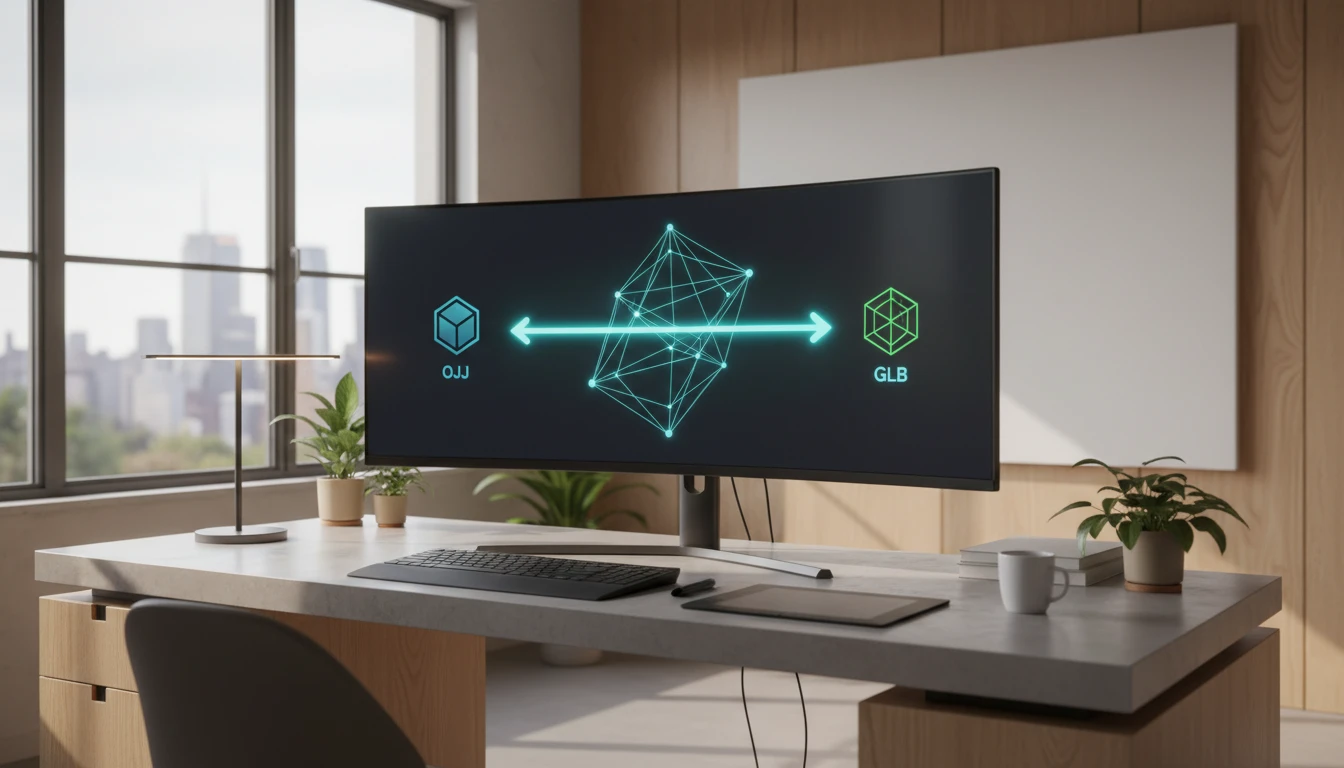
Convert OBJ to GLB
Upload a OBJ file and download the converted GLB — all processing happens on the server.
Drop your OBJ file here
or click to browse
Accepts .obj files
From Plain Text to Binary Efficiency
OBJ stores geometry as human-readable ASCII, which makes files large and slow to parse. GLB uses a compact binary encoding that loads significantly faster in browsers, engines, and AR runtimes.
Convert Now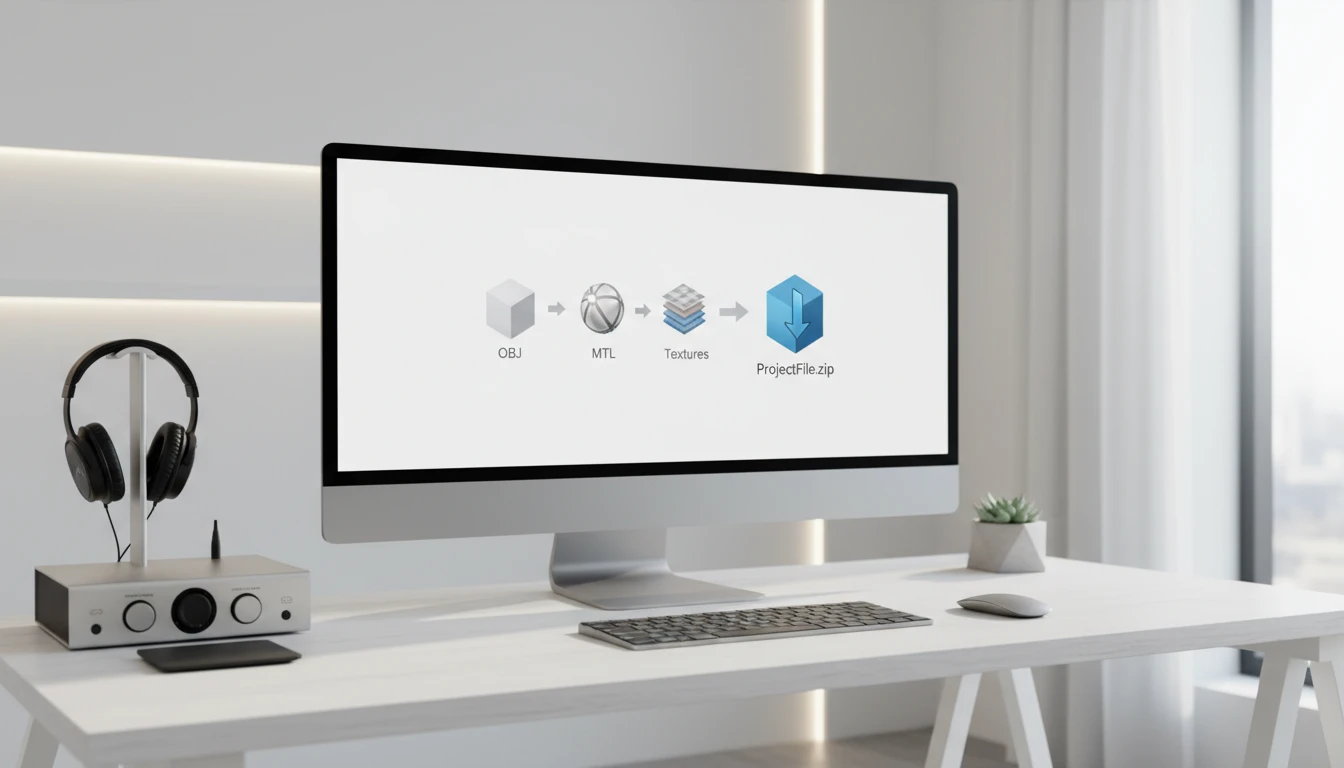
One File Instead of Many
An OBJ model typically ships with a separate MTL material file and external texture images. GLB bundles everything into a single self-contained binary, making it far easier to share, upload, and deploy.
Convert Now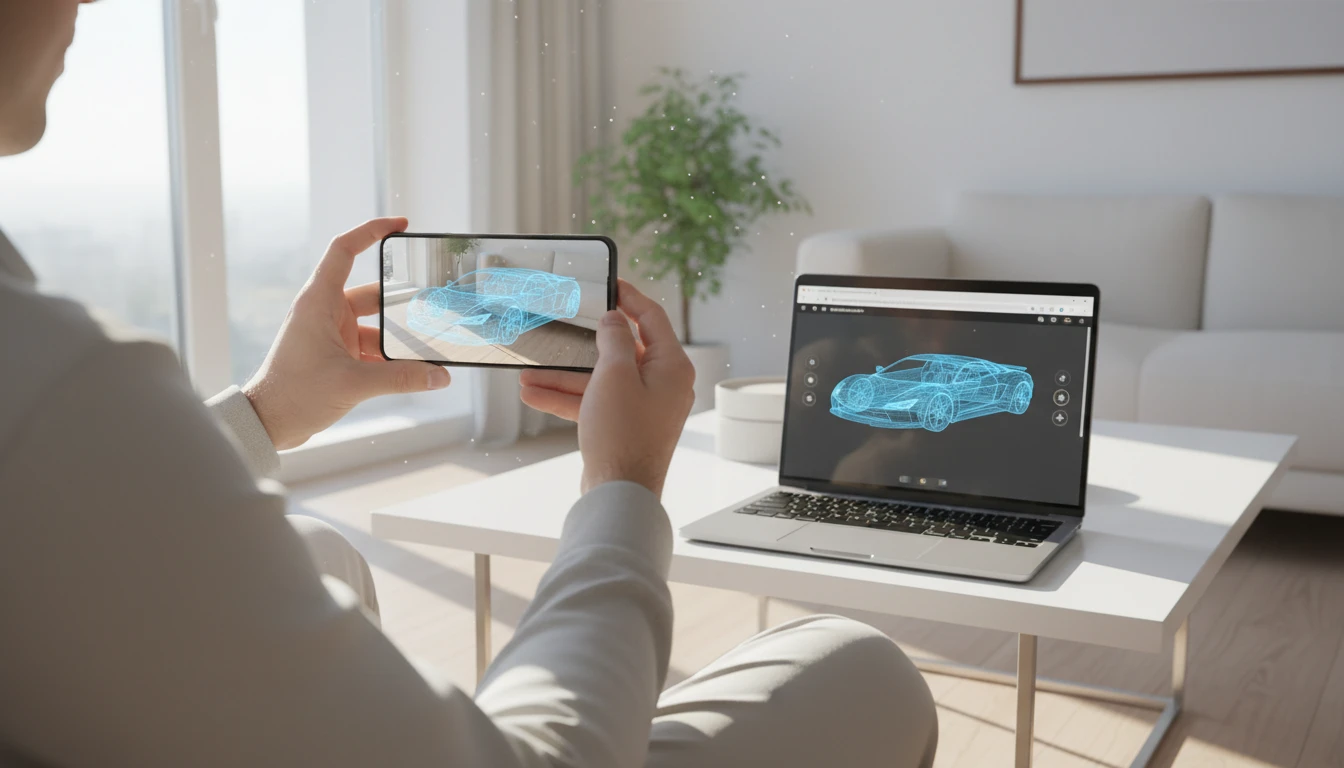
Ready for Web and AR
GLB is the recommended format for Three.js, Babylon.js, model-viewer, WebXR, and all major AR platforms. Converting your OBJ to GLB is the first step to publishing 3D on the web.
Convert NowHow to Convert OBJ to GLB
Upload Your OBJ File
Drag and drop an OBJ file into the upload zone or click to browse. Files up to 100 MB are supported.
Sign In and Convert
Sign in to start the conversion. The server processes the OBJ and packages it into a self-contained GLB binary.
Download the GLB
Once ready, click Download to save the GLB file directly to your device.
Deep Dive
OBJ and GLB: Understanding the Difference
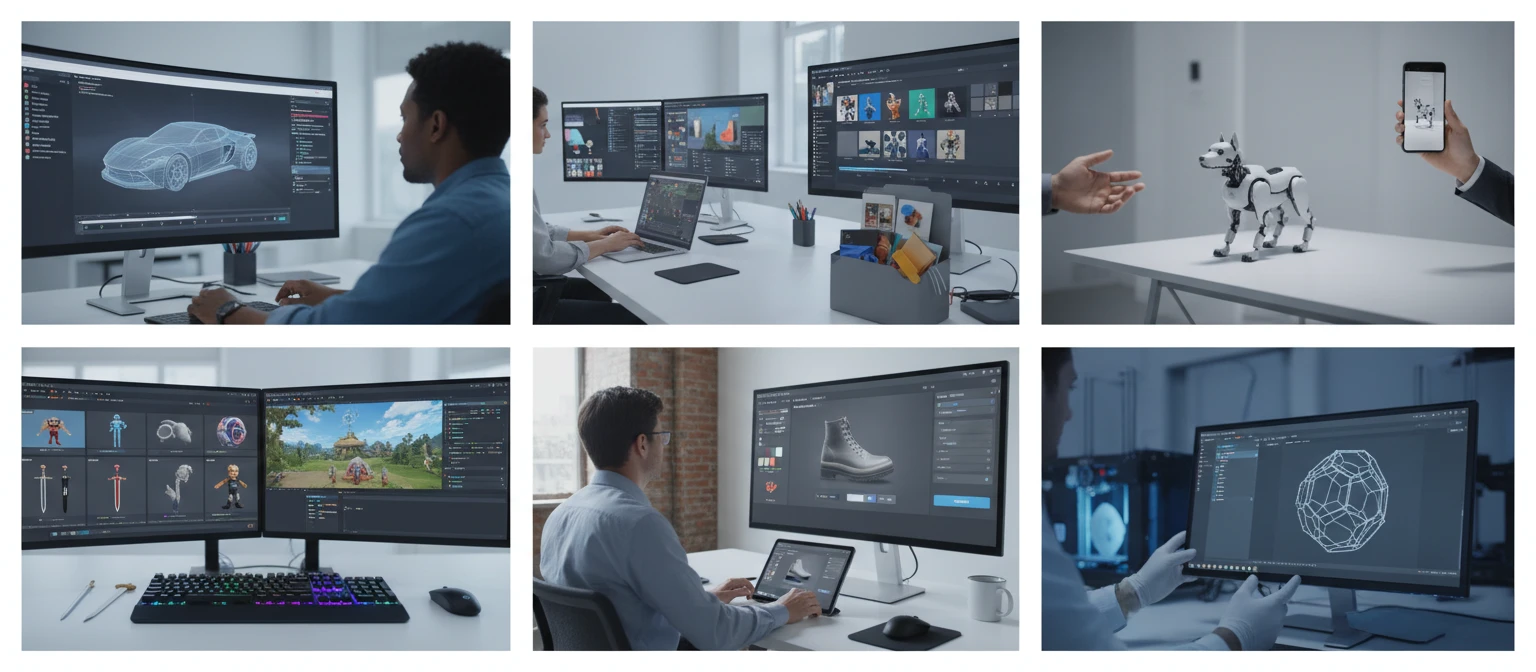
Why Use It
No Install Required
Everything runs on the server. No Blender, no Python scripts, no local dependencies to manage.
Self-Contained Output
The resulting GLB embeds geometry, materials, and textures in one binary file, eliminating broken relative paths and missing texture issues.
Faster Load Times
GLB binary encoding is significantly more compact than OBJ ASCII, translating to faster network transfers and quicker parse times in renderers.
Broad Runtime Support
GLB is the de facto standard for Three.js, Babylon.js, model-viewer, Unity, Unreal Engine, and every major WebXR and AR framework.
Who Uses It
Who Converts OBJ to GLB
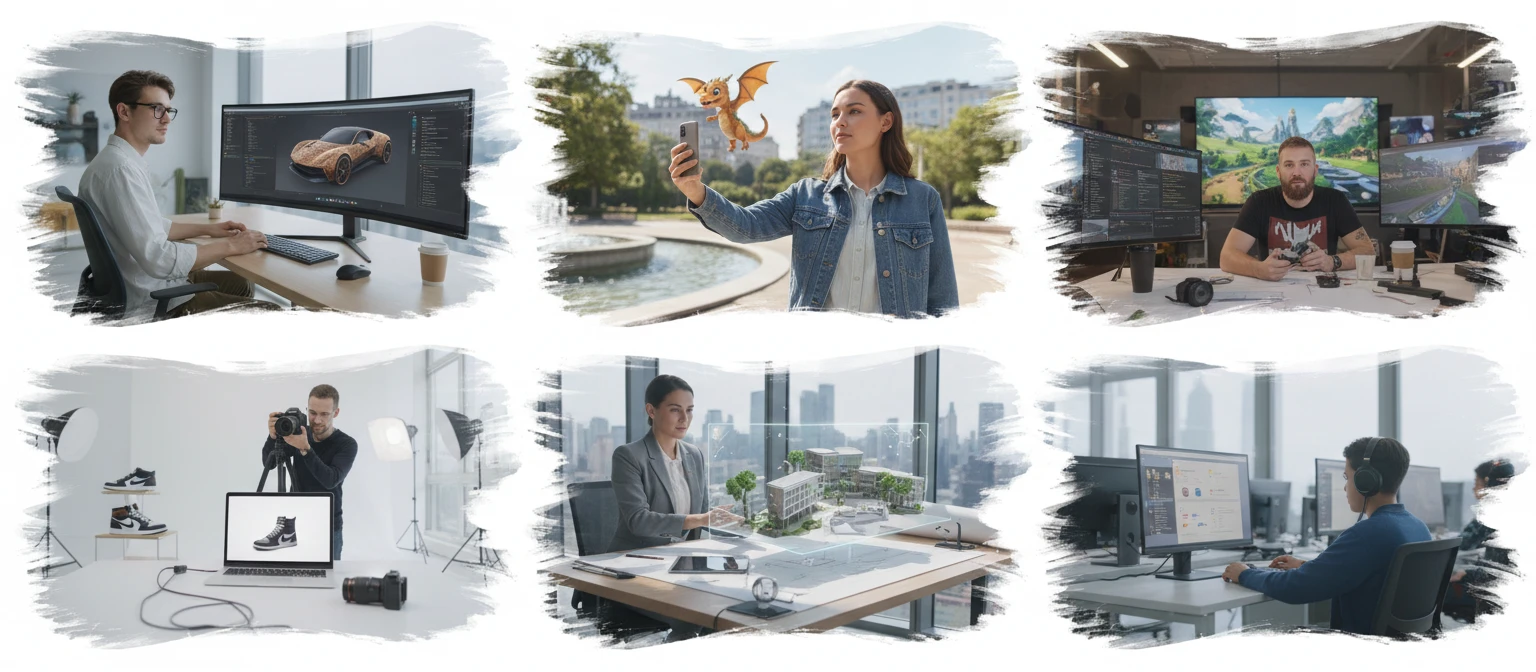
Frequently Asked Questions
Are OBJ materials and textures preserved in the GLB?
Yes. The converter reads the associated MTL file and texture images, then embeds them directly into the GLB binary. The result is a self-contained file with no external dependencies.
My OBJ has multiple objects. Are they all included?
Yes. Each named object or group in the OBJ file becomes a separate mesh node in the GLB scene graph, preserving the original structure.
Does the converter support OBJ files with UV coordinates?
Yes. UV texture coordinates are read from the OBJ and written into the GLB vertex data, ensuring textures map correctly after conversion.
What is the maximum OBJ file size?
The converter supports OBJ files up to 100 MB. For very large scenes, splitting into smaller objects before converting produces better results.
Can I open the resulting GLB in Blender or other DCC tools?
Yes. Blender, Maya, and most modern DCC tools have native GLB import support. The converted file can be re-imported for further editing.
Convert Your OBJ File Now
Upload your OBJ and get a web-ready GLB in seconds. No install, no manual setup.