Play Guitar Right in Your Browser
A full virtual guitar with a realistic fretboard and sampled acoustic and electric guitar sounds. Play with your computer keyboard or click the strings, pin out chords and scales, highlight note names across the neck, and share your pins with a link — no app or account needed.
Start Playing
Ready in Music Studio
Click the guitar to play in AI Music Studio.
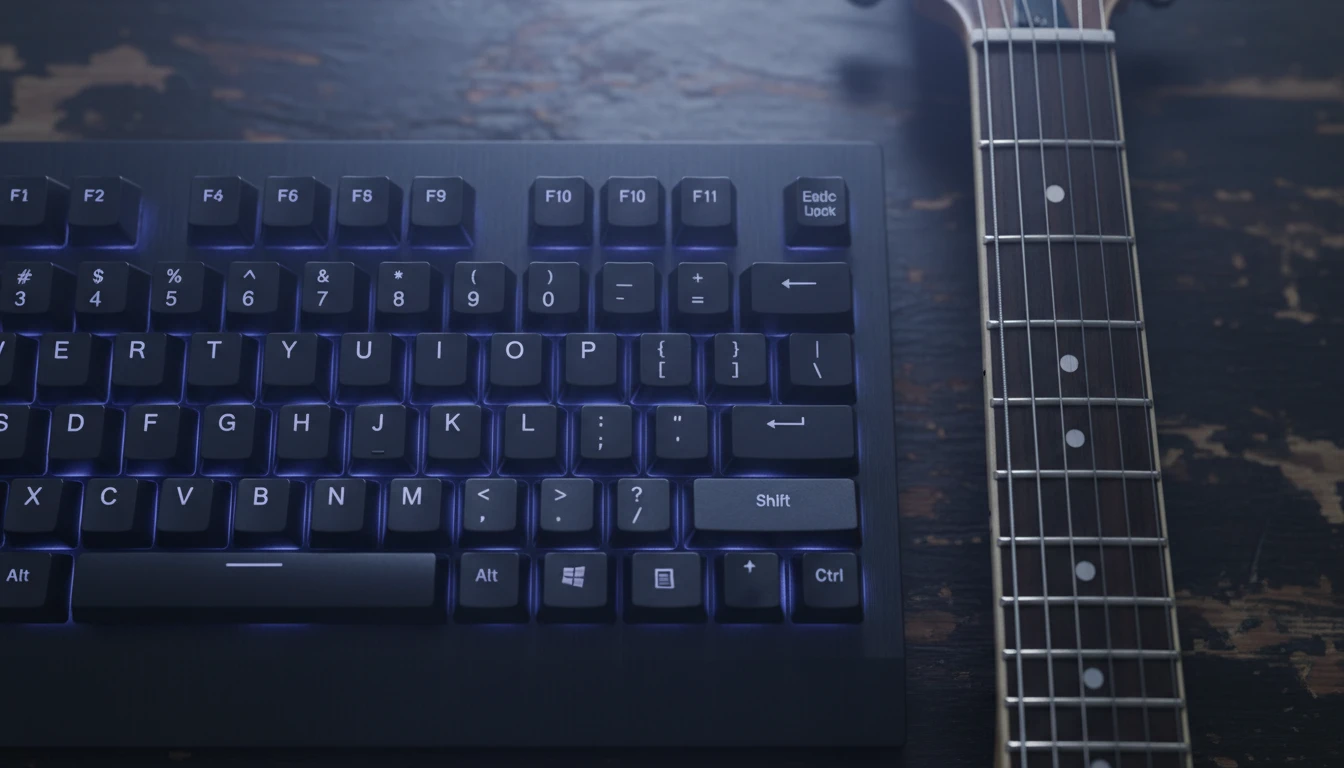
Computer Keyboard to Guitar Strings
The four rows of keys on your keyboard correspond to the four lowest strings of the guitar. Hold Shift and use the top two rows to play the top two strings. Each key along a row moves you up the frets.
Try It Now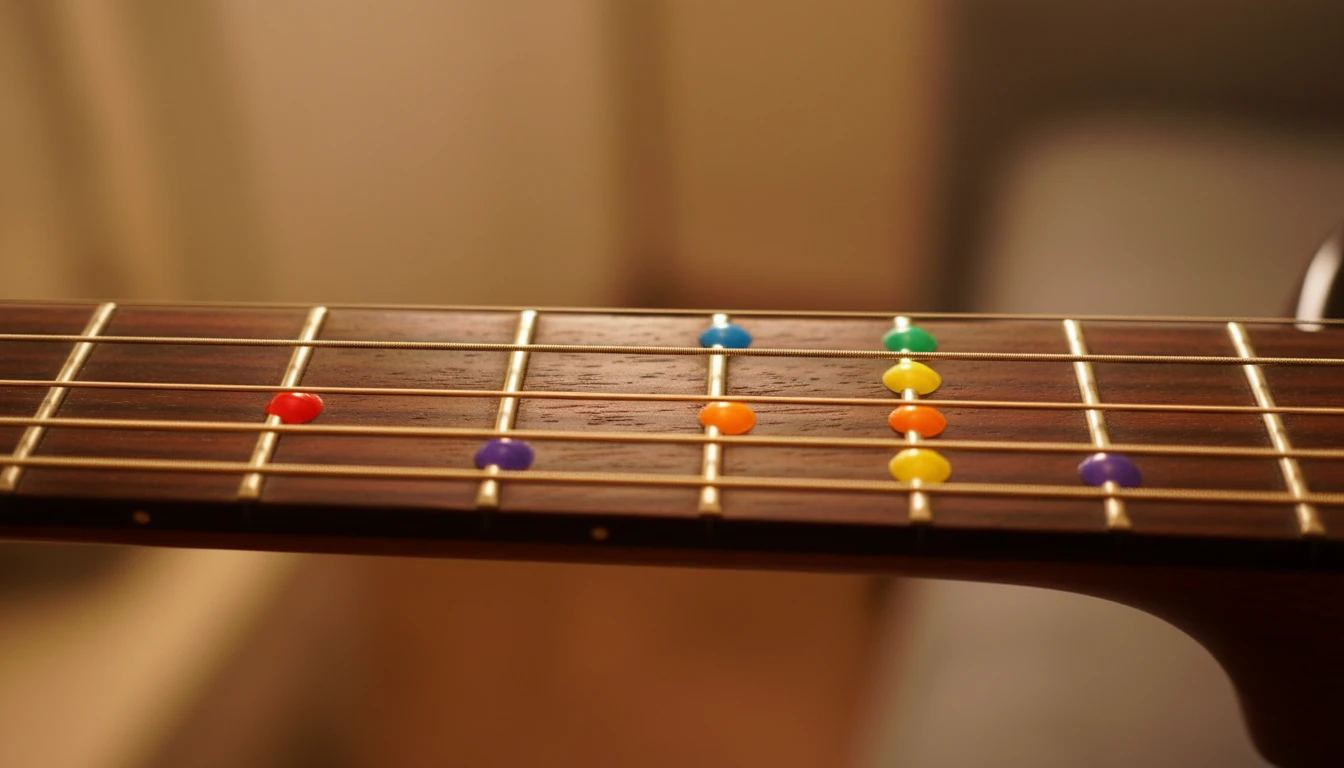
Pin Chords and Scales
Click Pin, then click positions on the fretboard to tag them. Each note is colour-coded and labelled. Hold Alt to spell a note with a flat instead of a sharp. Press Play or the spacebar to strum all your pinned notes.
Pin a Chord
Switch Sounds and Share via URL
Choose between steel and nylon acoustic guitars and clean, jazz, overdrive, and distortion electric tones. Your pinned notes are saved in the page URL — copy it to save your chord shape or send it to someone else.
Change the SoundHow to use the virtual guitar
Open the page and play
The guitar loads sampled sounds automatically. Click any fret or use your computer keyboard to play. No sign-in, no plugin, no download.
Choose your sound and highlight notes
Click the guitar button to switch between acoustic and electric tones. Click Highlight to show the note name at every fret so you can find your way around the neck.
Pin, play, and share
Use Pin mode to tag a chord or scale, press Space to strum it, and copy the page URL to save or share your pins.
Deep Dive
How the Online Guitar Works
The guitar plays real recorded samples of acoustic and electric guitars, mapped across a standard-tuned six-string fretboard.
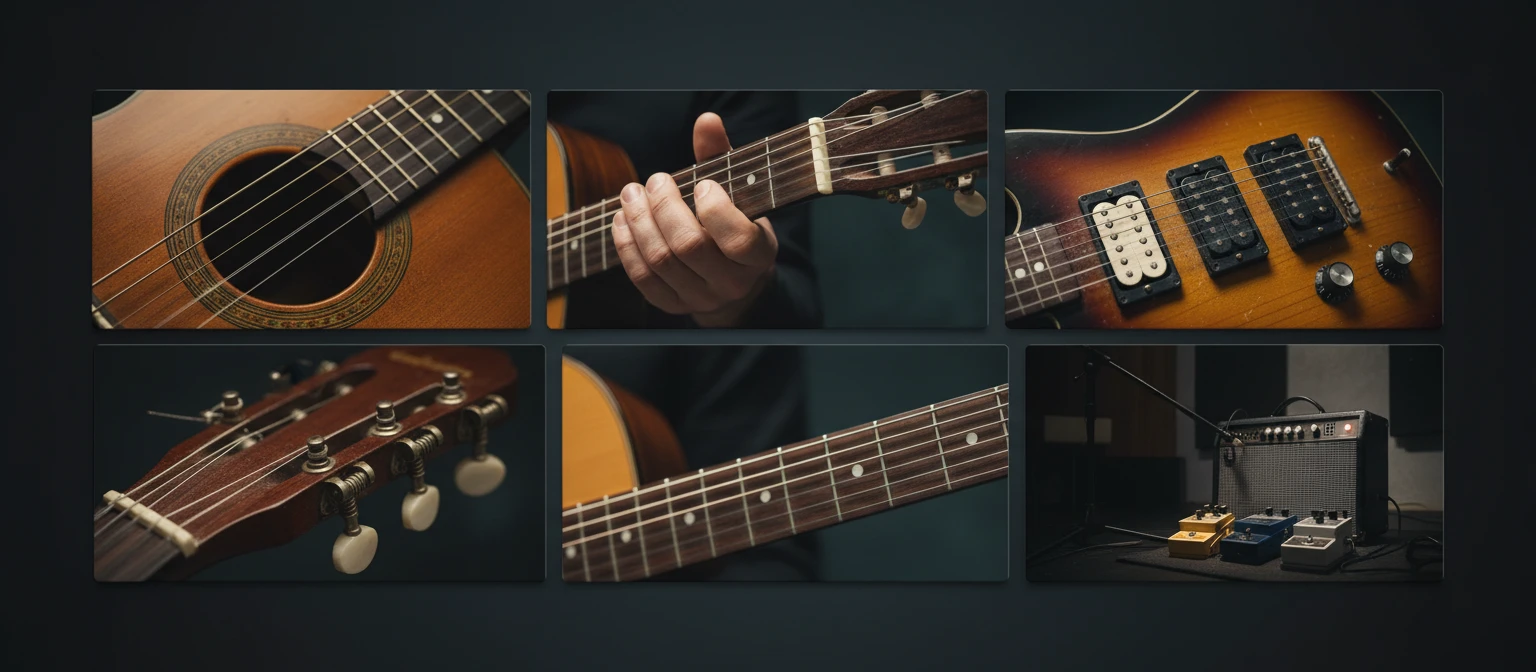
All audio plays locally in your browser. Your playing is never sent to a server.
Why Use This Guitar
Realistic Sound
Real recorded acoustic and electric guitar samples, not synthesised tones.
Full Fretboard
Six strings, 14 frets, standard tuning, with inlay markers just like a real guitar.
Keyboard Play
Four key rows for the low strings, Shift for the top two — play the whole neck.
Pin Chords & Scales
Tag positions, colour-coded and labelled, then strum them with the spacebar.
Note Highlighting
Show note names across the entire neck to learn the fretboard fast.
Share via URL
Your pins are saved in the URL — copy it to share a chord or scale.
Who Uses It
Who Plays the Virtual Guitar
From first-time learners to teachers and songwriters sketching ideas.
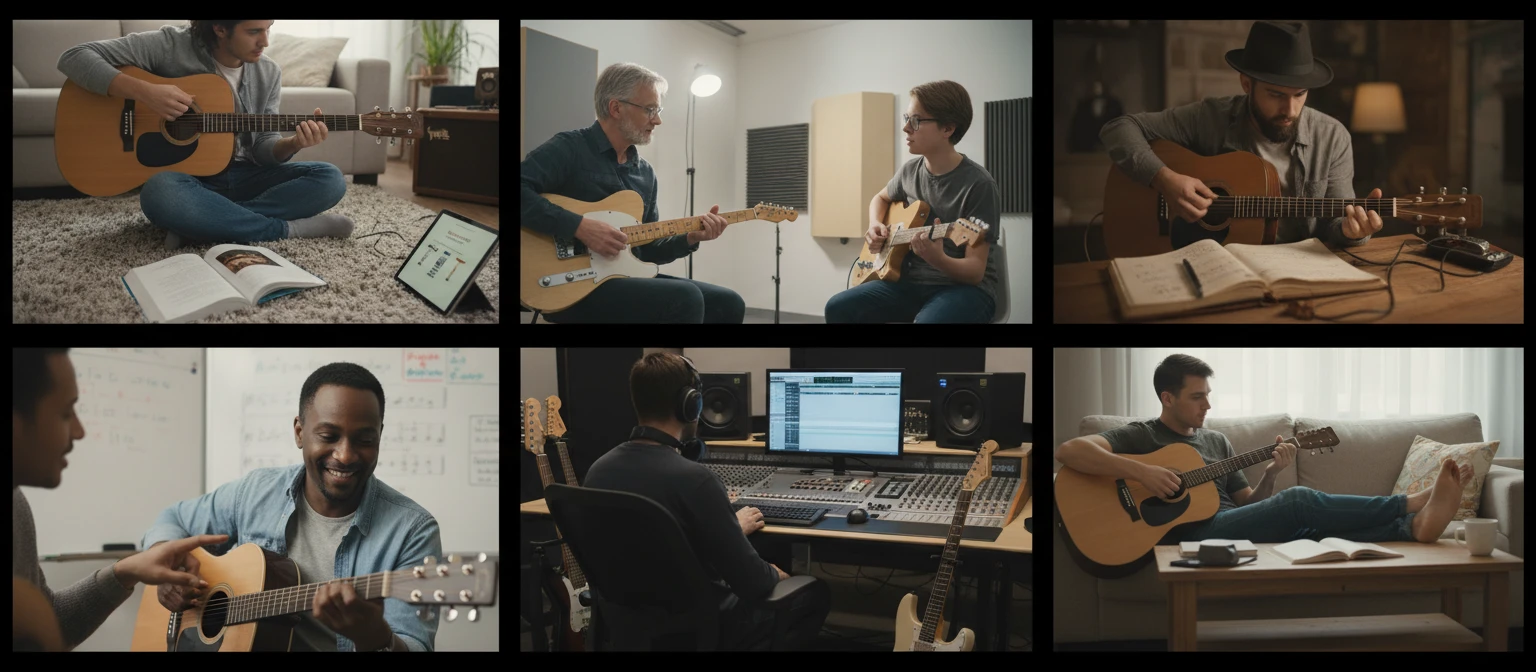
No sign-in, no download, no cost. Runs entirely in your browser.
Frequently Asked Questions
Do I need to install anything to play?
No. The guitar loads real recorded samples in your browser and plays them with the Web Audio API. Just open the page and click a string to start.
How do the keyboard shortcuts work?
The four rows of keys on your keyboard correspond to the four lowest guitar strings (E, A, D, G). Each key along a row moves one fret higher. Hold the Shift key and use the top two rows (numbers and Q row) to play the top two strings (B and high E).
How do I change the guitar sound?
Click the guitar button in the toolbar to open the sound picker. You can choose between steel-string and nylon acoustic guitars, and clean, jazz, overdrive, and distortion electric guitar tones.
What does Pin mode do?
Click Pin, then click positions on the fretboard to tag them. Each pinned note is colour-coded and labelled with its note name. Press Play or the spacebar to strum all pinned notes in sequence. Hold Alt while pinning to spell a note with a flat (♭) instead of a sharp (♯).
How do I share a chord or scale?
Pin the notes you want, then copy the URL from your browser's address bar. Anyone who opens that link will see the same notes pre-pinned on their fretboard.
What tuning does the guitar use?
Standard tuning: E A D G B E from the lowest (thickest) string to the highest (thinnest). This applies to classical, steel-string acoustic, and electric guitar.
Why is there no sound when I first open the page?
Browsers block audio before any user interaction, and the samples take a moment to load. Click a string once the samples have loaded and audio will play for the rest of the session.
Ready to Play?
Scroll up to the fretboard, click a string, and start making music.