Capture Any Screen or Window Without Installing Anything
Record your entire desktop, a single app window, or a browser tab. Add a webcam overlay in the corner, pause at any point, and download when done.
Start Recording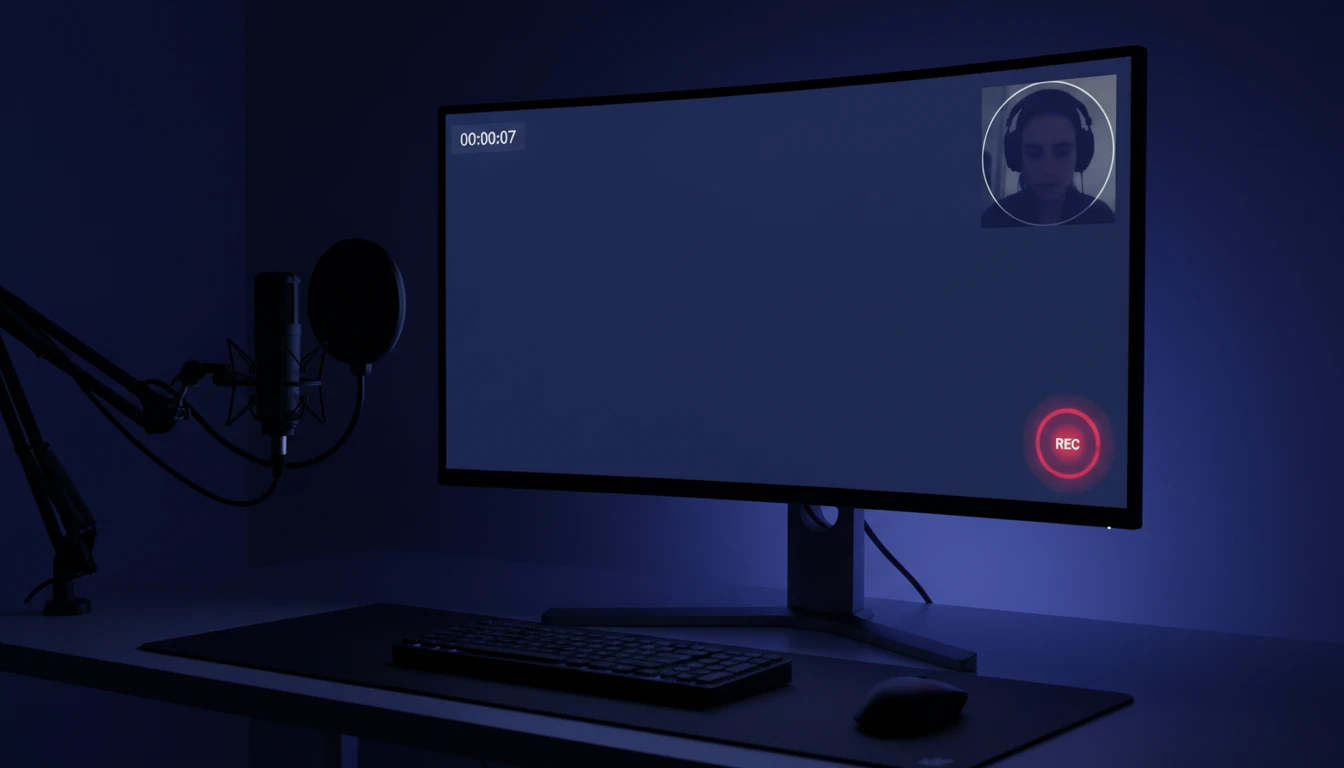
Screen Recorder
Capture your screen or webcam with optional camera overlay, pause support, and auto-save
Recording Controls
Settings
Recording Source
Choose a source, click Start Recording, grant permissions when prompted, then stop to preview and download.
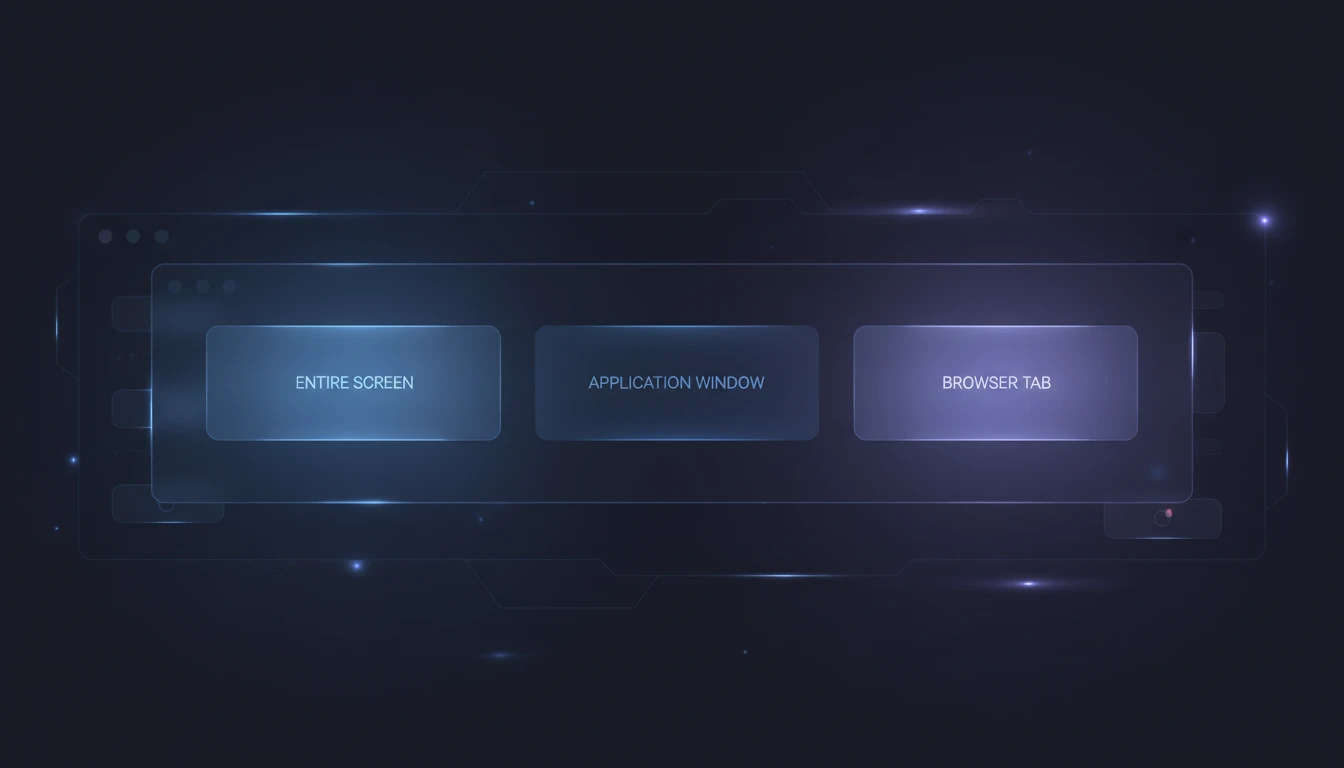
Screen, Window, or Tab Capture
Using getDisplayMedia(), you can choose to record your entire desktop, a specific application window, or only a browser tab — your browser's native sharing dialog gives you full control over what is captured.
Try It Now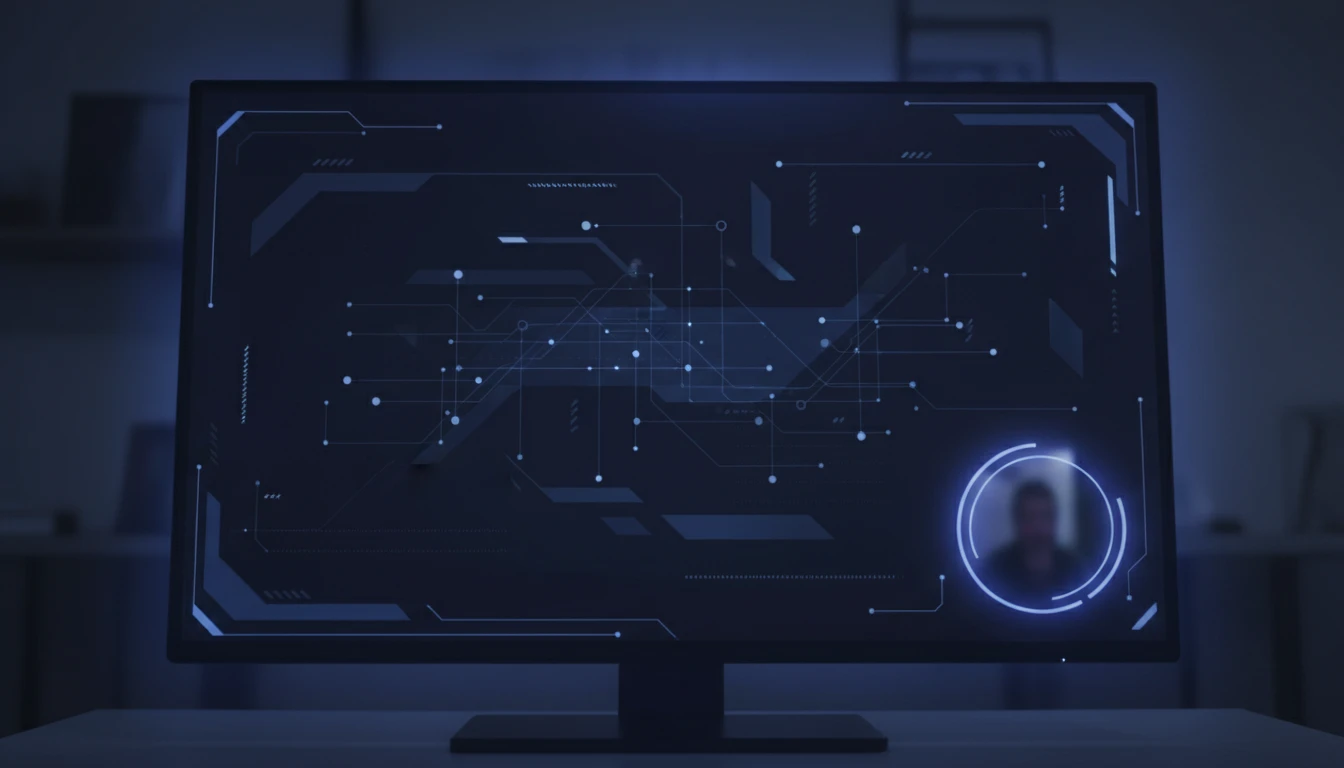
Webcam Picture-in-Picture Overlay
Enable Picture-in-Picture to add your webcam feed in the bottom-right corner of the recording. Choose between a rectangular or circular cutout, and adjust the overlay size from 10% to 40% of the screen width.
Try It Now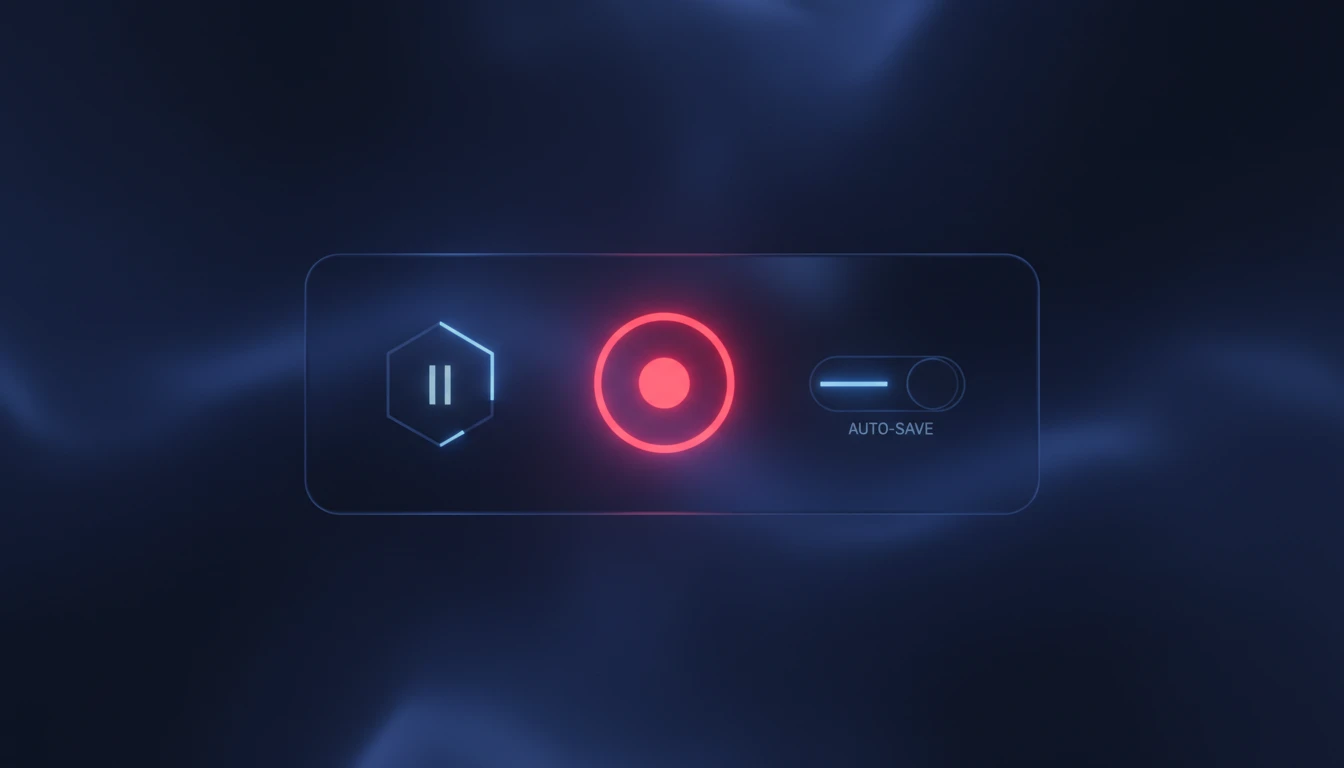
Pause, Resume, and Auto-Save Segments
Pause and resume recording without splitting the file. Enable auto-save to automatically download a segment every 5 minutes, protecting long recordings against unexpected browser crashes or tab closures.
Try It NowRecord your screen in three steps
Choose a source and configure options
Select Screen to capture your desktop or a window, or Camera Only to record your webcam. Optionally enable the PiP webcam overlay and auto-save.
Click Start Recording and grant permissions
Your browser will prompt you to select the screen area to share and allow microphone access. Click Allow and choose what to capture.
Stop and download
Click Stop when finished. Preview the recording in the browser, then click Download to save the file.
Deep Dive
How Screen Recorder Works
Everything runs in the browser using the Screen Capture API and MediaRecorder — no server, no extension, no install.
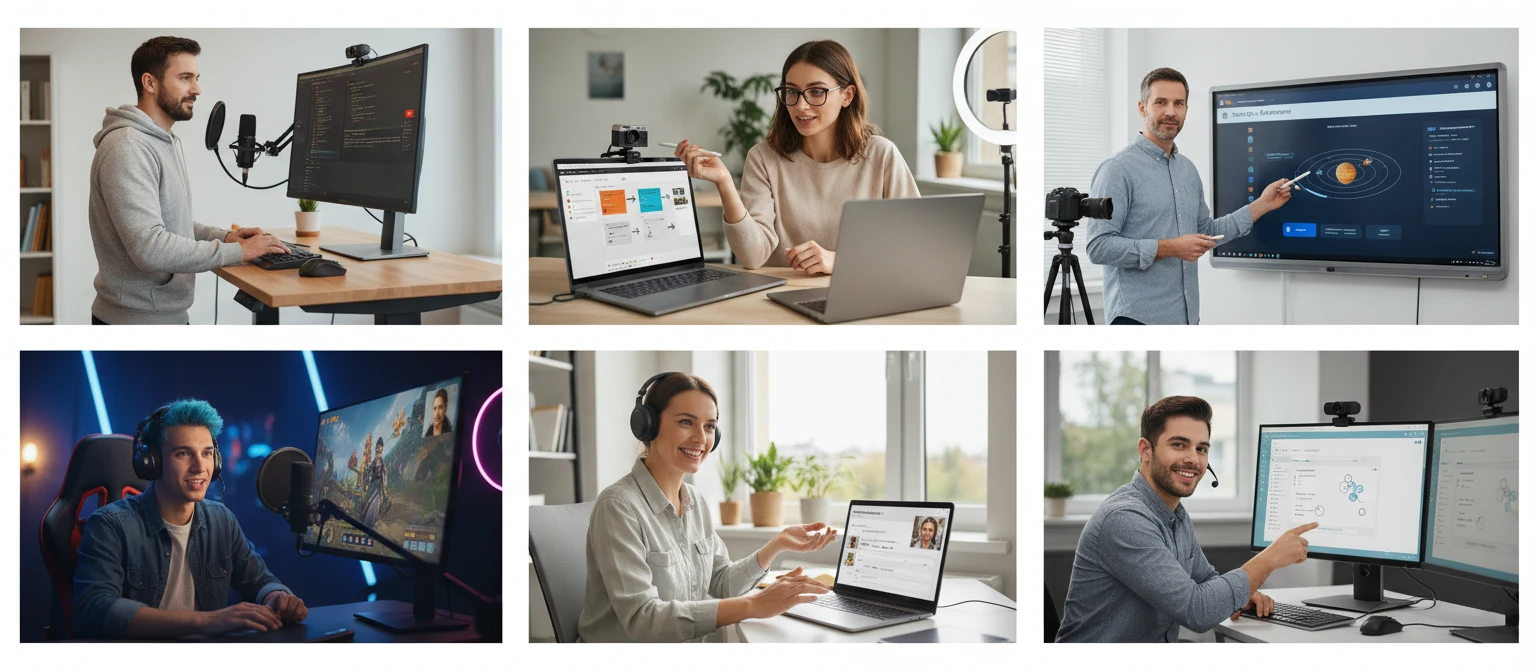
Why Use This Screen Recorder
Screen, Window, or Tab
Choose exactly what to capture from the browser's native sharing dialog — desktop, app, or tab.
Optional Webcam Overlay
Add a rectangle or circle PiP webcam feed in the corner, sized to your preference.
Pause and Resume
Pause at any time and continue into the same file without splitting or re-editing.
Auto-Save Segments
Long recordings are protected by automatic 5-minute segment saves to your device.
Who Uses It
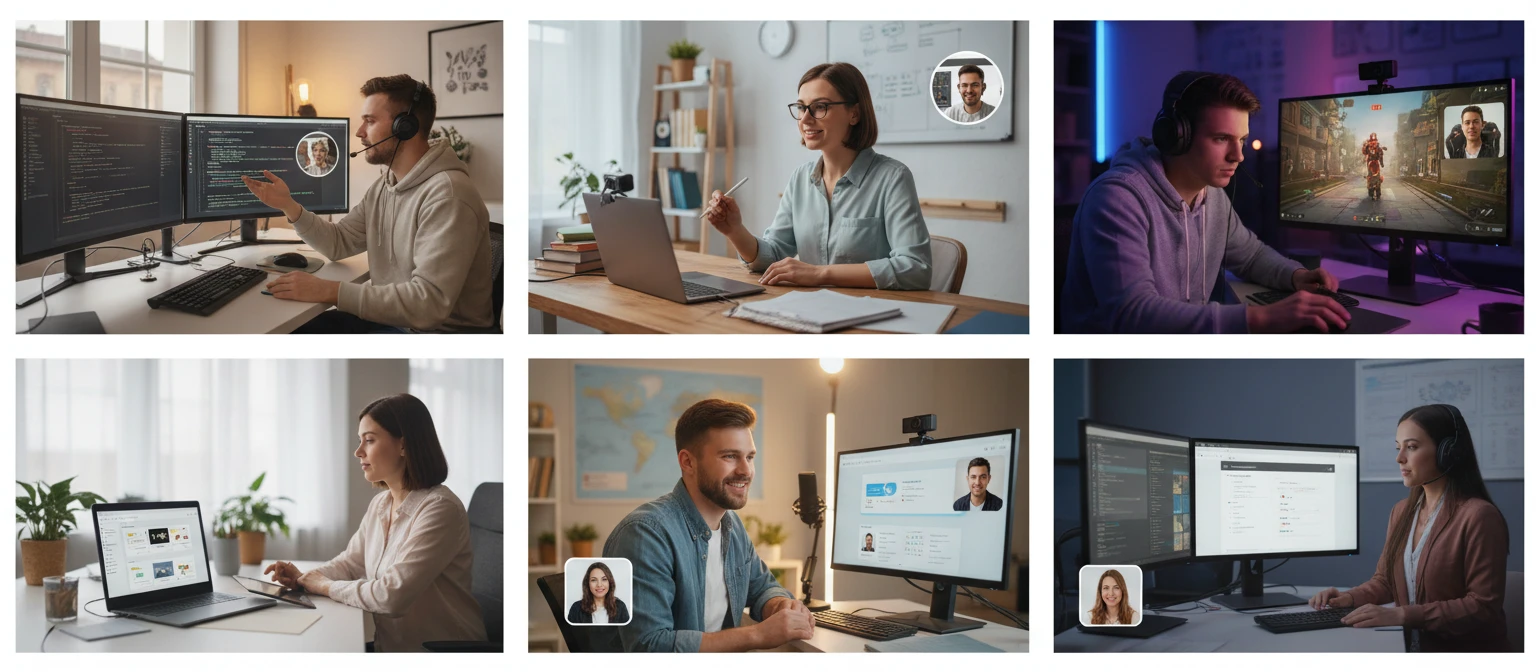
Who Uses Screen Recorder
Developers, educators, content creators, and anyone who needs to capture what is on their screen.
Frequently Asked Questions
Can I record applications outside the browser?
Yes. When you select Screen as the source, your browser opens a sharing dialog where you can choose to capture your entire desktop — including any application running on your computer — not just the browser window.
What can I select to record?
The browser's native screen-share dialog lets you choose between your entire desktop, a specific application window, or just a single browser tab. The available options depend on your operating system and browser version.
Can I record system audio (sounds from my computer)?
The recorder captures microphone audio via getUserMedia(). System audio capture (sounds from apps or video playback) depends on your browser and OS — some browsers include a "Share system audio" checkbox in the screen-share dialog when it is supported.
What does the webcam overlay look like?
When Picture-in-Picture is enabled, your webcam feed appears in the bottom-right corner of the recording. You can choose between a rectangular border or a circular cutout, and adjust the size from 10% to 40% of the screen width using the slider.
Can I pause and resume recording?
Yes. Clicking Pause suspends recording without stopping it, and Resume continues adding to the same file. The final download contains all footage from the session as one continuous video.
What does auto-save do?
When auto-save is enabled, the recorder automatically saves and downloads a new segment every 5 minutes during recording. This protects long sessions against unexpected interruptions such as browser crashes or accidental tab closures.
What format is the downloaded recording?
The recorder saves in WebM format using the VP9 or VP8 codec with Opus audio. WebM plays natively in Chrome, Firefox, and Edge, and can be converted to MP4 using any standard video editor or converter.
Ready to Capture Your Screen?
Open the recorder, choose your source, and start recording — no install, no upload, no waiting.