Move STL Print Geometry into the Flexible PLY Research Format
Convert STL meshes from 3D printing and CAD tools to PLY and unlock per-vertex property support — normals, colors, and custom scalar fields — for use in MeshLab, Open3D, PCL, CloudCompare, and advanced mesh analysis pipelines.
Convert Now
Convert STL to PLY
Upload a STL file and download the converted PLY — all processing happens on the server.
Drop your STL file here
or click to browse
Accepts .stl files

From Print Format to Analysis Format
STL is the geometry-only format of 3D printing — triangles and face normals, nothing more. PLY is the flexible research format with structured per-vertex property fields. Converting STL to PLY opens the mesh to MeshLab's full filter library, Open3D processing algorithms, and any analysis pipeline that benefits from PLY's property structure.
Convert Now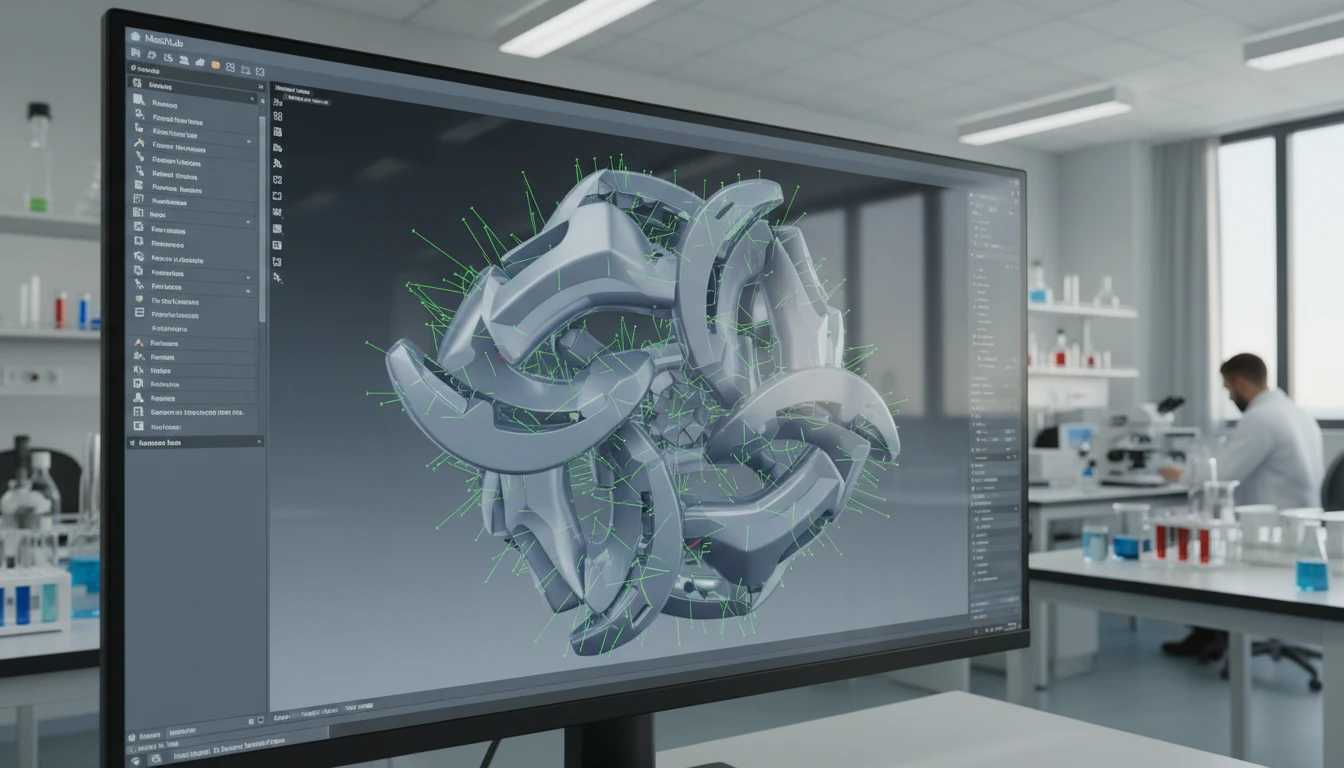
Smooth Vertex Normals Reconstructed
STL stores flat face normals that produce faceted shading on smooth surfaces. The converter reconstructs smooth per-vertex normals during conversion and writes them as PLY normal properties, so the mesh renders and analyzes correctly in MeshLab, Open3D, and any tool that uses normals for rendering or curvature computation.
Convert Now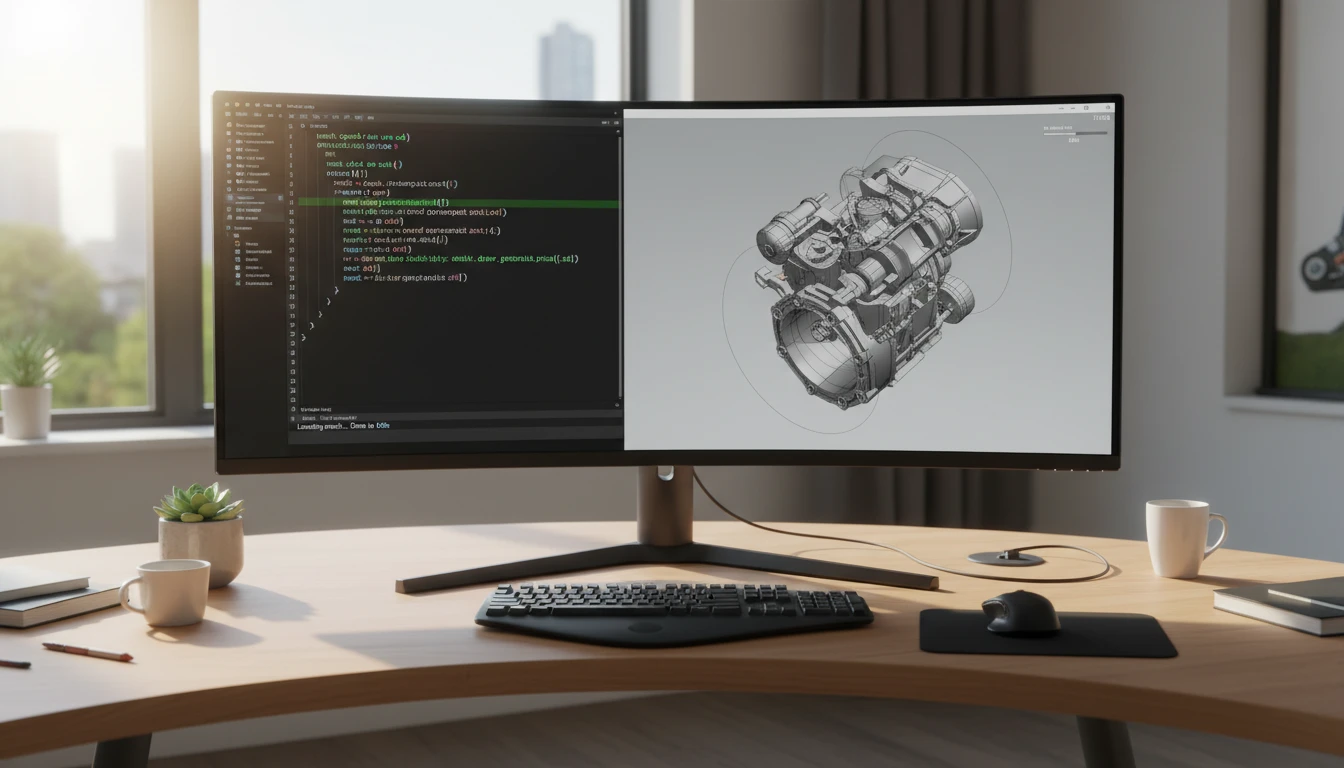
Compact Binary PLY for Large Meshes
Both ASCII and binary STL can produce large files for dense meshes. Binary PLY is more compact and faster to load in Open3D, PCL, and custom geometry pipelines than ASCII STL, making it a practical format for large CAD or FEA geometry in analysis workflows.
Convert NowHow to Convert STL to PLY
Upload Your STL File
Drag and drop an STL file into the upload zone or click to browse. Both ASCII and binary STL files up to 100 MB are supported.
Sign In and Convert
Sign in to start the conversion. The server parses the STL geometry, reconstructs smooth vertex normals, and writes them into a binary PLY file with structured per-vertex properties.
Download the PLY
Once ready, click Download. The binary PLY is immediately usable in MeshLab, Open3D, PCL, CGAL, Blender, CloudCompare, and any other PLY-compatible research or processing tool.
Deep Dive
STL and PLY: Print Format vs. Research Analysis Format

Why Use It
No Software to Install
The conversion runs on the server. No MeshLab batch scripts, local Assimp CLI pipelines, or Python geometry libraries needed. Upload and download directly from your browser.
Smooth Normals Reconstructed
STL flat face normals are replaced with smooth per-vertex normals written as PLY normal properties, fixing faceted shading on curved surfaces and enabling correct curvature analysis.
Compact Binary Output
The converter produces binary PLY — more compact than ASCII STL and faster to parse in Open3D, PCL, and custom pipeline code, especially for large CAD or FEA meshes.
Research and Analysis Ready
PLY is natively read by MeshLab, Open3D, PCL, CloudCompare, and CGAL. The converted file plugs directly into mesh analysis, repair, simplification, and spatial processing workflows.
Who Uses It
Who Converts STL to PLY

Frequently Asked Questions
Are both ASCII and binary STL files supported?
Yes. The converter handles both ASCII STL and binary STL. Binary STL is more compact and the standard output of most slicer and CAD software for large models.
Does the PLY output include smooth vertex normals?
Yes. STL face normals are flat per-face normals that produce faceted shading. The converter reconstructs smooth per-vertex normals from the triangle geometry and writes them as PLY normal properties (nx, ny, nz), fixing rendering on curved surfaces.
Does the PLY output include color data?
STL carries no color data, so the PLY output contains only geometry — vertex positions, face indices, and reconstructed normals. If you need color in the PLY, convert from a color-carrying format like PLY, GLTF, or OBJ instead.
Is the PLY output ASCII or binary?
The converter produces binary PLY output, which is more compact and faster to parse than ASCII PLY. MeshLab, Open3D, PCL, and most research tools read both formats transparently.
What is the maximum STL file size?
The converter supports STL files up to 100 MB. Binary PLY output is typically more compact than ASCII STL for the same geometry, so the output file may be smaller than the input.
Convert Your STL File to PLY Now
Upload your STL mesh and get a binary PLY with smooth normals in seconds. No install, no manual steps.