Bring PLY Scans and Meshes into the Modern Web 3D Pipeline
Convert Polygon File Format (PLY) meshes and point cloud captures to GLTF and make them accessible in web viewers, AR experiences, and any pipeline that speaks the modern glTF standard.
Convert Now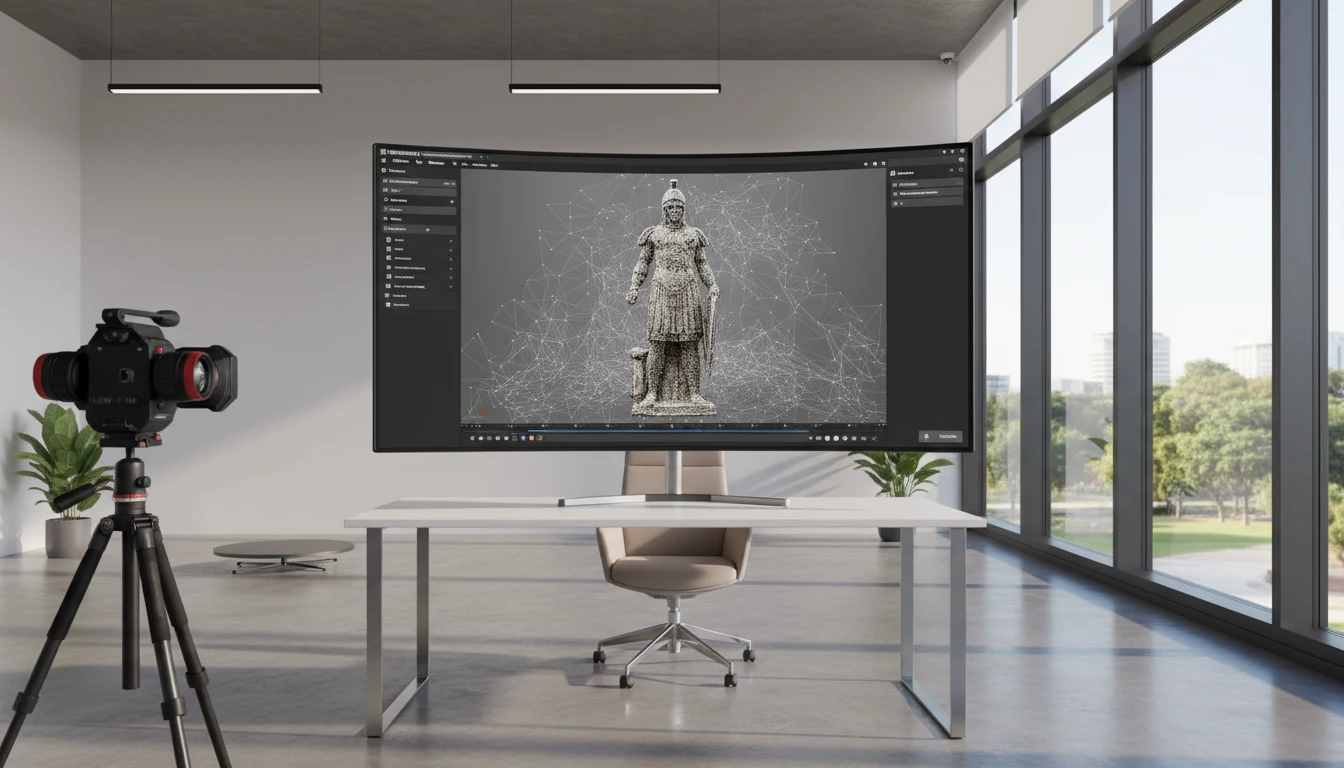
Convert PLY to GLTF
Upload a PLY file and download the converted GLTF — all processing happens on the server.
Drop your PLY file here
or click to browse
Accepts .ply files

From Scan Format to Web Standard
PLY is the go-to output format for 3D scanners, photogrammetry pipelines, and LiDAR capture. GLTF is the web-native standard. Converting PLY to GLTF makes scan data viewable in any browser and loadable in every modern 3D engine without specialist software.
Convert Now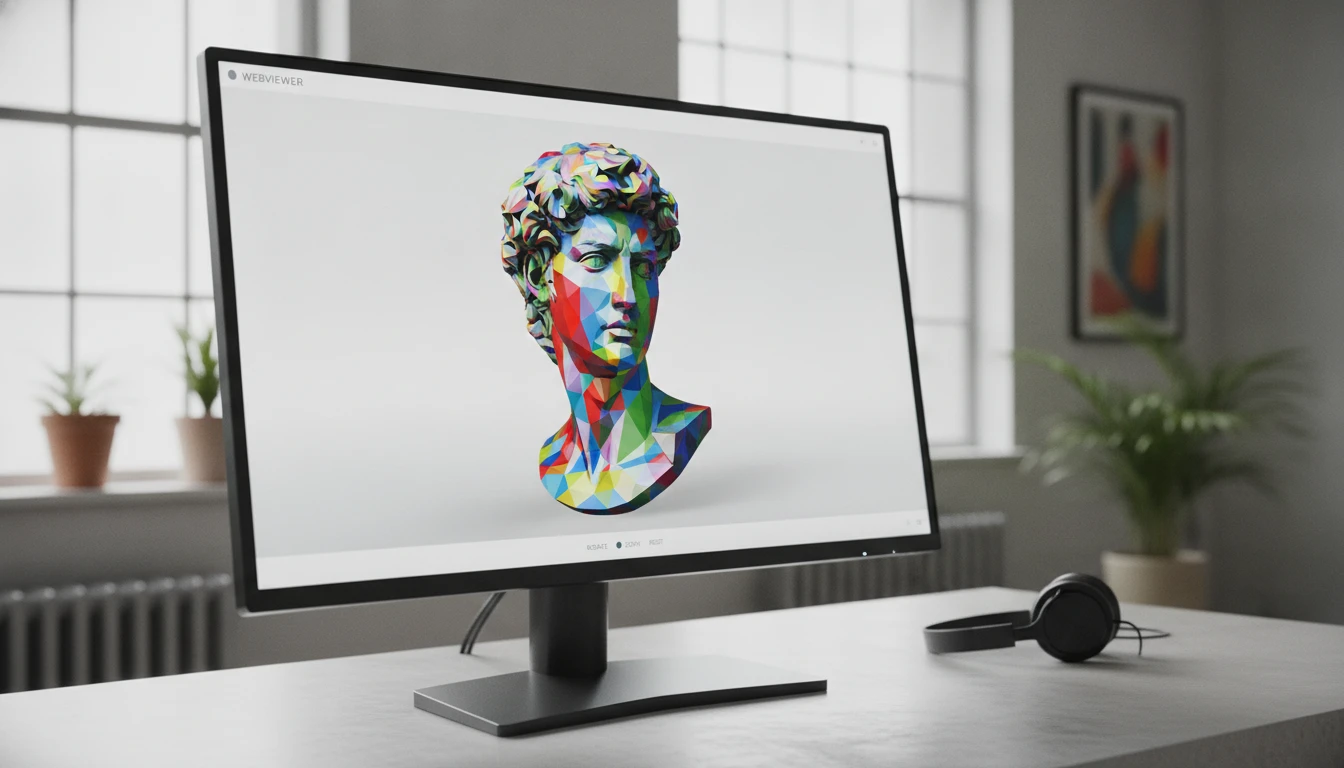
Vertex Colors and Normals Preserved
PLY files commonly carry per-vertex RGB color data from photogrammetry and scan pipelines. The converter reads these attributes and maps them to GLTF vertex color and normal properties, preserving the visual and geometric data from your original capture.
Convert Now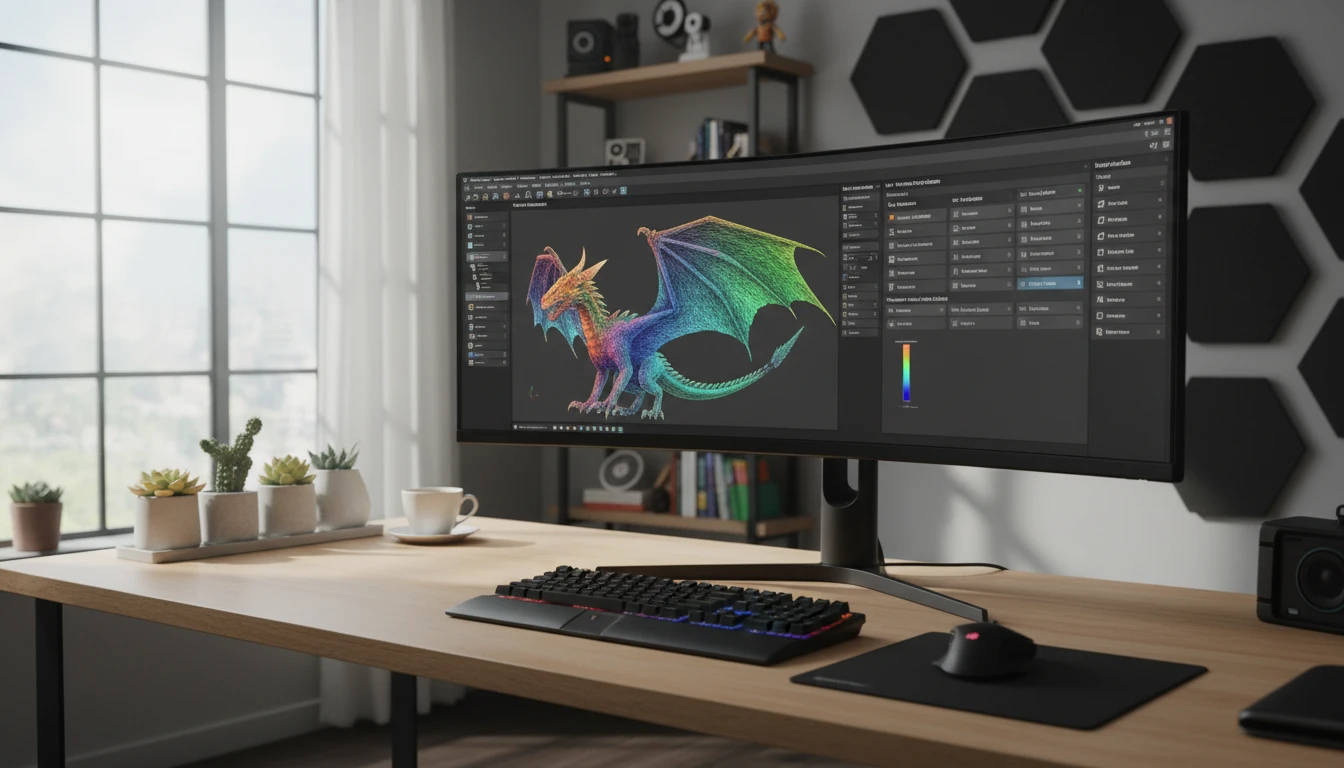
Full glTF Ecosystem Access
Once in GLTF format, apply Draco geometry compression, run the Khronos glTF Validator, optimize with glTF-Transform, and deploy to any Three.js, Babylon.js, or model-viewer application. Open the door to AR Quick Look on iOS and Scene Viewer on Android.
Convert NowHow to Convert PLY to GLTF
Upload Your PLY File
Drag and drop a PLY file into the upload zone or click to browse. Both ASCII and binary PLY files up to 100 MB are supported.
Sign In and Convert
Sign in to start the conversion. The server parses the PLY geometry, vertex colors, and normals, then writes them into a GLTF document with an accompanying BIN buffer.
Download the GLTF
Once ready, click Download. The GLTF is immediately usable in Three.js, Babylon.js, model-viewer, Unity, Unreal, or any further glTF processing tool.
Deep Dive
PLY and GLTF: Scan Format vs. Web Standard

Why Use It
No Software to Install
The conversion runs on the server. No MeshLab, Blender scripts, or local Assimp CLI pipelines needed. Upload and download directly from your browser.
Vertex Colors and Normals
Per-vertex RGB colors and normals stored in PLY files are extracted and written as GLTF vertex attributes, keeping photogrammetry and scan appearance intact.
Web Ready Instantly
The output GLTF loads directly in Three.js, Babylon.js, model-viewer, and any WebXR runtime without additional conversion or plugin.
Scan to Production Pipeline
PLY is the native output of most photogrammetry and 3D scanning tools. Converting to GLTF bridges the gap between raw capture and production web or AR deployment.
Who Uses It
Who Converts PLY to GLTF

Frequently Asked Questions
What is the PLY file format?
PLY (Polygon File Format) is a flexible format developed at Stanford for storing 3D mesh and point cloud data. It supports ASCII and binary encoding and can carry per-vertex properties such as position, normal, RGB color, confidence, and custom fields. It is widely used in 3D scanning, photogrammetry, and computational research.
Does the GLTF output include vertex colors from the PLY file?
Yes. If the PLY file contains per-vertex RGB or RGBA color properties, they are read and written as GLTF vertex color attributes, preserving the appearance from your original scan or capture.
Are both ASCII and binary PLY files supported?
Yes. The converter handles both ASCII PLY and binary PLY (little-endian and big-endian). Binary PLY files are more compact and common for large scan datasets.
Can I view the resulting GLTF in a browser without installing anything?
Yes. Load the GLTF in any Three.js or Babylon.js application, open it with model-viewer, or use the Khronos glTF Sample Viewer or similar online tools.
What is the maximum PLY file size?
The converter supports PLY files up to 100 MB. Dense photogrammetry meshes with millions of vertices produce large GLTF and BIN outputs.
Convert Your PLY File to GLTF Now
Upload your PLY scan or mesh and get a web-ready GLTF in seconds. No install, no manual steps.