Pull the Audio Track from Any MOV Video and Download it as WAV
Drop a MOV file recorded on iPhone, a DSLR, or QuickTime Player and extract the audio track as WAV — entirely in your browser, no upload needed.
Extract Audio Now
Audio Extractor
Drop a video file, extract the audio track, and download it. Works with MP4, MOV, WebM, MKV and more.
Drop a video file to get started
MP4, MOV, WebM, MKV, AVI
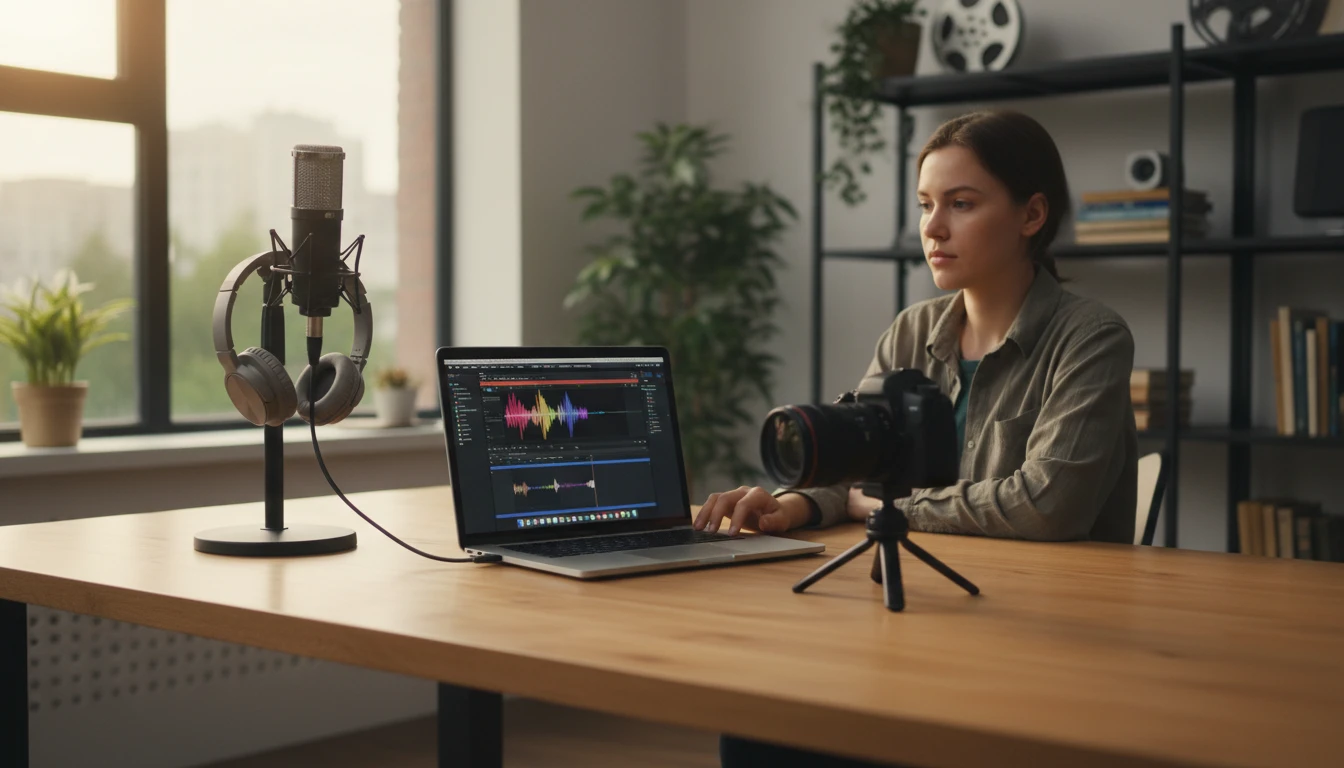
Extract iPhone and DSLR Audio for Professional Editing
iPhones record video as MOV by default. DSLRs and mirrorless cameras from Canon, Nikon, and Sony save clips in MOV containers. When the audio track inside those files needs to go into a DAW, podcast editor, or broadcast suite, WAV is the universal import format. Extract the audio here and open the resulting WAV directly in Pro Tools, Logic Pro, Adobe Audition, or any editor.
Extract Now
Grab Audio from QuickTime Screen Recordings and Lectures
Screen recorders like QuickTime Player on macOS save output as MOV. Lecture recordings, webinar captures, and tutorial videos often arrive as MOV files. Extracting the audio track as WAV gives you a file you can load into any editor, apply noise reduction, normalize levels, and export in the format your platform requires.
Try It Now
Runs Entirely in Your Browser
Audio extraction happens in your browser using the Web Audio API. The MOV file never leaves your device. Drop it in, click Extract, and the WAV downloads directly to your computer. There is no file size limit from a server, and no waiting for an upload to complete.
See It in ActionExtract audio from MOV in three steps
Upload your MOV file
Drop your MOV video onto the player or click Browse. iPhone recordings, DSLR clips, and QuickTime screen recordings all load immediately in the preview player.
Extract the audio
Click "Extract Audio". The browser decodes the MOV using the Web Audio API and separates the audio track. A progress bar shows the status.
Preview and download
Play the extracted audio to confirm it, then click Download WAV. The file saves to your device with the original filename and a .wav extension.
Deep Dive
MOV and WAV: What Each Format Is and When to Use Them
MOV is Apple's QuickTime video container. WAV is an uncompressed audio format. Here is what you need to know about both.
Extraction runs in your browser. The MOV file is never uploaded to a server.
Why Use This Extractor
Works with Any MOV Source
iPhone recordings, DSLR clips, QuickTime screen recordings, Final Cut Pro exports. If the browser can decode it, the extractor handles it.
Browser-Based, No Upload
Extraction happens entirely in your browser using the Web Audio API. The MOV file never leaves your device.
Uncompressed WAV Output
The output is a 16-bit PCM WAV at the original sample rate — accepted by every DAW, audio editor, and broadcast tool.
Fast Extraction
Audio is decoded and encoded locally in the browser, typically in a few seconds regardless of video length.
Who Uses It
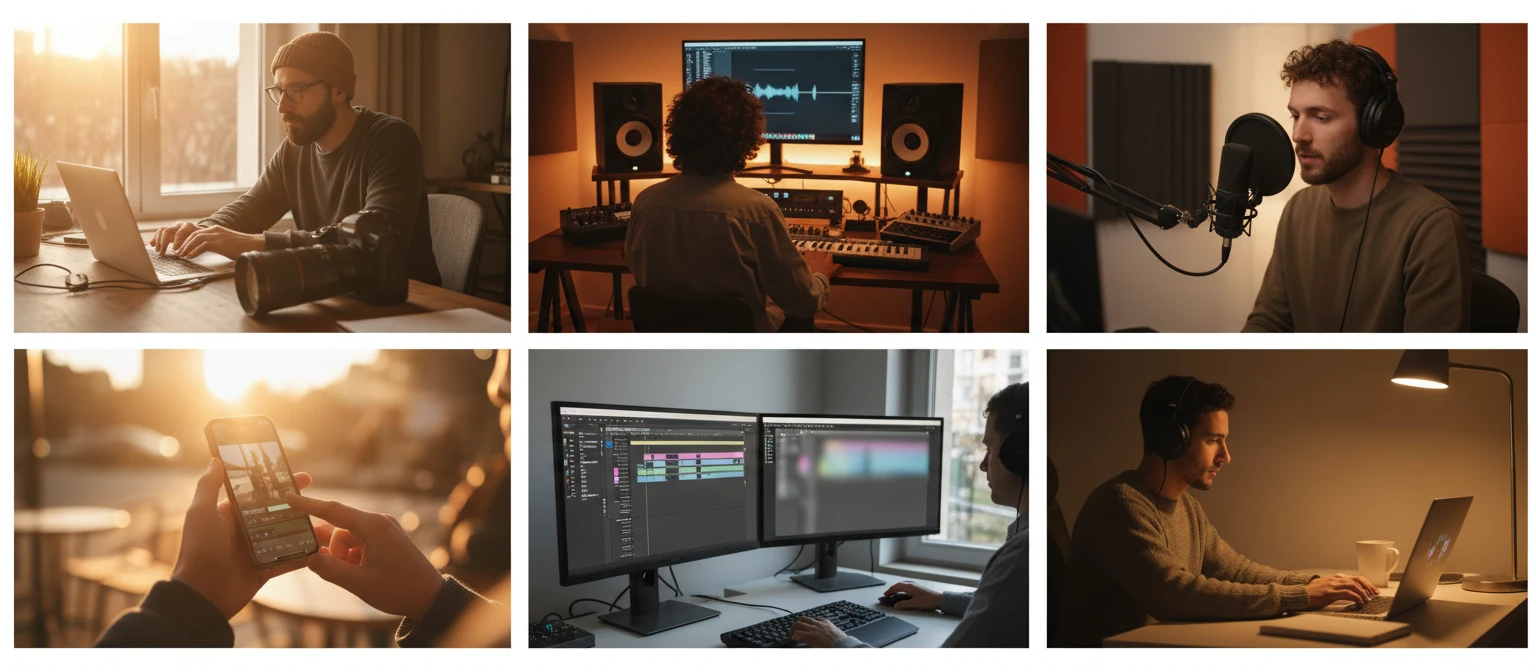
Who Extracts MOV to WAV
From filmmakers pulling production audio to podcasters extracting interview recordings, these are the most common workflows.

Runs entirely in your browser. Files never leave your device.
Frequently Asked Questions
What happens to the video when I convert MOV to WAV?
The video track is discarded. The browser extracts only the audio stream from the MOV container and encodes it as a WAV file. The original MOV file is not modified.
Does the file get uploaded to a server?
No. Extraction runs entirely in your browser using the Web Audio API. The MOV file is read from your local disk into browser memory and never sent to any server.
Will the WAV audio be the same quality as the original MOV?
The WAV output is 16-bit PCM at the sample rate of the decoded audio. If the audio inside the MOV is AAC (the default for iPhone recordings), the browser decodes AAC to PCM — the WAV is uncompressed but the quality ceiling is that of the original AAC. If the MOV contains PCM audio (such as from ProRes recordings on iPhone 15 Pro), the output is a bit-accurate copy.
My MOV was recorded on an iPhone. Will it work?
Yes. iPhones record MOV with AAC audio, which all modern browsers can decode natively. Drop the file in and click Extract Audio.
Is there a file size limit?
There is no server-imposed limit since everything runs in your browser. Very large files (several GB) may push against available browser memory on lower-powered devices. For typical video clips up to a few hundred MB, extraction works without issue.
Can I convert other video formats like MP4 or MKV to WAV?
This page is focused on MOV files. Use the MP4 to WAV page for MP4 files, or the general Audio Extractor which accepts any video format your browser can decode.
Ready to Extract Audio from Your MOV?
Drop your MOV file above and download the WAV audio track in seconds.