Get the Right Audio Format for Every Device, App, and Platform
Upload any audio file, choose your output format, and download. MP3, WAV, FLAC, AAC, OGG, ALAC, WMA, Opus, and M4A all supported.
Convert Now
Audio Format Converter
Upload any audio file, choose an output format, and download the converted result. Supports MP3, WAV, FLAC, AAC, OGG, ALAC, WMA, Opus and M4A.
Drop your audio file here
or click to browse

Nine Formats, Any Combination
MP3, WAV, FLAC, AAC, OGG, M4A, WMA, Opus and ALAC are all supported as both input and output. Convert between lossy, lossless, and uncompressed formats in a single step. There are no fixed pairs — convert WAV to OGG, FLAC to AAC, WMA to M4A, or any other combination.
Convert Now
FFmpeg Under the Hood
Every conversion runs through FFmpeg on dedicated servers. The same engine used by YouTube, VLC, and professional broadcast tools. Sample rates, channel mapping, and metadata are preserved where the target format supports them.
Try It Now
From Archive to Delivery in One Step
Store your masters as lossless FLAC or WAV and convert to any delivery format on demand. MP3 for podcast hosts, AAC for Apple devices, OGG for game engines, Opus for web apps. No quality loss beyond what the target format introduces.
See It in ActionThree steps to convert any audio file
Upload your audio file
Drop any audio file onto the tool or click to browse. MP3, WAV, FLAC, AAC, OGG, M4A, WMA, Opus and ALAC are all accepted.
Choose your output format
Select the target format from the format picker. Then click Convert. The file is uploaded and processed by FFmpeg on our servers.
Download the converted file
Preview the output in the browser player, then download. The original filename is preserved with the new extension.
Deep Dive
Choosing the Right Audio Format
Lossy, lossless, compressed, uncompressed. Here is what each category means and when to use it.
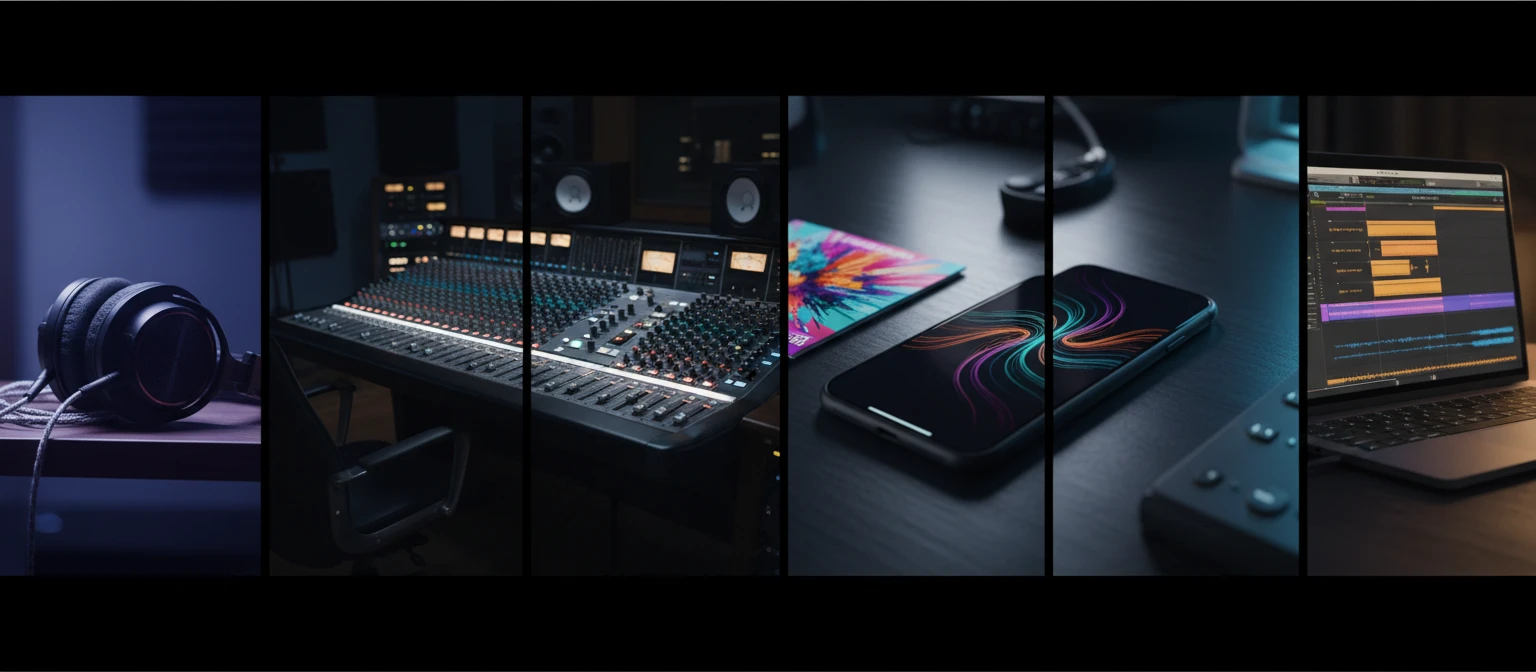
Format choice affects compatibility as much as quality. Always check what your destination platform or device expects.
Why Use This Converter
Nine Formats Supported
MP3, WAV, FLAC, AAC, OGG, M4A, WMA, Opus and ALAC as both input and output. Any combination in a single step.
FFmpeg-Powered
Industry-standard FFmpeg handles every conversion. Accurate sample rates and channel mapping preserved.
Fast Processing
Most files convert in under 30 seconds on dedicated servers. Larger FLAC or WAV files may take a little longer.
Simple Workflow
Upload, pick a format, download. The format picker shows all available targets for your source file.
Who Uses It
Who Uses the Audio Converter
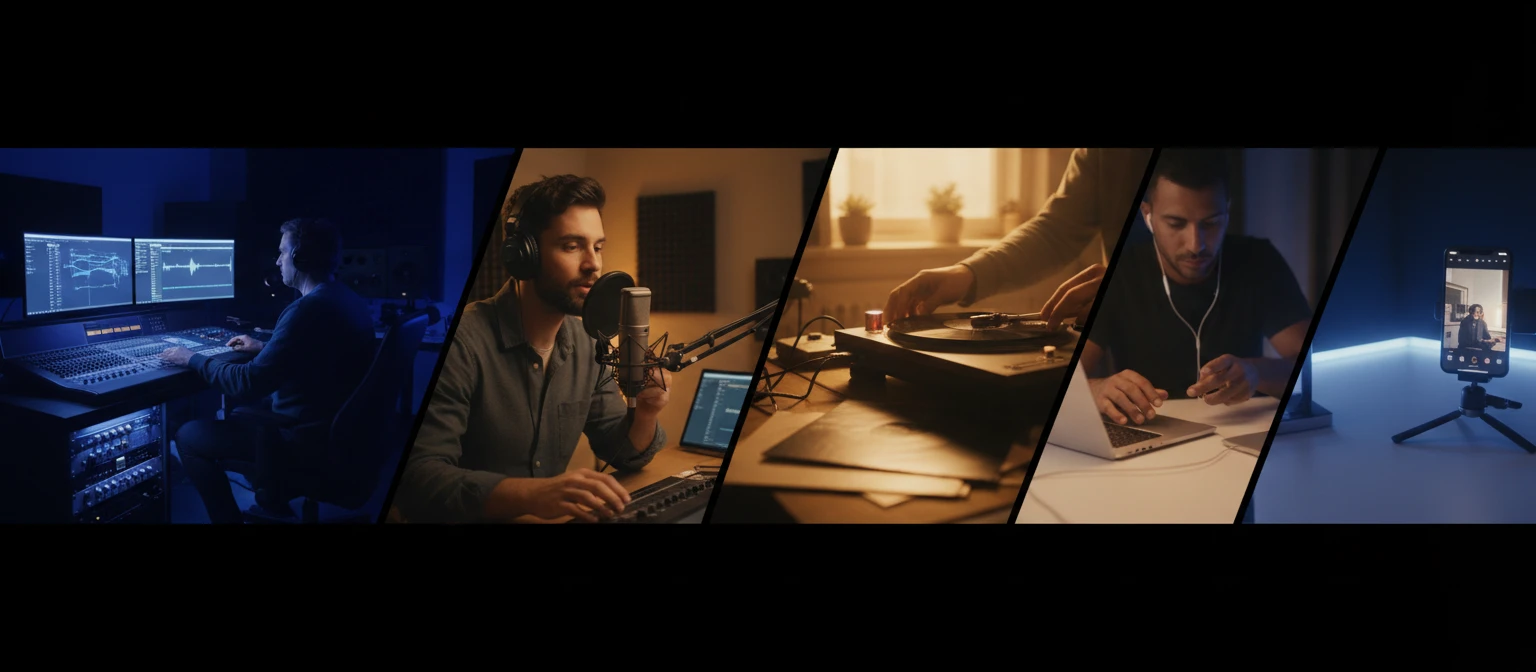
From archiving vinyl rips to delivering podcast episodes and integrating audio into games, these are the most common workflows.
Converts using FFmpeg on dedicated servers.
Frequently Asked Questions
What audio formats are supported?
Both input and output support MP3, WAV, FLAC, AAC, OGG, M4A, WMA, Opus and ALAC. You can convert any supported format to any other supported format in a single step.
Will converting between lossy formats reduce quality?
Yes. Converting from one lossy format to another (for example MP3 to AAC) involves a decode-then-encode step. Some additional quality is lost in the re-encode. At high source bitrates (192 kbps or above) the difference is rarely audible, but for critical listening use a lossless source whenever possible.
Does converting to FLAC or WAV restore quality lost in an MP3?
No. Converting a lossy file to a lossless format wraps the decoded audio in a lossless container but does not restore data that was discarded during the original lossy encode. The file will be larger but will not sound better than the MP3 source.
What is the maximum file size?
The upload limit is 100 MB per file. Most typical audio tracks are well within this limit. Long recordings such as multi-hour podcasts or extended mixes may need to be split before conversion.
How long does conversion take?
Most files convert in under 30 seconds. Longer recordings or high-resolution lossless files (24-bit 96 kHz WAV) may take up to a few minutes depending on server load.
What is the difference between FLAC and ALAC?
Both are lossless formats that store audio without any quality loss. FLAC (Free Lossless Audio Codec) is open-source and universally supported on Linux, Roon, Plex, Foobar2000, and every non-Apple platform. ALAC (Apple Lossless Audio Codec) is Apple's lossless format stored in an .m4a container, and plays natively on iPhone, iPad, Mac, Logic Pro, and AirPlay without any third-party codec. Converting between them produces no quality change.
Ready to Convert Your Audio?
Upload your file above and get the converted result in seconds.