Bring Your FLAC Collection to iPhone and Apple Devices Without Losing a Single Sample
Upload your FLAC file and get an ALAC that plays natively in the iPhone Music app, iTunes, Logic Pro, and AirPlay — a true lossless-to-lossless conversion with zero quality change, no third-party app required on any Apple device.
Convert Now
Audio Format Converter
Upload any audio file, choose an output format, and download the converted result. Supports MP3, WAV, FLAC, AAC, OGG, ALAC, WMA, Opus and M4A.
Drop your audio file here
or click to browse
Play Your CD Rip FLAC Library on iPhone Without a Third-Party App
The iPhone Music app does not support FLAC. Playing FLAC on iPhone requires installing VLC, Flacbox, or another third-party player — and even then the files do not integrate with the native Music library, Siri, CarPlay, or AirPlay. ALAC plays natively in the iPhone Music app, syncs through iTunes or Finder like any Apple audio, and works with every Apple audio feature. Converting FLAC CD rips to ALAC delivers true lossless audio in the iPhone's own player with no extra software.
Convert Now
Import Your FLAC Masters into Logic Pro as Native Lossless Audio
Logic Pro does not import FLAC. Attempting to open a FLAC file in a Logic session results in an unsupported format error. ALAC, however, is a native Logic Pro format — it imports directly, appears in the browser, and can be used as a lossless audio clip in sessions. Music producers, mixing engineers, and podcasters who maintain FLAC master recordings can convert to ALAC for seamless Logic Pro integration without any quality change.
Try It Now
Stream Lossless FLAC-Sourced Audio to HomePod and AirPlay Speakers
AirPlay 2 supports lossless ALAC streaming from the Mac Music app to HomePod, HomePod mini, and any AirPlay 2 speaker. FLAC files stored on a Mac do not stream as lossless through AirPlay — they require a third-party server or conversion. Converting FLAC to ALAC and importing into the Mac Music library enables native lossless AirPlay streaming to every speaker in the home without any additional software or server.
See It in ActionThree steps to native Apple lossless from your FLAC
Upload your FLAC file
Drop your FLAC file onto the tool or click to browse. CD rips, studio masters, audiophile downloads, and any FLAC audio file are all accepted.
Convert to ALAC
Click "Convert". FFmpeg decodes the FLAC losslessly to PCM and re-encodes it using the Apple Lossless codec — zero quality change between two lossless formats.
Download your ALAC file
Download your .m4a (ALAC) file ready to import into iTunes or Apple Music, sync to iPhone, use in Logic Pro, or stream via AirPlay.
Deep Dive
FLAC to ALAC: Two Lossless Codecs, One Apple-Native Result
FLAC and ALAC are both lossless codecs that store audio without any quality loss. Converting between them produces no quality change — only ecosystem compatibility changes. FLAC is the universal open standard; ALAC is the Apple-native lossless format.
Our converter uses FFmpeg to decode FLAC losslessly and re-encode using the Apple Lossless codec, producing a standard .m4a (ALAC) file.
Why Convert FLAC to ALAC
Native on Every Apple Device
iPhone, iPad, Mac, Apple TV, HomePod, and AirPlay all play ALAC natively in the Music app. No third-party player or codec install required.
Zero Quality Change
FLAC and ALAC are both lossless. Converting between them is a pure codec swap — every sample value is identical to the original FLAC recording.
Native in Logic Pro and GarageBand
Logic Pro and GarageBand import ALAC as a native lossless audio format, while FLAC triggers an unsupported format error.
Fast Conversion
Most FLAC files convert to ALAC in under 30 seconds on dedicated FFmpeg servers.
Who Uses It
Who Converts FLAC to ALAC
Audiophiles bringing CD rip FLAC collections to iPhone, music producers importing FLAC masters into Logic Pro, AirPlay listeners streaming lossless to HomePod, Apple Music subscribers maintaining a lossless local library, and anyone who wants lossless audio in the native iPhone Music app without a third-party player.
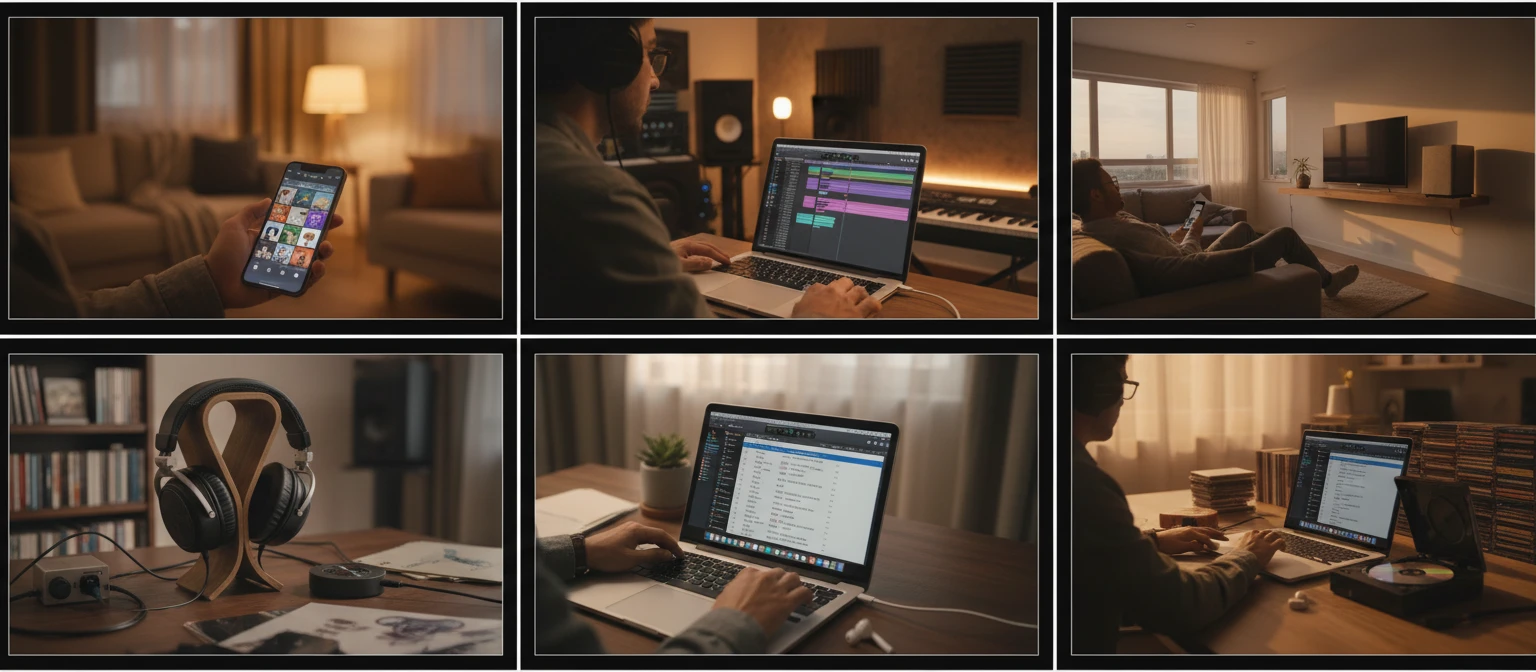
Converts using FFmpeg on dedicated servers.
Frequently Asked Questions
Does converting FLAC to ALAC change the audio quality?
No. Both FLAC and ALAC are lossless codecs. Converting between them is a pure codec swap — FFmpeg decodes the FLAC losslessly to PCM and re-encodes it using the Apple Lossless algorithm. Every sample value in the ALAC is identical to the original FLAC. Converting ALAC back to FLAC would produce a bit-for-bit identical file to the original.
Why does iPhone not play FLAC in the native Music app?
Apple's audio stack (CoreAudio) is built around the MPEG-4 container and its own codec ecosystem. The iPhone Music app, iTunes, and Apple Music recognize the .m4a container for both AAC (lossy) and ALAC (lossless), but not the FLAC container format. ALAC delivers the same lossless audio in an .m4a container that the Music app and every Apple audio framework natively supports.
Will the ALAC file sync to my iPhone through iTunes or Finder?
Yes. ALAC files are standard .m4a files and are fully recognized by iTunes on Windows and Finder on macOS for iPhone sync. They appear in the Music app as lossless tracks and work with all native iOS audio features including CarPlay, Siri, AirPlay, and the Apple Watch sync.
Is ALAC supported in Logic Pro?
Yes. Logic Pro imports ALAC (.m4a) as a native lossless audio format. FLAC is not supported by Logic Pro and triggers an unsupported format error on import. ALAC files from a FLAC conversion import directly into Logic sessions without any additional step.
Should I keep the FLAC after converting to ALAC?
Yes. Keep the FLAC as your long-term archive master. It is the universal lossless standard recognized by Roon, Plex, Foobar2000, Audacity, and every non-Apple audio tool. The ALAC is the Apple-compatible derivative for iPhone, iTunes, and Logic Pro. ALAC can always be regenerated from the FLAC with zero quality loss.
Is there a file size limit?
The upload limit is 100 MB per file. Most FLAC audio tracks are well within this limit.
Ready to Convert Your FLAC to ALAC?
Upload your lossless FLAC above and get an Apple-native ALAC in seconds.