Open Your FLAC Archive in Any DAW, Sampler, or Broadcast Tool
Upload your FLAC file and get a WAV that imports without friction into every DAW, hardware sampler, mastering chain, and broadcast system — decoded directly from a lossless source with no quality change whatsoever.
Convert Now
Audio Format Converter
Upload any audio file, choose an output format, and download the converted result. Supports MP3, WAV, FLAC, AAC, OGG, ALAC, WMA, Opus and M4A.
Drop your audio file here
or click to browse
Import FLAC-Sourced Audio Directly into Pro Tools, Logic, or Ableton
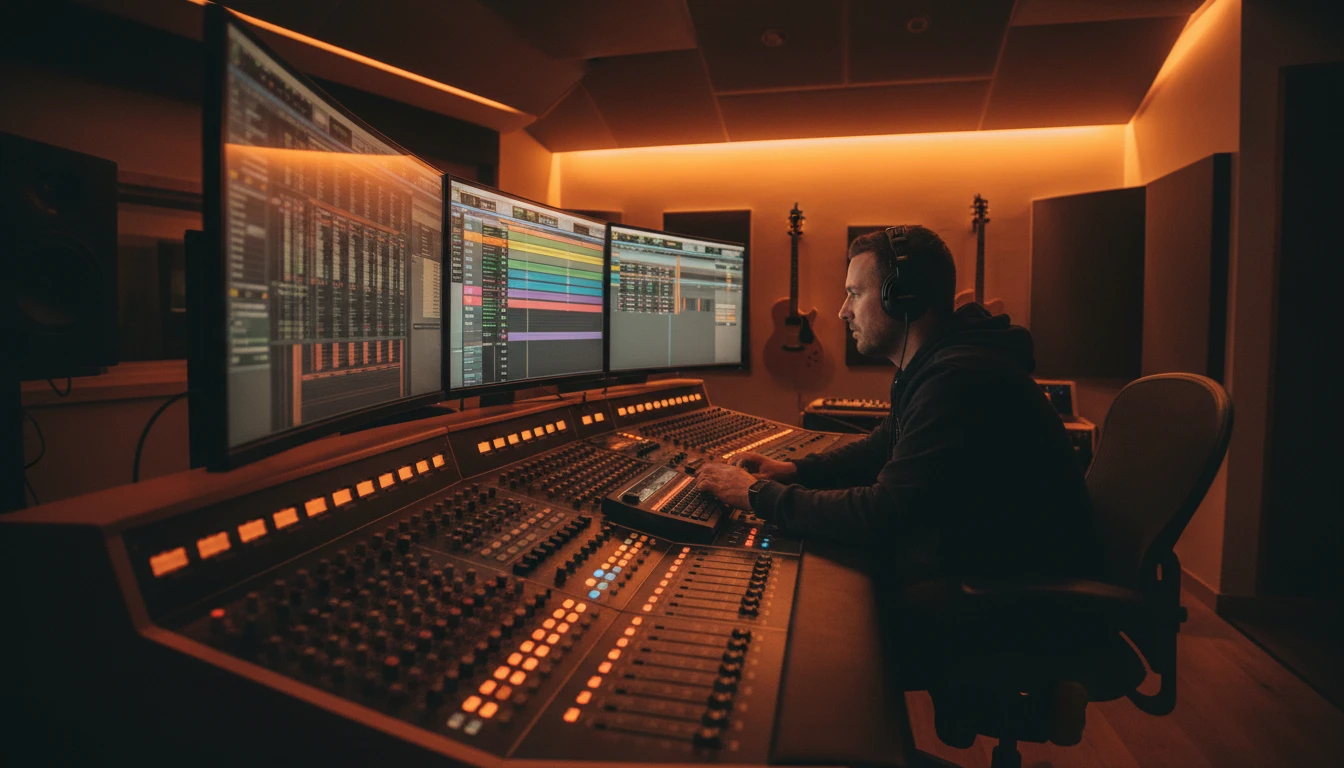
Pro Tools requires WAV or AIFF for its session files and does not recognize FLAC as a native audio clip format. Logic Pro and Ableton Live both import WAV without any conversion step, while FLAC requires an extra bounce. Audio engineers, producers, and mixers who maintain FLAC archives can convert to WAV and drop the file directly into any session without format warnings or re-links.
Convert Now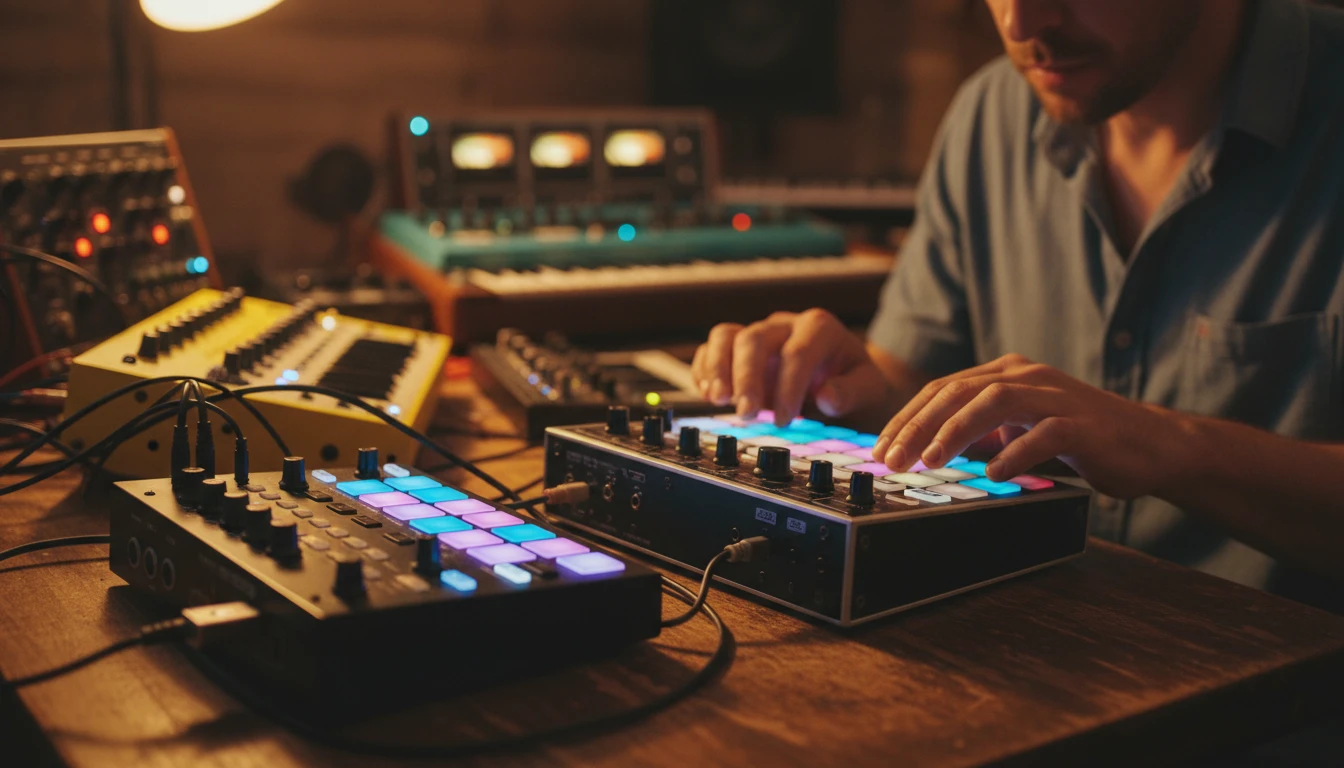
Load FLAC Music Into Hardware Samplers That Only Read WAV
Hardware samplers including the Akai MPC, Roland SP-404, Native Instruments Maschine, and most drum machines read WAV from SD cards or USB drives but do not support FLAC. Musicians and producers who record and archive samples in FLAC can convert to WAV and transfer directly to the sampler storage — maintaining the lossless quality of the original recording in the uncompressed format the hardware expects.
Try It Now
Deliver WAV Stems and Masters to Mastering Engineers
Mastering engineers, sync licensing platforms, and broadcast delivery systems typically specify WAV at specific bit depths and sample rates. Mixing engineers who export sessions to FLAC for archival purposes can convert to WAV for client delivery. Both formats carry the exact same audio data — the WAV is simply the uncompressed container that every professional tool accepts unconditionally.
See It in ActionThree steps to a universally compatible WAV from a lossless source
Upload your FLAC file
Drop your FLAC file onto the tool or click to browse. CD rips, studio exports, archival recordings, and sample library masters are all accepted.
Convert to WAV
Click "Convert". FFmpeg decodes the FLAC losslessly to PCM and stores it in a WAV container — no encoding step, no quality change, just decompression.
Download your WAV file
Download your .wav file ready to import into any DAW, load onto a hardware sampler, send to a mastering engineer, or deliver to a broadcast system.
Deep Dive
FLAC to WAV: Two Lossless Formats, One Universal Destination
FLAC and WAV are both lossless. Converting between them introduces no quality change. The difference is compatibility: FLAC is the compact archive format; WAV is the uncompressed format every professional tool unconditionally accepts.
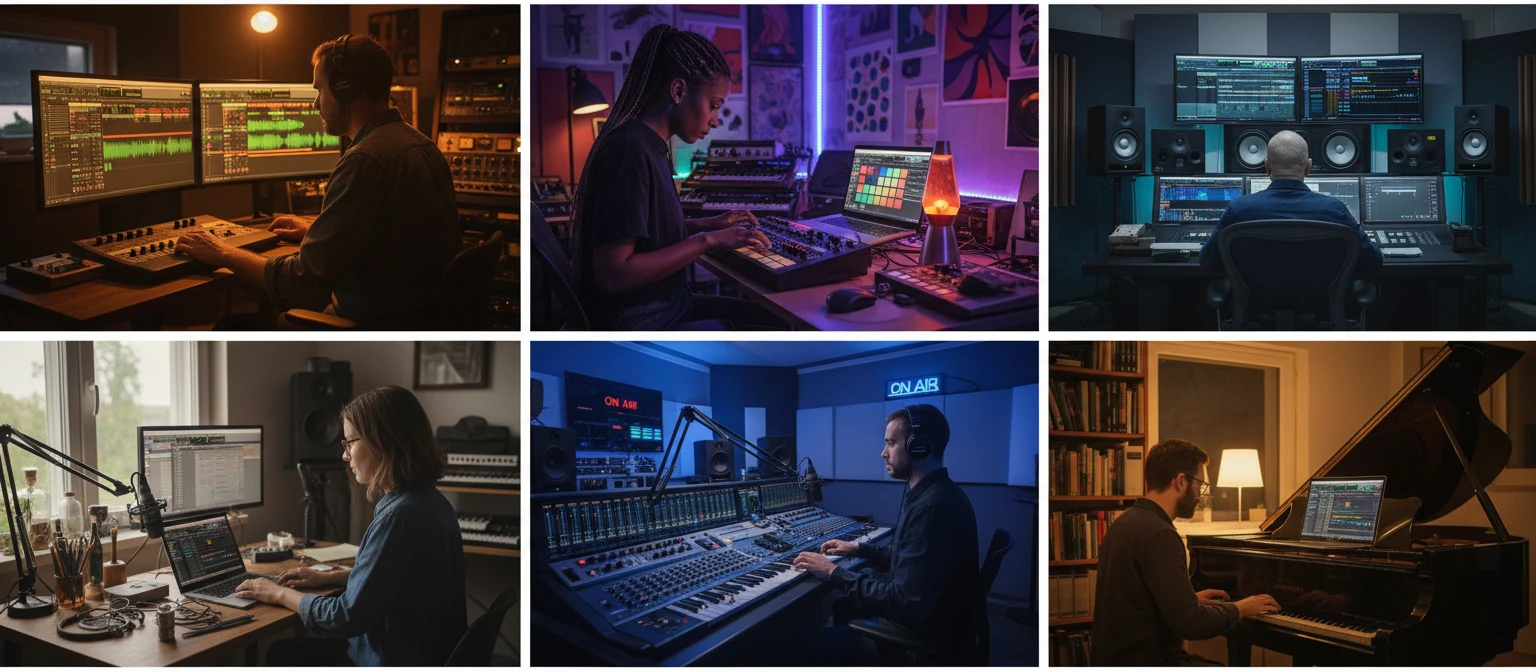
Our converter uses FFmpeg to decode FLAC losslessly to PCM and wrap it in a WAV container, preserving the original sample rate, bit depth, and channel layout.
Why Convert FLAC to WAV
Works in Every DAW Without Warnings
Pro Tools, Logic, Ableton, Reaper, and every other DAW import WAV natively with no format errors, re-links, or conversion prompts.
Compatible with Any Hardware Sampler
Akai MPC, Roland SP-404, Maschine, and every hardware sampler reads WAV from SD cards and USB drives without requiring FLAC support.
Zero Quality Change
Both FLAC and WAV are lossless. Decoding FLAC to WAV is a pure container swap — every sample value is identical to the original recording.
Fast Conversion
Most FLAC files decode to WAV in under 30 seconds on dedicated FFmpeg servers.
Who Uses It
Who Converts FLAC to WAV
Audio engineers importing into DAW sessions, music producers loading hardware samplers, mastering engineers receiving stems, sample library creators uploading to Splice or LoopCloud, broadcast operators delivering to spec, and game audio developers working with FMOD or Wwise.
Converts using FFmpeg on dedicated servers.
Frequently Asked Questions
Does converting FLAC to WAV change the audio quality?
No. Both FLAC and WAV are lossless formats. FLAC losslessly compresses the PCM data; WAV stores it uncompressed. Decoding FLAC to WAV is a pure decompression step — every sample value in the WAV is identical to the original recording. There is no encoding step, no quality loss, and no audible difference between the FLAC and the resulting WAV.
Why does WAV not support FLAC directly?
WAV and FLAC are entirely separate formats with different containers and codec specifications. WAV is a Microsoft/IBM RIFF container that primarily holds uncompressed PCM audio. FLAC is an independent open-source codec from Xiph.Org with its own container format. They are not related — a FLAC file cannot be renamed to .wav and played; it must be properly decoded and repackaged.
Will the converted WAV keep the original sample rate and bit depth?
Yes. FFmpeg preserves the original sample rate (44.1, 48, 96 kHz, etc.) and bit depth (16-bit, 24-bit) when decoding FLAC to WAV. A 24-bit 96 kHz FLAC produces a 24-bit 96 kHz WAV. No resampling or dithering is applied unless you request it explicitly.
Does Pro Tools import FLAC natively?
No. Pro Tools does not recognize FLAC as a valid audio clip format. Attempting to import a FLAC file into a Pro Tools session results in an "unsupported format" error or it is simply ignored by the session browser. Converting to WAV first produces a file Pro Tools imports without any error or quality loss.
Why is the WAV file larger than the FLAC?
FLAC uses lossless compression to reduce the file size compared to raw PCM. WAV stores uncompressed PCM — all the raw audio samples as bytes, with no compression. A 4-minute stereo track at CD quality (44.1 kHz, 16-bit) is roughly 25 to 35 MB as FLAC and 40 to 50 MB as WAV. The additional size reflects the absence of compression, not any addition of data.
Is there a file size limit?
The upload limit is 100 MB per file. Most FLAC audio tracks are well within this limit.
Ready to Convert Your FLAC to WAV?
Upload your lossless master above and get a universally compatible WAV in seconds.