Shrink Uncompressed WAV Files Without Sacrificing Clarity
WAV files are massive. AAC delivers near-identical audio at a fraction of the size — the codec behind every Apple Music track, iPhone ringtone, and YouTube stream. Upload your WAV and get a compact AAC ready to share, stream, or store.
Convert Now
Audio Format Converter
Upload any audio file, choose an output format, and download the converted result. Supports MP3, WAV, FLAC, AAC, OGG, ALAC, WMA, Opus and M4A.
Drop your audio file here
or click to browse
Cut File Size by Up to 10x Compared to WAV
A 5-minute stereo WAV at CD quality is roughly 50 MB. The same audio encoded to AAC at 256 kbps is around 10 MB — with quality that most listeners cannot distinguish from the original in a blind test. Smaller files mean faster uploads, less storage consumed, and quicker streaming starts.
Convert Now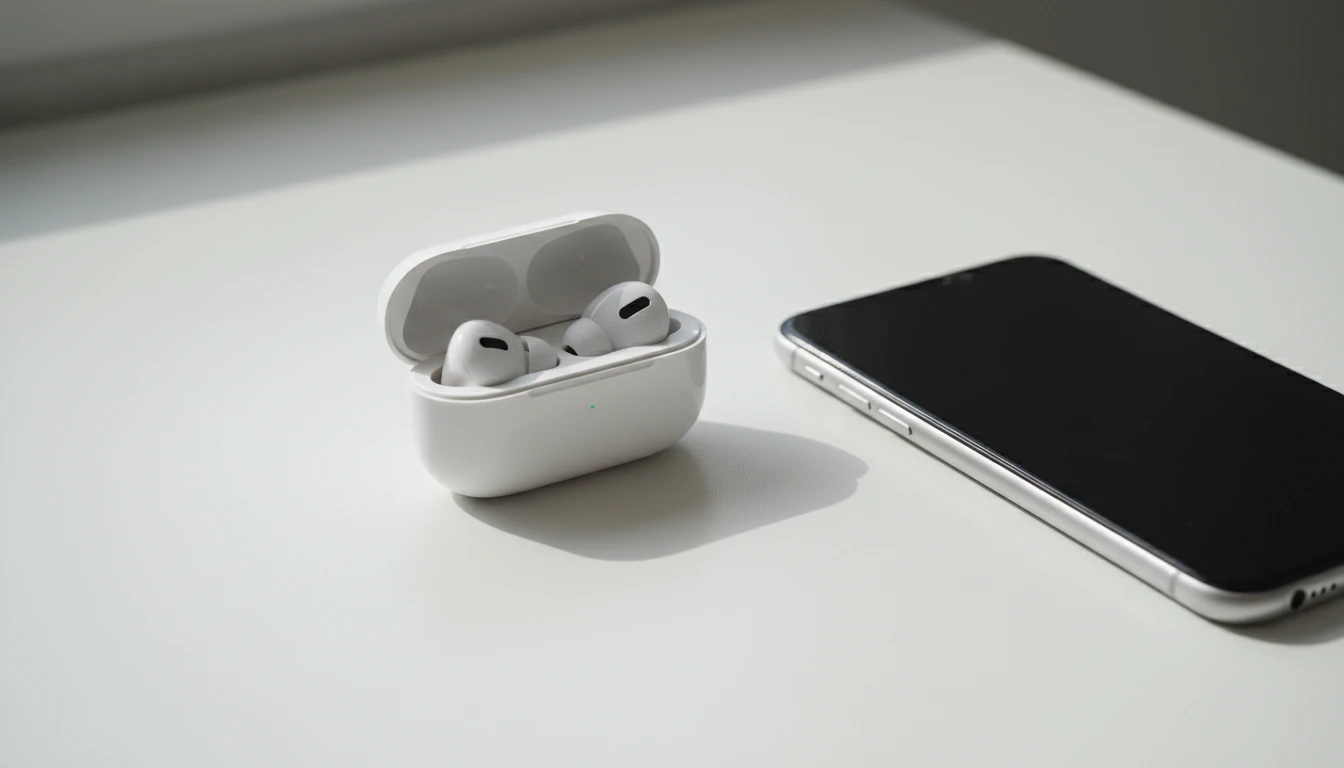
The Native Format for Every Apple Device
AAC is the default audio codec for the Apple ecosystem. iPhone, iPad, Mac, Apple Watch, Apple TV, and AirPods all decode AAC natively and efficiently. iTunes, Apple Music, and GarageBand all use AAC for imports, exports, and streaming. Converting WAV to AAC means your audio is ready for any Apple device the moment the download finishes.
Try It Now
Ready for YouTube, Spotify, and Every Streaming Platform
YouTube, Spotify, Apple Music, and Amazon Music all transcode uploaded audio to AAC or a derivative at some point in their pipeline. Uploading AAC directly skips a re-encode step and preserves your audio closer to the intended quality. For podcast hosting, video production, and social media content, AAC is the most broadly accepted compressed audio format.
See It in ActionThree steps from WAV to AAC
Upload your WAV file
Drop any WAV file onto the tool or click to browse. Studio recordings, field recordings, DAW exports, and voice memos are all accepted.
Convert to AAC
Click "Convert". FFmpeg reads the PCM data from the WAV and encodes it as AAC at a high bitrate to preserve as much of the original quality as possible.
Download your AAC file
Preview the output in the browser player, then download your .aac file ready to add to Apple Music, upload to YouTube, share with collaborators, or sync to any device.
Deep Dive
WAV vs AAC: Lossless Archive vs Efficient Delivery
WAV stores every sample without compression. AAC uses psychoacoustic modelling to discard audio data the ear cannot perceive, achieving a much smaller file with near-transparent quality.
Our converter uses FFmpeg to encode WAV to AAC at a high bitrate, preserving as much of the original quality as possible.
Why Convert WAV to AAC
Native on Apple Devices
AAC is the default audio codec on iPhone, iPad, Mac, Apple Watch, and Apple TV — plays without any additional software.
Up to 10x Smaller
A 5-minute WAV at CD quality is ~50 MB. The same audio in AAC at 256 kbps is ~10 MB — a fraction of the storage footprint.
Streaming-Ready
YouTube, Spotify, Apple Music, and Amazon Music all use AAC or AAC-derived codecs in their delivery pipelines.
Universal Compatibility
AAC plays on iOS, Android, Windows, macOS, Linux, and virtually every modern media player and browser.
Who Uses It
Who Converts WAV to AAC
Musicians sharing recordings, podcasters uploading episodes, video editors exporting audio tracks, and developers building mobile apps that ship audio assets.

Converts using FFmpeg on dedicated servers.
Frequently Asked Questions
Does converting WAV to AAC reduce quality?
Yes — AAC is a lossy format, so the conversion is a one-way process that discards audio data the ear typically cannot perceive. At 256 kbps, the quality loss is considered transparent by most listeners in blind tests. At lower bitrates (128 kbps), artefacts may appear on complex musical content but are rarely noticeable on speech.
Should I keep the original WAV after converting?
Yes. You cannot recover the lossless audio from an AAC file after conversion. Keep the WAV as your master archive and use the AAC only for distribution, sharing, or playback on portable devices.
Will the converted AAC play on my iPhone?
Yes. AAC is the native audio codec for the entire Apple ecosystem. iPhone, iPad, Mac, Apple Watch, and Apple TV all play AAC natively without any additional software or codec.
What bitrate does the converter use?
The converter uses FFmpeg with a high AAC bitrate to preserve as much of the original quality as possible. For most music content this produces a transparent result — quality differences from the source WAV are not detectable by most listeners.
Is AAC better than MP3?
Generally yes. AAC achieves better audio quality at the same bitrate compared to MP3, supports more audio channels, and is natively supported on all modern iOS, Android, macOS, and Windows devices. MP3 is only preferable for compatibility with very old hardware such as car stereos and CD players manufactured before 2005.
Is there a file size limit?
The upload limit is 100 MB per file. Most WAV files are within this range, though very long recordings at high sample rates may exceed it.
Ready to Convert Your WAV to AAC?
Upload your WAV above and get a compact, streaming-ready AAC file in seconds.