Archive Your M4A Audio as ALAC for Native Lossless Playback on Every Apple Device
Upload your M4A file and get an ALAC that plays natively on iPhone, Mac, Apple TV, and AirPlay without any third-party app — and stops further quality degradation from any future re-encoding or processing.
Convert Now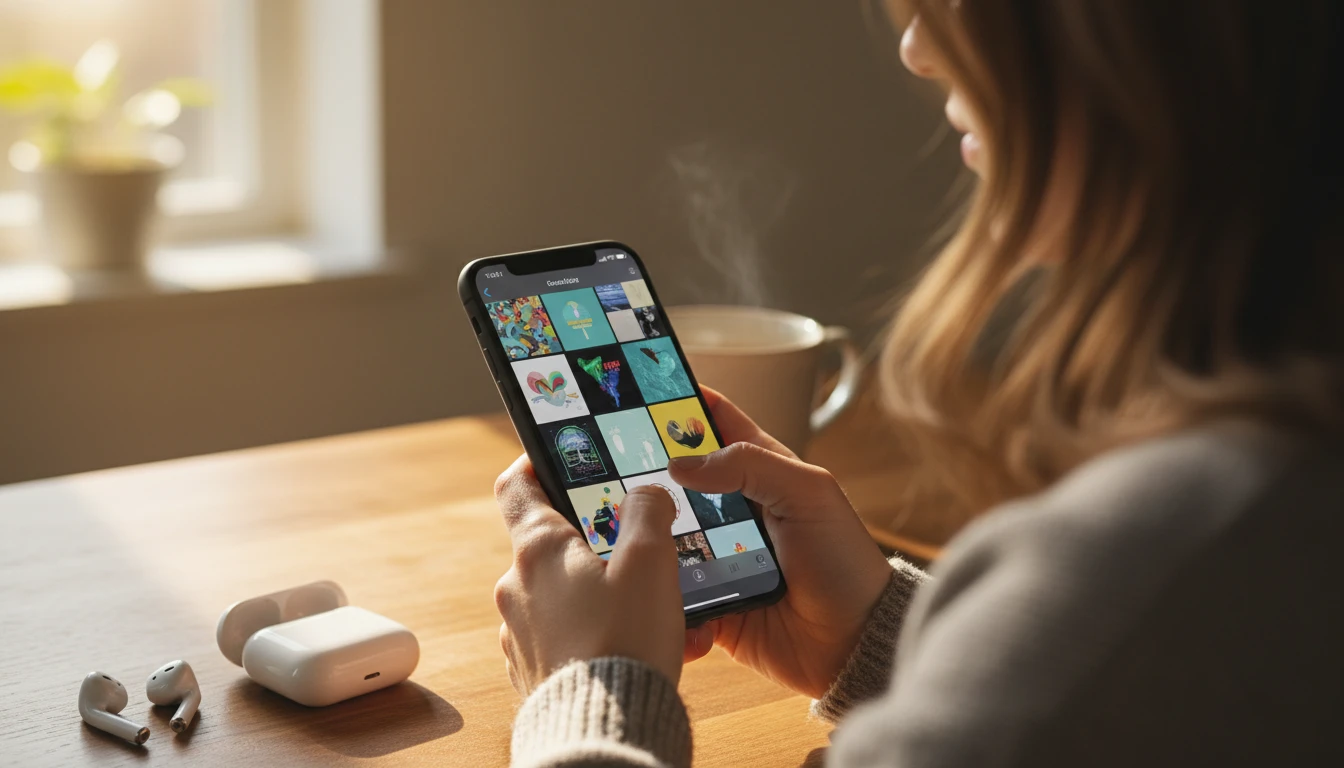
Audio Format Converter
Upload any audio file, choose an output format, and download the converted result. Supports MP3, WAV, FLAC, AAC, OGG, ALAC, WMA, Opus and M4A.
Drop your audio file here
or click to browse

Play Your M4A Library as Lossless ALAC on iPhone Without a Third-Party App
ALAC (Apple Lossless Audio Codec) is a lossless codec stored inside the same .m4a container that AAC uses. The iPhone Music app, iPad, Mac Music, Apple TV, and AirPlay all play ALAC natively without any codec installation or third-party player. Users who want lossless audio on their Apple devices can convert M4A files to ALAC for playback at the full fidelity the source contains, with no further quality change.
Convert Now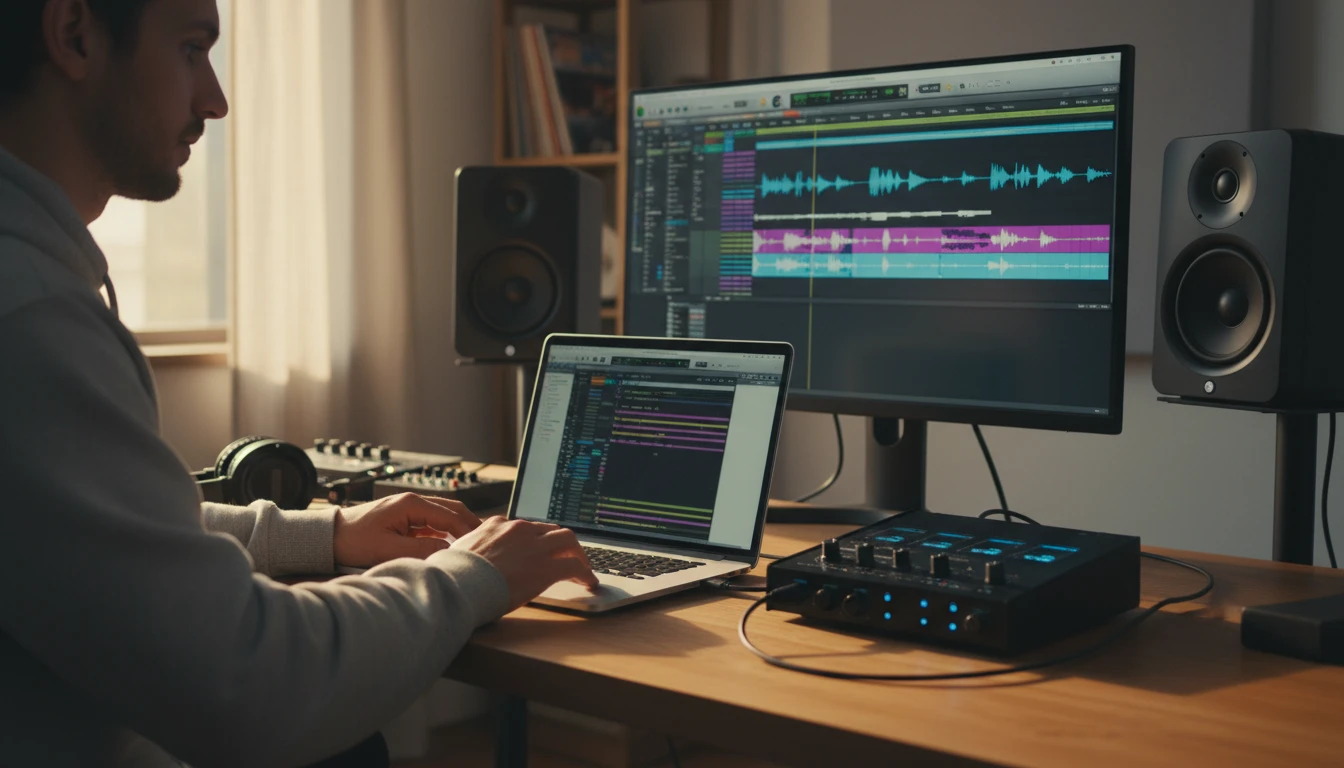
Create a Lossless Working Copy of M4A for Logic Pro and GarageBand
Logic Pro and GarageBand import ALAC natively and treat it as a lossless audio source. Producers who work with M4A recordings — iPhone voice memos, GarageBand exports, or iTunes audio — can convert to ALAC and use the resulting file as a working copy in Logic Pro. Every plugin pass and bounce from an ALAC source introduces no additional compression beyond what the original M4A contained.
Try It Now
Stop Further Quality Loss When Re-Encoding M4A to Other Formats
When an M4A file is re-encoded directly to MP3, OGG, or another lossy format, two lossy passes compound the quality loss. Converting M4A to ALAC first produces a lossless intermediate: any future re-encoding from ALAC introduces only one new lossy pass rather than stacking degradation on top of the original AAC encoding. This is the standard approach for building a stable conversion master from existing lossy audio.
See It in ActionThree steps to an Apple-native lossless ALAC from your M4A
Upload your M4A file
Drop your .m4a file onto the tool or click to browse. iPhone voice memos, GarageBand exports, iTunes downloads, and any M4A audio are all accepted.
Convert to ALAC
Click "Convert". FFmpeg decodes the audio from the M4A container and re-encodes it losslessly using the Apple Lossless codec, wrapped in an .m4a container.
Download your ALAC file
Download your .m4a (ALAC) file ready to import into iTunes or Apple Music, play on iPhone, use in Logic Pro, or store as a lossless archive copy.
Deep Dive
M4A to ALAC: From Compressed Apple Audio to Lossless Apple Standard
M4A with AAC is compressed and lossy. M4A with ALAC is lossless. Both use the same .m4a container and both play natively on every Apple device — the difference is whether the audio data inside can be decoded without any quality loss.

Our converter uses FFmpeg to decode the audio from the M4A and re-encode it losslessly using the Apple Lossless codec.
Why Convert M4A to ALAC
Plays Natively on Every Apple Device
ALAC is Apple's lossless codec. iPhone, iPad, Mac, Apple TV, HomePod, and AirPlay all play ALAC natively in the Music app without any third-party software.
Stops Further Quality Degradation
Once in ALAC, any future re-encoding to MP3, OGG, or Opus adds only one new lossy pass. No more compounding quality loss from repeated conversions.
Native in Logic Pro and GarageBand
Logic Pro and GarageBand import ALAC as a lossless audio source. Every processing step and bounce starts from the cleanest available version of the audio.
Fast Conversion
Most M4A files convert to ALAC in under 30 seconds on dedicated FFmpeg servers.
Who Uses It
Who Converts M4A to ALAC
Apple Music subscribers building a lossless local library, iPhone users who want lossless playback without a third-party app, Logic Pro producers creating stable working copies from M4A sources, audiophiles archiving their Apple purchases, and anyone building a re-conversion master from existing M4A audio.

Converts using FFmpeg on dedicated servers.
Frequently Asked Questions
Does converting M4A to ALAC improve audio quality?
No. If the M4A holds AAC audio, converting to ALAC does not restore the quality that AAC compression originally discarded. ALAC losslessly stores the PCM data decoded from the AAC — exactly the audio the M4A contained, no worse and no better. The benefit of converting to ALAC is stopping further degradation: any future re-encoding from ALAC adds only one new lossy pass, rather than stacking compression losses on top of the existing AAC encoding.
Why choose ALAC over FLAC for Apple devices?
ALAC plays natively in the iPhone Music app, iTunes, Apple Music, Logic Pro, GarageBand, AirPlay, and HomePod without any additional software. FLAC is not supported by the iPhone Music app and requires a third-party app such as VLC or Flacbox for playback on iPhone. Logic Pro does not import FLAC natively. For any workflow that stays within the Apple ecosystem, ALAC is the natural lossless choice.
Will the ALAC file sync to my iPhone through iTunes or Finder?
Yes. ALAC files are standard .m4a files with a lossless codec inside. iTunes on Windows and Finder on macOS recognize them as Apple Music-compatible audio and sync them to iPhone like any other audio file. They appear in the iPhone Music app as lossless tracks and play without any additional app.
How much larger will the ALAC file be compared to the original M4A?
ALAC stores losslessly compressed PCM audio, which is significantly larger than AAC-compressed M4A. A 4-minute AAC M4A at 128 kbps is roughly 3 to 4 MB; the same audio as ALAC is typically 15 to 25 MB, depending on the original recording. The larger size reflects the absence of lossy compression in ALAC, not any addition of audio data.
Can I import the ALAC file into Logic Pro?
Yes. Logic Pro imports ALAC (.m4a) natively as a lossless audio format. The file appears in the Logic browser as a standard audio clip and can be used directly in sessions, sample libraries, and Flex Time or Flex Pitch workflows.
Is there a file size limit?
The upload limit is 100 MB per file. Most M4A audio files are well within this limit.
Ready to Convert Your M4A to ALAC?
Upload your M4A above and get an Apple-native lossless ALAC in seconds.