Import Your FLAC Masters into iTunes, Apple Music, and GarageBand
Upload your FLAC file and get an M4A that drops straight into your iTunes library, syncs to iPhone and iPad through Apple Music, opens as a GarageBand track, and plays natively across every Apple device — with the quality advantage of being encoded from a perfect, lossless source.
Convert Now
Audio Format Converter
Upload any audio file, choose an output format, and download the converted result. Supports MP3, WAV, FLAC, AAC, OGG, ALAC, WMA, Opus and M4A.
Drop your audio file here
or click to browse
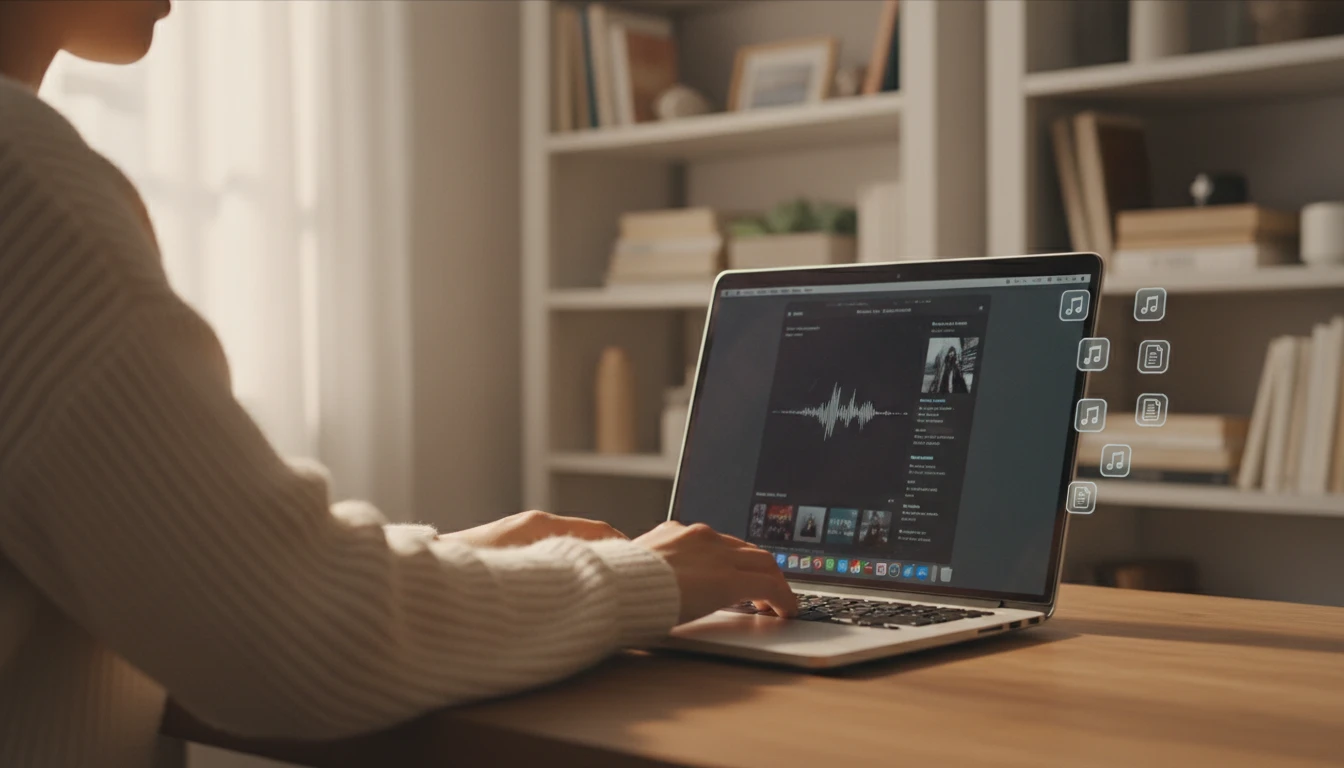
Build Your iTunes Library from Lossless FLAC Rips
iTunes and Apple Music accept M4A files and sync them to every Apple device. FLAC files are not on Apple's supported import list. Converting FLAC CD rips and archival recordings to M4A imports them directly into the iTunes library with full metadata — album art, artist, genre, track number — and makes them available for sync to iPhone, iPad, and HomePod.
Convert Now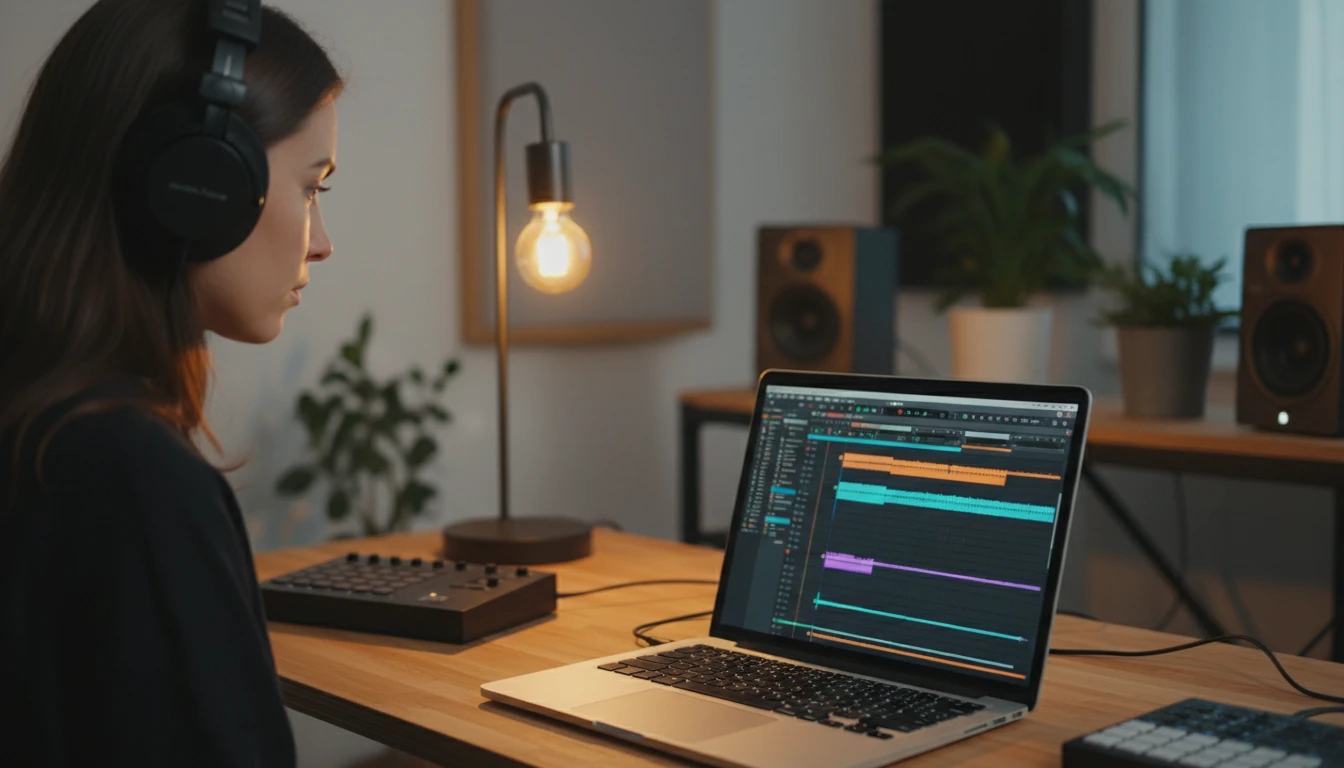
Open FLAC Recordings as GarageBand Project Tracks
GarageBand on Mac and iPad imports M4A audio files directly into projects as audio regions. FLAC files cannot be opened in GarageBand. Podcast producers, musicians, and songwriters who work from FLAC masters can convert to M4A and drag recordings into any GarageBand project for editing, adding music beds, applying effects, and exporting finished audio.
Try It Now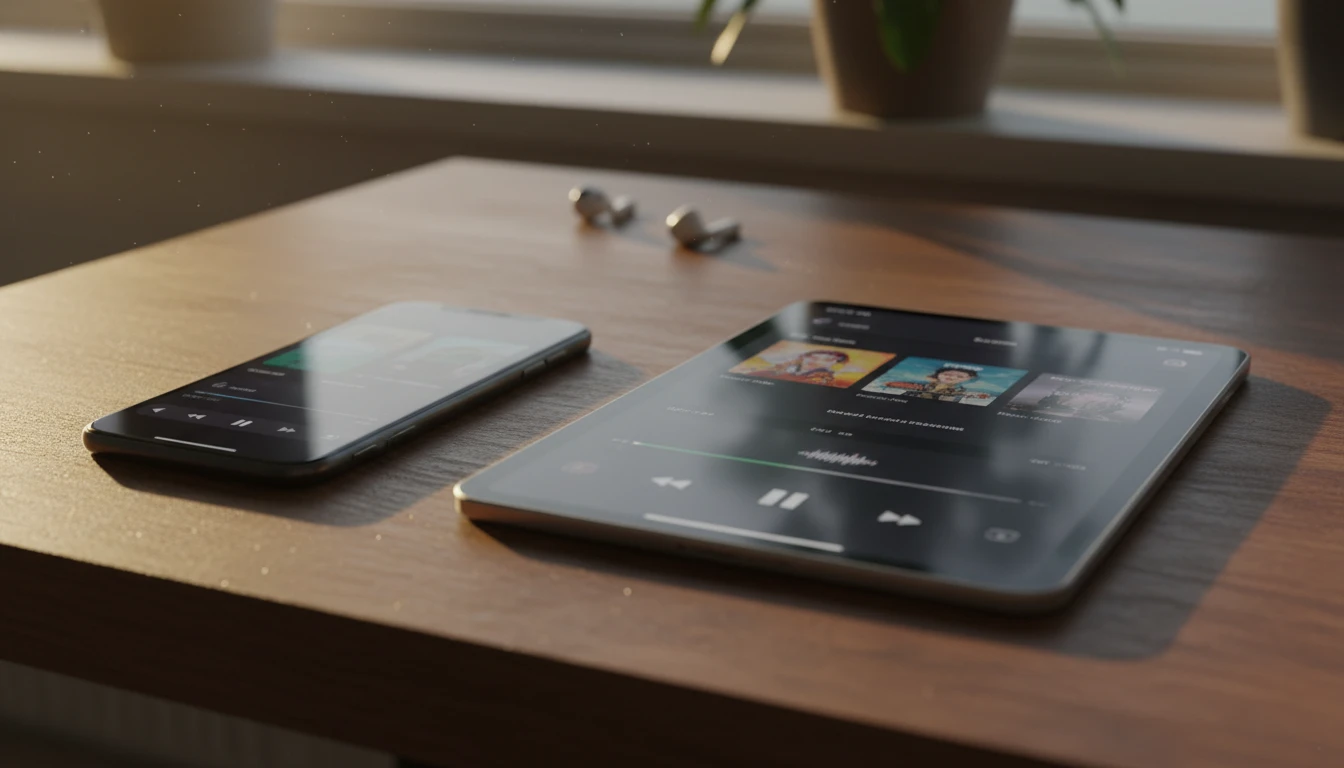
Sync Lossless-Sourced Audio to iPhone via iCloud Music Library
iCloud Music Library stores M4A files and makes them available across every Apple device on the account. Converting FLAC masters to M4A and importing them into Apple Music uploads them to iCloud Music Library automatically, giving every iPhone, iPad, Mac, and HomePod on the account access to the tracks without a cable sync.
See It in ActionThree steps to an iTunes-ready M4A from a lossless source
Upload your FLAC file
Drop your FLAC file onto the tool or click to browse. CD rips, studio masters, DAW exports, and archival recordings are all accepted.
Convert to M4A
Click "Convert". FFmpeg decodes the FLAC losslessly to PCM and encodes it as AAC inside an M4A container at a high bitrate — one clean encoding pass from a perfect uncompressed source.
Download your M4A file
Download your .m4a file and drag it into iTunes or Apple Music, open it in GarageBand, or AirDrop it directly to an iPhone or iPad.
Deep Dive
FLAC to M4A: Open Lossless Archive to Apple's Native Music Container
FLAC is the universal lossless archive format. M4A is Apple's native music container — the format iTunes creates, Apple Music downloads in, and GarageBand works with. Converting between them brings a lossless library into Apple's music management ecosystem.

Our converter uses FFmpeg to decode FLAC losslessly and encode as AAC in an M4A container at a high bitrate.
Why Convert FLAC to M4A
iTunes and Apple Music Ready
M4A imports directly into iTunes and Apple Music and syncs to every connected iPhone and iPad with full metadata and album art.
Opens in GarageBand and Logic Pro
Drag the M4A into any GarageBand or Logic Pro project as an audio region ready for editing, mixing, and export.
Syncs via iCloud Music Library
M4A files imported into Apple Music upload to iCloud Music Library and become available on every Apple device on the account.
Fast Conversion
Most FLAC files convert to M4A in under 30 seconds on dedicated FFmpeg servers.
Who Uses It
Who Converts FLAC to M4A
Audiophiles building iTunes libraries from FLAC rips, musicians opening FLAC recordings in GarageBand, Apple Music subscribers adding personal FLAC masters to iCloud Music Library, and podcast producers editing in GarageBand from lossless source recordings.

Converts using FFmpeg on dedicated servers.
Frequently Asked Questions
What is the difference between FLAC to M4A and FLAC to AAC?
AAC is the audio codec — the compression algorithm. M4A is the container file format that holds AAC audio. Converting FLAC to M4A produces a .m4a file containing AAC audio — the same audio as a plain .aac file, just in the MPEG-4 container that iTunes, GarageBand, and Apple Music expect. For Apple ecosystem use, M4A is the correct output format.
Why can't I import FLAC directly into iTunes?
iTunes and Apple Music support AAC (.m4a), MP3, WAV, AIFF, and Apple Lossless (ALAC). FLAC is an open-source format not included in Apple's supported list. Converting to M4A with AAC encoding is the standard approach for adding FLAC music to an iTunes library.
Should I convert FLAC to M4A with AAC or with ALAC?
If you want a compressed file for efficient iPhone storage and everyday listening, use AAC inside M4A — it produces the best possible AAC quality from a lossless source at a fraction of the FLAC file size. If you want bit-for-bit identical quality to the FLAC master with no quality loss at all, convert to ALAC (also stored in .m4a). Both are valid choices depending on your storage and quality priorities.
Can I open the converted M4A in GarageBand on Mac?
Yes. Drag the .m4a file into a GarageBand project window and it will appear as an audio region on a track. GarageBand imports M4A on both Mac and iPad natively.
Will the M4A sync to all my Apple devices via iCloud Music Library?
Yes. Once an M4A is imported into Apple Music on a Mac with iCloud Music Library enabled, it uploads and becomes available on every Apple device signed into the same Apple ID — iPhone, iPad, Mac, HomePod, and Apple Watch.
Is there a file size limit?
The upload limit is 100 MB per file. Most FLAC audio tracks are well within this limit.
Ready to Convert Your FLAC to M4A?
Upload your lossless master above and get an iTunes-ready M4A in seconds.