Turn Your OGG Files into M4A Ready for iTunes, Apple Music, and iOS
Upload your OGG file and download an M4A that imports directly into your Apple Music library, works in iOS apps, and plays natively on every Apple device.
Convert Now
Audio Format Converter
Upload any audio file, choose an output format, and download the converted result. Supports MP3, WAV, FLAC, AAC, OGG, ALAC, WMA, Opus and M4A.
Drop your audio file here
or click to browse
Import Directly into Apple Music and iTunes
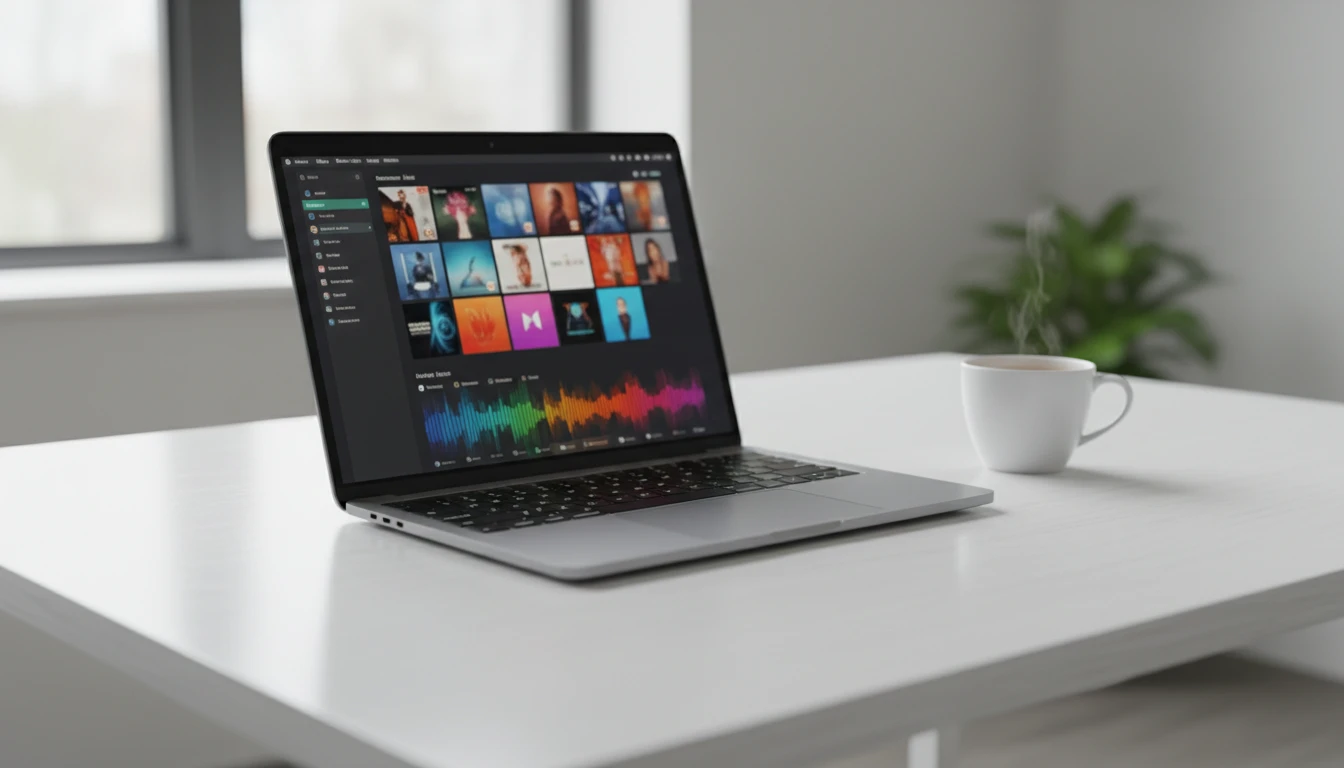
The Apple Music app and iTunes only import audio in formats they recognize natively. M4A (AAC) is the default format both apps use for your personal music library. Drag the converted file in and it appears instantly alongside your other tracks.
Convert Now
Native Playback on iPhone, iPad, and Mac
OGG is not supported by iOS, iPadOS, or Safari. M4A (AAC) is hardware-decoded on every Apple chip, which means lower battery usage and instant playback in the Music app, Podcasts, Files, and any third-party iOS audio app.
Try It Now
FFmpeg-Powered Server Conversion
Every conversion runs through FFmpeg on dedicated servers. The OGG Vorbis stream is fully decoded to PCM, then re-encoded as AAC inside an M4A container at a high bitrate to keep the quality penalty of transcoding two lossy formats as small as possible.
See It in ActionThree steps to Apple-ready audio
Upload your OGG file
Drop your OGG Vorbis file onto the tool or click to browse. The format is validated before conversion starts.
Convert to M4A
Click "Convert". FFmpeg decodes the OGG Vorbis stream to PCM and re-encodes it as AAC inside an MPEG-4 M4A container at a high bitrate.
Download your M4A file
Preview the output in the browser player, then download your .m4a file ready to import into Apple Music, iTunes, or any iOS app.
Deep Dive
OGG vs M4A: Open Source vs the Apple Standard
OGG Vorbis is a patent-free open codec with excellent quality, but it is blocked by every Apple platform. M4A is the MPEG-4 container Apple uses for its entire audio ecosystem, from the Music app to ringtones.

Output is packaged as AAC inside an M4A container. The .m4a file is recognized natively by all Apple software and devices.
Why Use This Converter
iTunes and Apple Music Ready
M4A is the native format for Apple Music and iTunes. Drag the converted file straight into your library with no additional steps.
Hardware-Decoded on Apple Devices
AAC in M4A is decoded in hardware on every iPhone, iPad, and Mac chip. Faster startup, lower battery drain, and instant seeking.
Fast Conversion
Most OGG files convert to M4A in under 30 seconds on our dedicated servers.
FFmpeg-Powered
Industry-standard FFmpeg decodes the full OGG Vorbis stream before re-encoding, preserving sample rate and channel layout throughout.
Who Uses It
Who Converts OGG to M4A
Apple device users, iOS developers, podcast producers, and anyone moving audio from an open-source or Android workflow into the Apple ecosystem.

Converts using FFmpeg on dedicated servers.
Frequently Asked Questions
What is the difference between M4A and AAC?
AAC is the audio codec (the compression algorithm). M4A is the container file that holds AAC-encoded audio. Think of M4A as the box and AAC as the audio inside. Apple uses the .m4a extension for audio files containing AAC in its Music app, iTunes, and iOS.
Will I lose quality when converting OGG to M4A?
Yes, a small amount of quality is lost because both OGG Vorbis and AAC are lossy formats. Converting between them requires decoding the OGG and re-encoding as AAC, which introduces a second round of compression. Using a high output bitrate keeps this penalty minimal and inaudible to most listeners.
Can I add the converted M4A file to my Apple Music library?
Yes. M4A (AAC) is the native format for Apple Music and iTunes. On a Mac, drag the .m4a file into the Music app. On iPhone or iPad, use the Files app or AirDrop to add it to your library.
Can I use M4A files in an iOS app or Xcode project?
Yes. AVFoundation, the audio framework on all Apple platforms, supports M4A (AAC) natively. Add the .m4a file to your Xcode project and reference it in Swift or Objective-C the same way you would any supported audio asset.
Can I make an iPhone ringtone from the converted M4A?
Yes. iPhone ringtones use the .m4r format, which is an M4A file with a renamed extension and a maximum duration of 30 seconds. Trim your audio to under 30 seconds, convert to M4A, then rename the file from .m4a to .m4r before syncing it to your iPhone.
Is there a file size limit?
The upload limit is 100 MB per file. Most OGG tracks are well within this limit.
Ready to Convert Your OGG to M4A?
Upload your file above and get an Apple-ready M4A in seconds.