Trim Any Audio File to the Exact Moment You Need
Upload an MP3, WAV, OGG, FLAC or M4A file, drag the handles to set your trim range, and export the result as WAV.
Start Trimming
Audio Trimmer
Upload an audio file, drag the handles on the waveform to set your range, and export as WAV.
No file loaded
Drop an audio file here, or click Load file
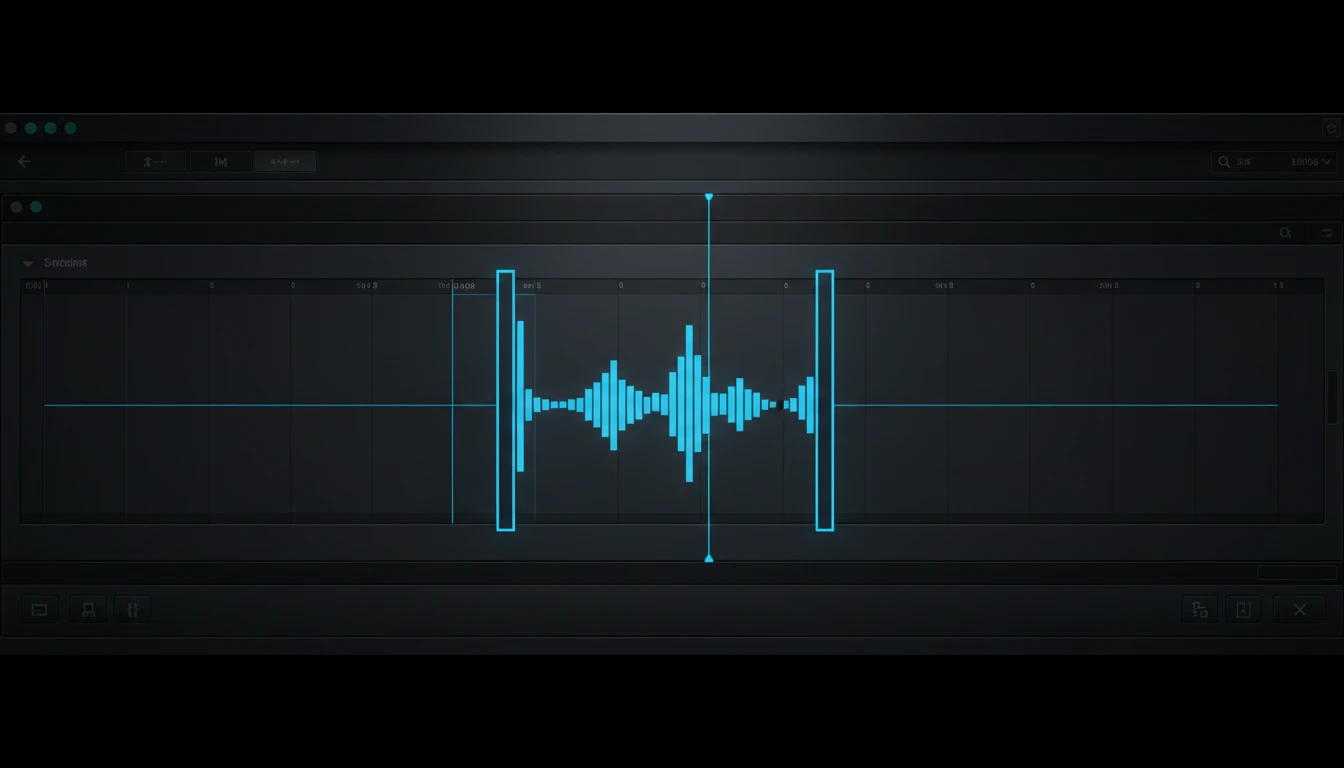
Waveform Trim Editor
See the full waveform the moment your file loads. Drag the handles directly on the waveform to set your start and end points. Fine-tune timing with the numeric input fields below.
Try It Now
Preview Before Downloading
Play the original file directly in the browser. The playhead loops within your selected range so you can hear exactly what will be exported before committing.
Try It Now
WAV Export at Original Quality
The trimmed selection is extracted at the original sample rate and encoded to 16-bit PCM WAV, preserving the full audio quality of the source file.
Export NowTrim audio in three steps
Upload your audio
Drop an audio file onto the upload area or click to browse. MP3, WAV, OGG, FLAC, and M4A are all supported. The waveform loads immediately.
Set your trim range
Drag the blue handles on the waveform to set the start and end of your clip. Use the time input fields for precise values. The playback loops within your selection so you can hear it before exporting.
Export the trimmed clip
Click Trim Audio. The selected range is extracted and downloaded to your device as a WAV file at the original sample rate.
Deep Dive
How the Audio Trimmer Works
All processing runs in your browser using the Web Audio API, no server upload required.
Why Use This Audio Trimmer
Frame-Accurate Trimming
Drag handles on the waveform and fine-tune with numeric inputs for precise start and end points.
Preview In Selection
Playback loops within your selected range so you can hear the result before exporting.
Multiple Formats In
Accepts MP3, WAV, OGG, FLAC and M4A — any format your browser can decode.
Lossless WAV Out
16-bit PCM WAV at the original sample rate with no quality loss.
Who Uses It
Who Uses the Audio Trimmer
From podcasters cleaning up recordings to musicians extracting loops, here are the most common uses.

Frequently Asked Questions
Can I use this to trim MP3 files?
Yes. Drop any MP3 file onto the upload area, drag the handles to set your trim range, and export as WAV. The browser decodes the MP3 natively so no conversion step is needed.
Can I trim WAV files?
Yes. WAV files load and decode instantly since they are already uncompressed PCM. The exported WAV is a direct sample-accurate slice of the original, with no quality loss.
What audio formats are supported?
Any format your browser's built-in codec can decode: typically MP3, WAV, OGG, FLAC, M4A, and AAC. The exported file is always a WAV.
How precise is the trim?
The numeric input fields let you set start and end times to one decimal place (0.1 s). The underlying sample-level copy is accurate to a single audio sample at the file's native sample rate.
Why is the exported WAV larger than the original file?
WAV is an uncompressed format. The original file may have been an MP3 or OGG compressed to a fraction of the size. Run the exported WAV through an audio converter if you need a smaller file.
Can I trim very long audio files?
The tool loads the entire file into memory as a decoded PCM AudioBuffer. Files up to around 30 to 60 minutes work fine on most modern devices. Very long files may cause the browser to run low on memory.
Ready to Trim?
Drop an audio file, drag the handles to your range, and download your trimmed clip in seconds.