Get a Complete Styling Plan for Any Shelf
Describe your shelf or upload a photo and get arrangement concepts, a zone-by-zone styling guide, plant picks, a colour palette, a shopping list, and DIY project ideas.
Style My Shelf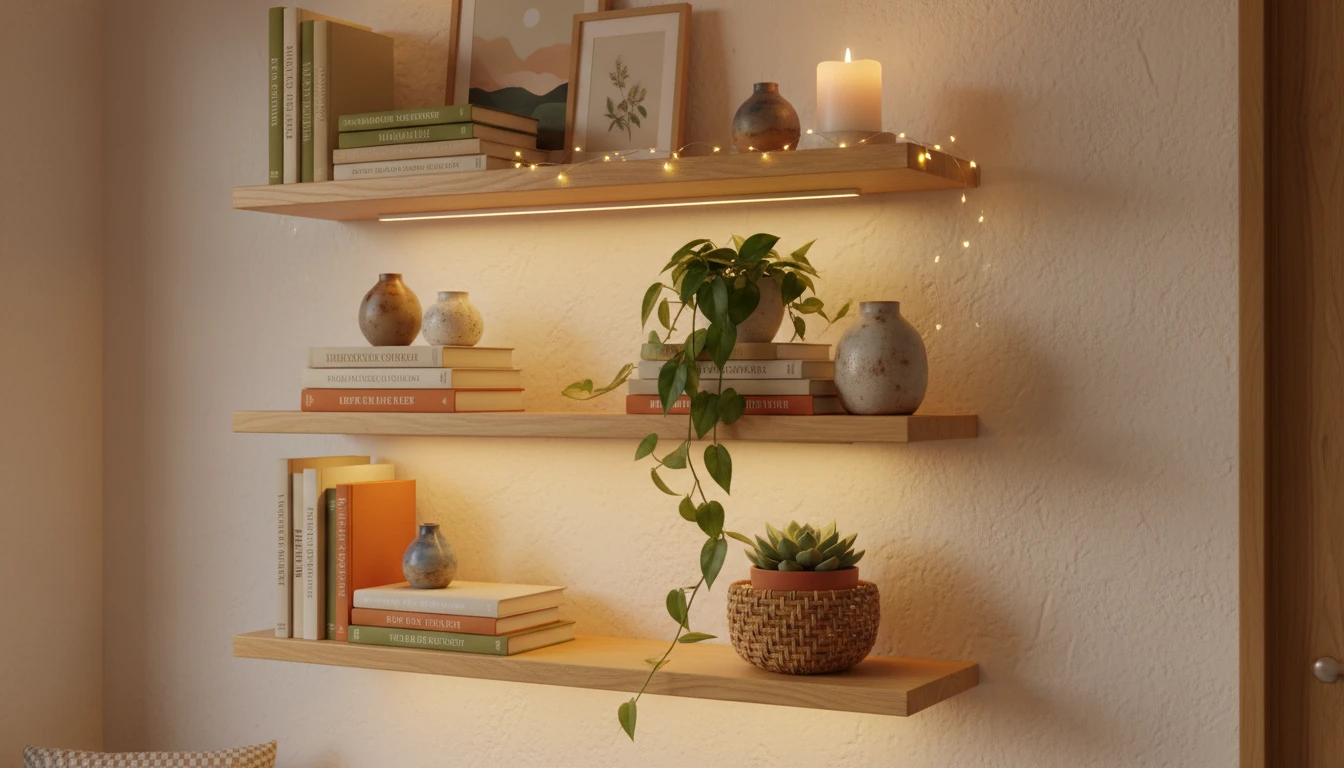
Upload a Shelf Photo
We'll open AI Home Studio next so you can get educational shelf styling ideas.
Drag & drop your shelf photo here
Show the full shelf or bookcase — JPG, PNG or WebP, up to 15MB
Your photo is used only to generate shelf decor ideas for you.
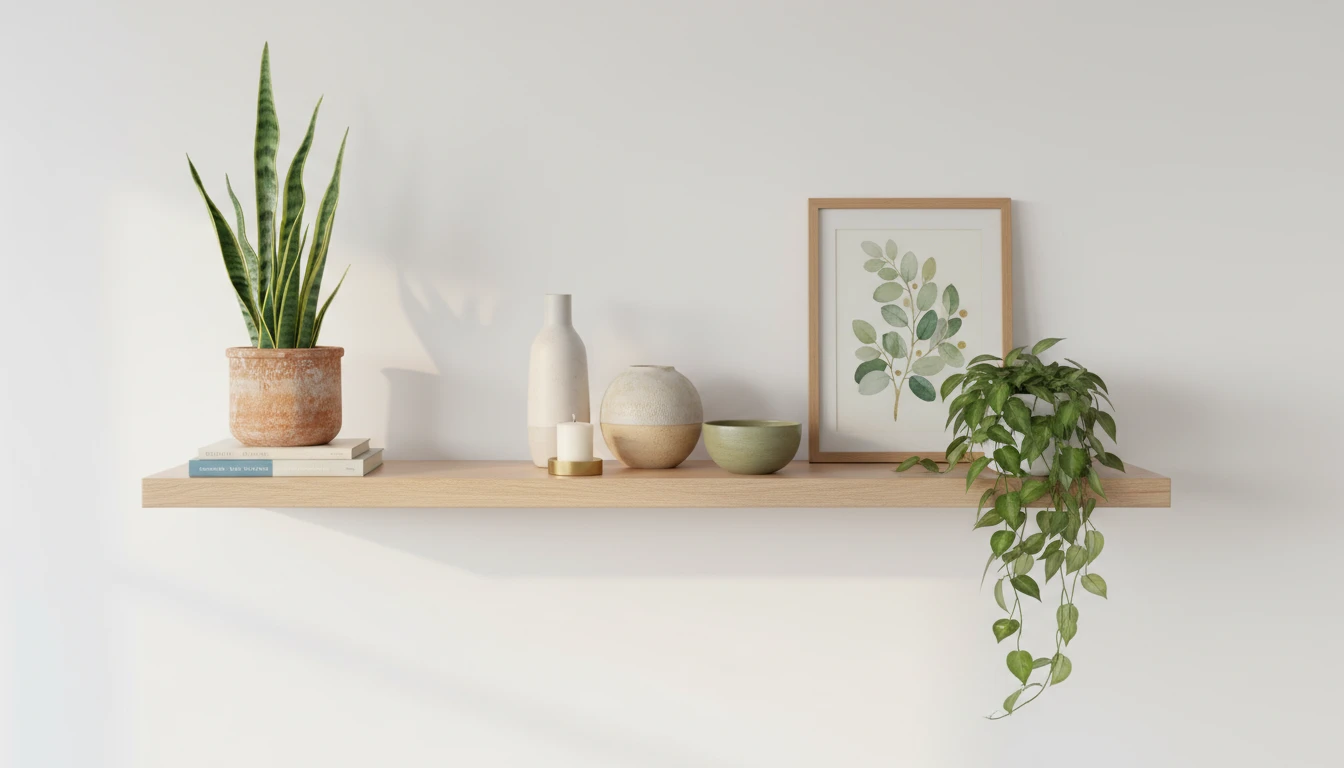
Complete Arrangement Concepts with Zone-by-Zone Guide
Upload a photo of your shelf or describe it in text and the AI generates 2-3 complete arrangement concepts, each with a mood description, a list of key elements, a difficulty rating, an estimated cost, and a specific visual composition tip. It then breaks every tier into left, centre, and right zones, telling you exactly what types of objects, books, and plants belong in each zone, how to vary heights, which anchor piece to place where, and how much negative space to leave.
Style My Shelf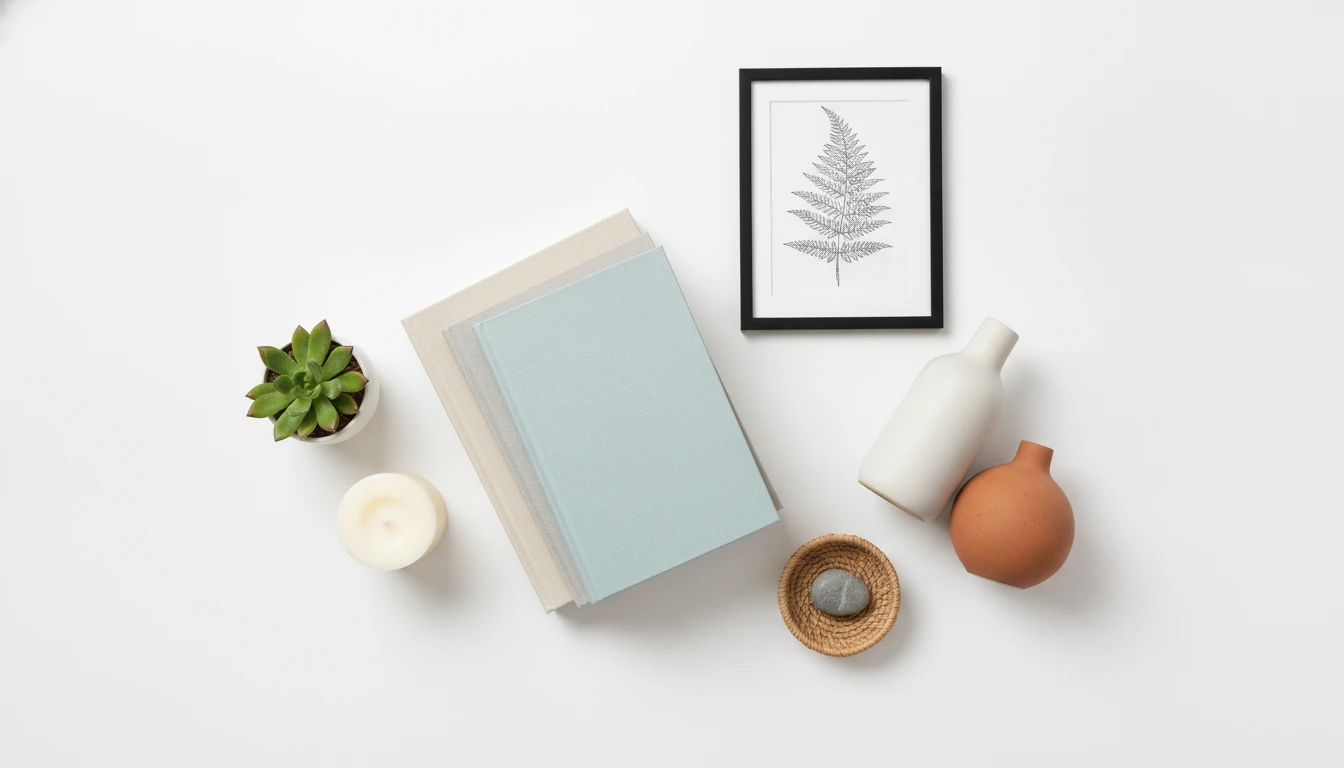
Object Categories, Plant Picks, and Colour Palette
Every result includes a detailed breakdown of the ideal object mix for your shelf and style: how many books and whether to arrange them horizontally or vertically, what sizes and finishes of decorative objects to choose, how to integrate frames and art, and how to use functional storage items decoratively. The plant section recommends 3-4 specific species matched to your room's light level with pot recommendations. The colour palette covers primary and accent colours, textures to mix, and colours to avoid.
Get Object Ideas
Mistakes to Avoid, Shopping List, and DIY Projects
The mistakes section identifies 4-5 specific shelf styling pitfalls relevant to your shelf type and style (overcrowding, symmetry overload, wrong scale, clashing finishes, missing negative space) and explains how to correct each one. The shopping list is grouped by category with individual item descriptions and estimated costs. The DIY section gives you 2-3 hands-on project ideas for custom shelf pieces with materials, difficulty, cost, and time to complete.
See Full PlanHow to Get AI Shelf Decor Ideas
Upload a Shelf Photo or Describe It
Upload a photo of the shelf you want to style, or describe it in the text box: shelf type, number of tiers, approximate width and depth, the room it is in, what you already have on it, your desired style, and your budget.
AI Analyses and Plans the Styling
The AI analyses the shelf dimensions, existing objects, room context, light conditions, and style direction to build a complete arrangement plan using professional composition principles.
Get the Complete Styling Plan
Receive 2-3 arrangement concepts, a zone-by-zone guide, object categories and ratios, plant picks, colour palette, common mistakes to avoid, a shopping list with costs, DIY projects, and lighting tips.
Who Uses It

New Homeowners and Renters
Just moved in and have empty shelves you are not sure how to fill? Upload a photo of your bare shelf and describe the room style you are going for and the AI builds a complete styling plan from scratch. It tells you exactly what to buy, what ratio of books to decorative objects to plants works best, and which plants survive in your room's light conditions, so you can shop confidently and get a result you are proud of.
Redesigning an Existing Shelf
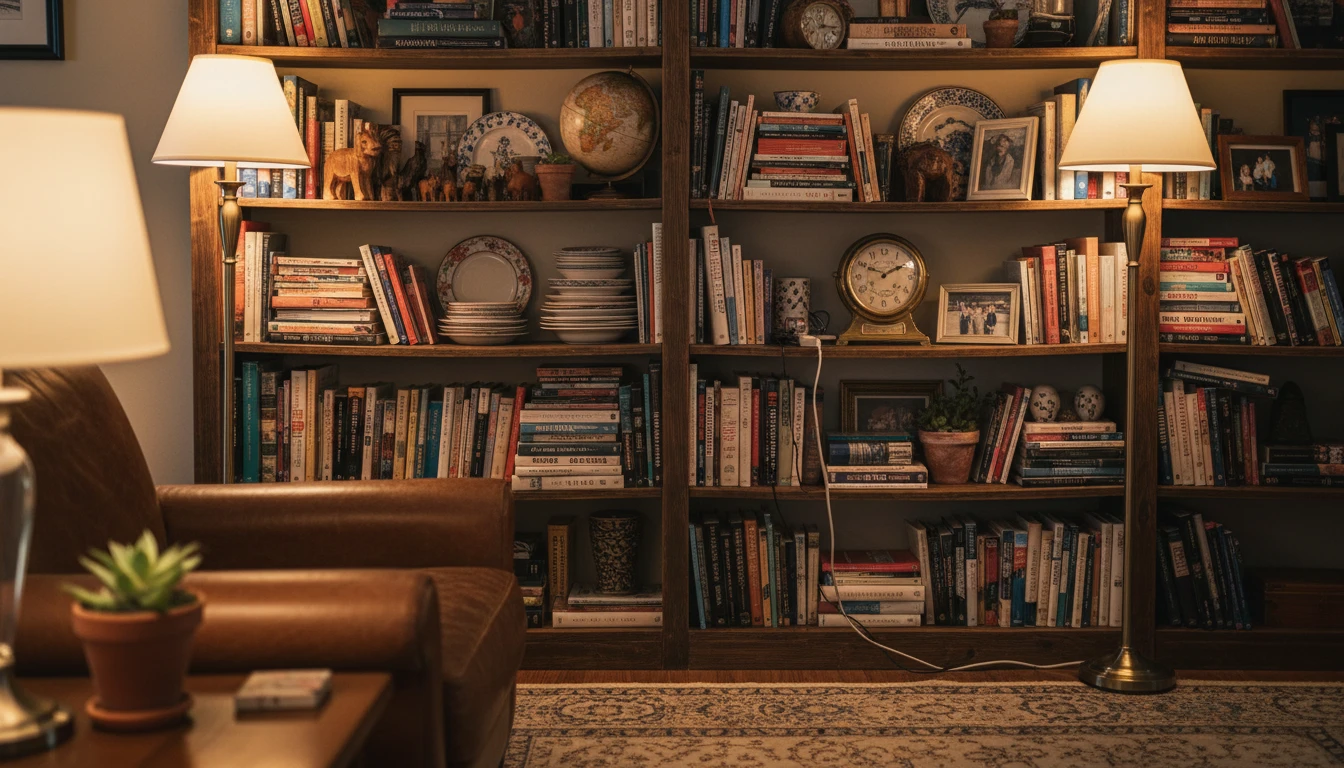
Have a shelf that feels cluttered, unbalanced, or just dated and want fresh ideas without starting from scratch? Upload a photo of the current shelf and describe what you want to change. The AI analyses the existing arrangement, identifies specific composition problems, and gives you a revised plan that works with the items you already own while recommending targeted additions that will transform the overall look.

Interior Design Students and Enthusiasts
Studying interior design or developing your eye for composition? Use the tool as a learning resource. Upload any shelf photograph and the AI walks through the zone-by-zone composition logic, the object ratio guidelines, the colour palette rationale, and the specific mistakes in the current arrangement, giving you a structured critique and redesign that teaches you how professional stylists think through a shelf.
Content Creators and Home Bloggers
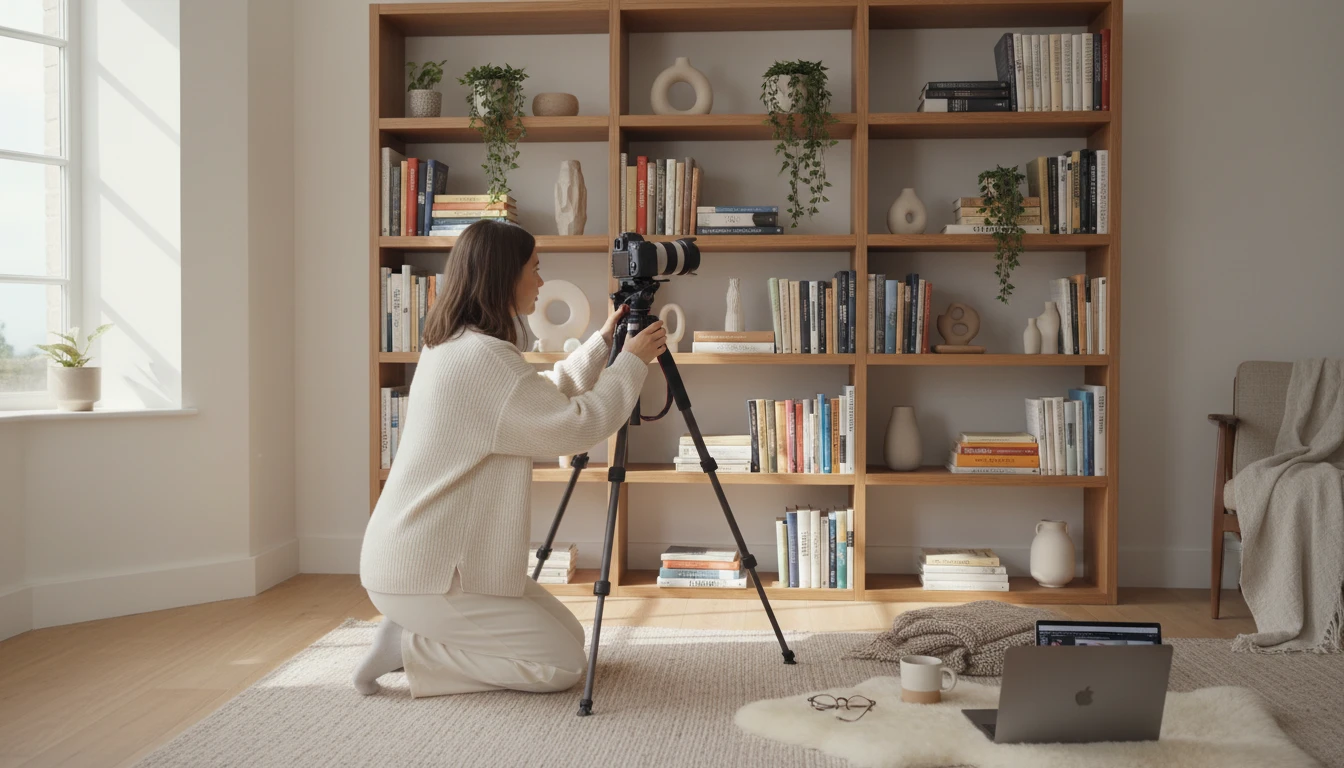
Creating content around your home and want your shelf to look polished and intentional for your next photo shoot or video? Upload a shot of your current shelf setup and describe your aesthetic and the AI generates a complete styling plan you can execute before the shoot, including specific object placement, colour palette, plant suggestions, and lighting tips for the best on-camera result.
Deep Dive
Popular Shelf Styling Aesthetics
Shelf styling is one of the most expressive and visible aspects of interior design. Understanding the major shelf aesthetics helps you describe your style clearly and gives the AI the context it needs to produce the most relevant and targeted styling plan for your space.
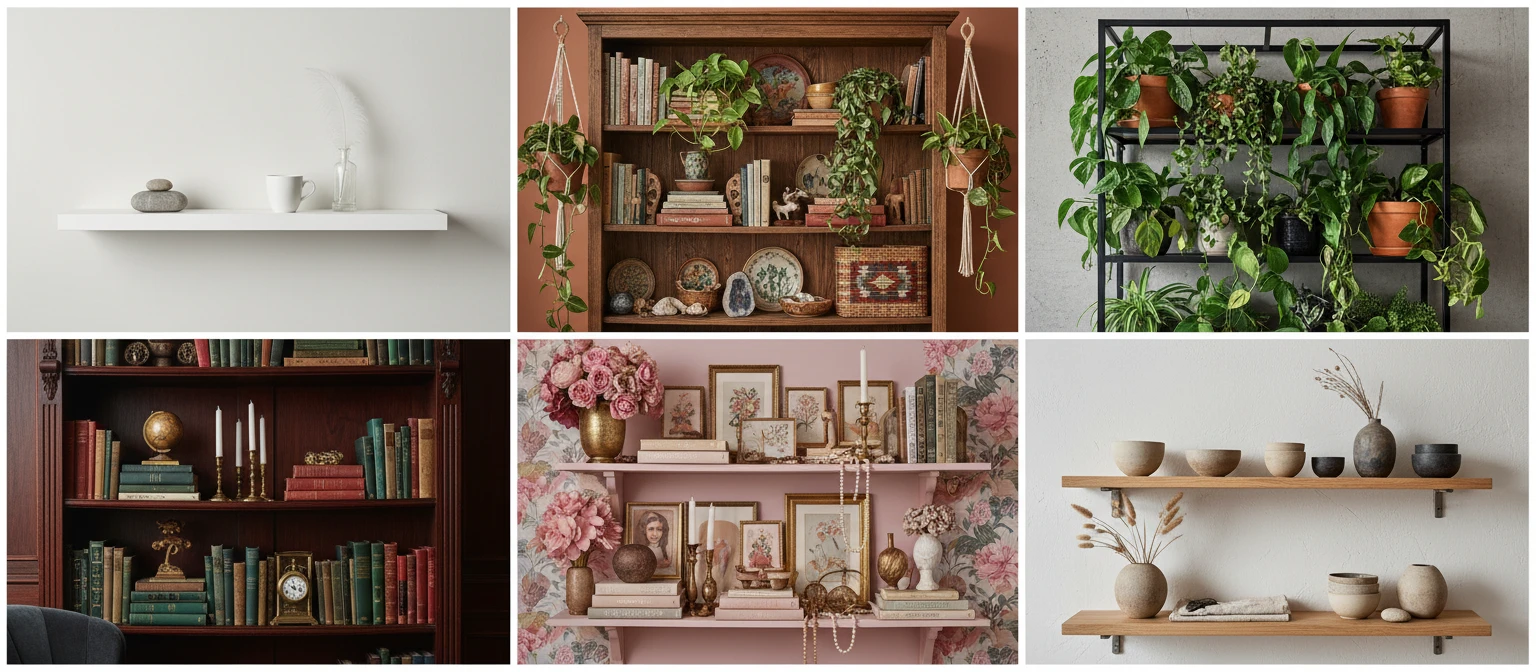
Note: shelf styles are not mutually exclusive. Many well-styled shelves blend two aesthetics, such as a warm minimalist that borrows from both the curated minimalist and the boho palettes. Describe your desired mix clearly to get the most tailored results.
Why Use It
Professional Composition Logic
The AI applies zone-by-zone composition principles, object ratio guidelines, height variation techniques, and negative space rules that professional stylists use, without the hourly rate.
Tailored Plant Picks
Plants transform shelves but the wrong species in the wrong light dies quickly. The AI recommends specific plant species matched to your room's actual light conditions with care difficulty ratings.
Prevents Common Pitfalls
Overcrowding, symmetry overload, wrong scale, clashing finishes, and missing negative space are the most common shelf styling mistakes. The AI flags these specifically for your shelf and style.
Ready-to-Shop List and DIY Ideas
Every result includes a prioritised shopping list grouped by category with estimated costs, plus 2-3 DIY project ideas for custom pieces you can make at a fraction of retail prices.
Frequently Asked Questions
How does the AI Shelf Decor Ideas Generator work?
Describe your shelf including the type, number of tiers, approximate dimensions, the room it is in, what you already have on it, your desired style, and your budget, or upload a photo. The AI then produces 2-3 complete arrangement concepts, a zone-by-zone styling guide for every tier, object category recommendations with ideal ratios, plant picks matched to your light conditions, a colour palette, common mistakes to avoid, a shopping list with cost estimates, DIY project ideas, and lighting tips.
What shelf types does it work for?
The tool works for all shelf types: floating wall shelves, bookcases and bookshelves, built-in alcove shelves, open kitchen shelving, bathroom shelves, display cabinets, corner shelves, ladder shelves, entryway shelving, and more. Just describe the shelf type and its context in your input.
Do I need to upload a photo?
A written description works on its own. Include the shelf type, number of tiers, approximate width and depth, the room it is in, what is currently on it if anything, and your desired style. Uploading a photo gives the AI a visual baseline for more targeted recommendations, and combining a photo with a description produces the most accurate and actionable results.
What does zone-by-zone styling mean?
Professional stylists break each shelf tier into three horizontal zones: left, centre, and right. Each zone is treated as a small curated vignette with its own anchor piece, height variation, and composition logic. The AI applies this technique, telling you what types of objects, how much height variation, and how much negative space to use in each zone so the whole shelf reads as balanced and intentional from a distance.
What is the recommended ratio of books to decorative objects?
A common professional starting point is around 60% books and functional items, 30% decorative objects, and 10% plants or living elements, but this varies significantly by style. A maximalist bookshelf skews heavily toward books, while a display shelf may be mostly decorative objects. The AI tailors the ratio recommendation to your stated style, shelf type, and the items you already own.
How do I get the best results from the tool?
Be specific in your description: mention the shelf size (for example, 3 floating shelves each 80cm wide and 25cm deep), the room and its light direction (north-facing, south-facing window), any existing items you want to keep, the style you want (warm minimalist, maximalist boho, Japandi), and your budget for new items. If uploading a photo, step back enough to show all shelf tiers in the frame and turn on room lights for good visibility.
Can it help me restyle a shelf I already have objects on?
Yes. Upload a photo of your current shelf or describe its current contents and the AI analyses the existing arrangement, identifies specific composition problems such as overcrowding, height imbalance, or clashing finishes, and gives you a revised plan that works with the items you already own while recommending targeted additions to improve the overall look.
Style Your Shelf Instantly
Sign up free and get 100 credits instantly. Upload a shelf photo or describe your shelving and get a complete professional styling plan in seconds.
Disclaimer: This tool uses generative AI technology which may produce content that resembles copyrighted materials or that is inaccurate, incomplete, or out-of-date. It is provided for general information and educational purposes only and is not intended for illegal activities or to replace professional advice, diagnosis, or treatment. Users are solely responsible for how they use the generated content. If you plan to use AI-generated content commercially or publicly, we strongly recommend reviewing it for potential copyright issues and obtaining proper permissions where necessary. We accept no liability for copyright infringement or any other consequences resulting from the use of content generated by this tool.