Generate a Structured Outline for Any Topic or Content Type
Describe what you want to create and get a complete outline in seconds, across nine content types and three depth levels, with notes on what to include in each section.
Generate an Outline
AI Outline Generator
Describe any topic and get a complete, structured outline. Choose the content type (article, essay, course, presentation, and more), outline depth, and target audience.
Results
AI Outline Generator
AI Outline Generator
Paste your text on the left and click the button to see the results.
- Complete structured outline for any content type
- Nine content types: article, essay, research paper, report, presentation, course, book, video script, podcast
- Three depth levels: high-level, detailed, comprehensive
- Six audience calibrations from beginners to experts
- Key points to cover and writing strategy notes
- Suggested title and content summary

Nine Content Types, Each with Its Own Structure
A blog article has a different structure from a research paper, a research paper differs from a presentation, and a podcast episode differs from an online course. A blog article opens with a hook, builds through main argument sections, and closes with a call to action. A research paper follows abstract-introduction-literature-methodology-results-discussion-conclusion. A presentation opens with an agenda, delivers main points, and closes with Q&A. Each content type in this tool generates an outline that follows the conventions of that format — not a generic numbered list dressed up as an outline.
Generate an Outline
Three Depth Levels for Different Use Cases
High-level outlines (sections only) are useful at the planning stage — when you need to validate the structure before investing time in writing. Detailed outlines (sections and subsections) give writers a clear roadmap for each section without over-specifying the content. Comprehensive outlines (sections, subsections, and bullet points) are useful for collaborative projects where multiple writers work on different sections, or for content that needs to be approved before writing begins. Choose the depth that matches your workflow.
Choose Your Depth
Specific to Your Topic, Not Generic
A generic outline generator produces sections like "Introduction," "Main Points," and "Conclusion" — structure you could write yourself in thirty seconds. A useful outline has section titles that are specific to the actual topic: not "Main Points" but "Why Traditional Diets Fail: The Metabolic Explanation" and "How Intermittent Fasting Resets Insulin Sensitivity." Every section title, purpose note, and key point in this tool is generated specifically for your topic, not filled in from a template.
See the SpecificityHow to Generate an Outline
Describe Your Topic
Enter your topic or content description. Include the main argument, key points you want to cover, and the context — the more specific you are, the more targeted and useful the outline will be.
Set Content Type, Depth, and Audience
Choose the content type (article, essay, research paper, presentation, course, and more), the outline depth (high-level, detailed, or comprehensive), and the target audience level.
Get the Complete Outline
Receive a complete structured outline with a suggested title, section-by-section breakdown, key points to cover, and writing strategy notes. Use it directly or adjust before writing.
Who Uses It

Bloggers and Content Writers
Generate a blog article outline before writing to ensure the piece has a logical flow and covers all the key points. Use the comprehensive depth to give yourself bullet-point-level detail for each section, then write each section from the bullet points. Eliminates the most common cause of writer's block: not knowing what comes next.

Students and Academic Writers
Generate essay and research paper outlines to structure your argument before writing. The research paper type follows the standard academic structure (intro, literature review, methodology, results, discussion, conclusion). Use the expert audience calibration for graduate-level work, the intermediate calibration for undergraduate.

Course and Curriculum Creators
Generate a complete course outline with learning objectives, module structure, and assessment approach. Use the online course type with the beginners or intermediate audience calibration. The comprehensive depth produces a module-level breakdown with specific lesson topics — a complete curriculum map you can take directly into course development.

Business and Corporate Writers
Generate outlines for reports, presentations, and proposals. The report type produces an executive summary-first structure with findings and recommendations. The presentation type builds toward a clear call to action. Use the business executives audience calibration for outcome-focused, concise outlines that prioritize value and recommendations over background.
Deep Dive
Why Outlining Before Writing Works
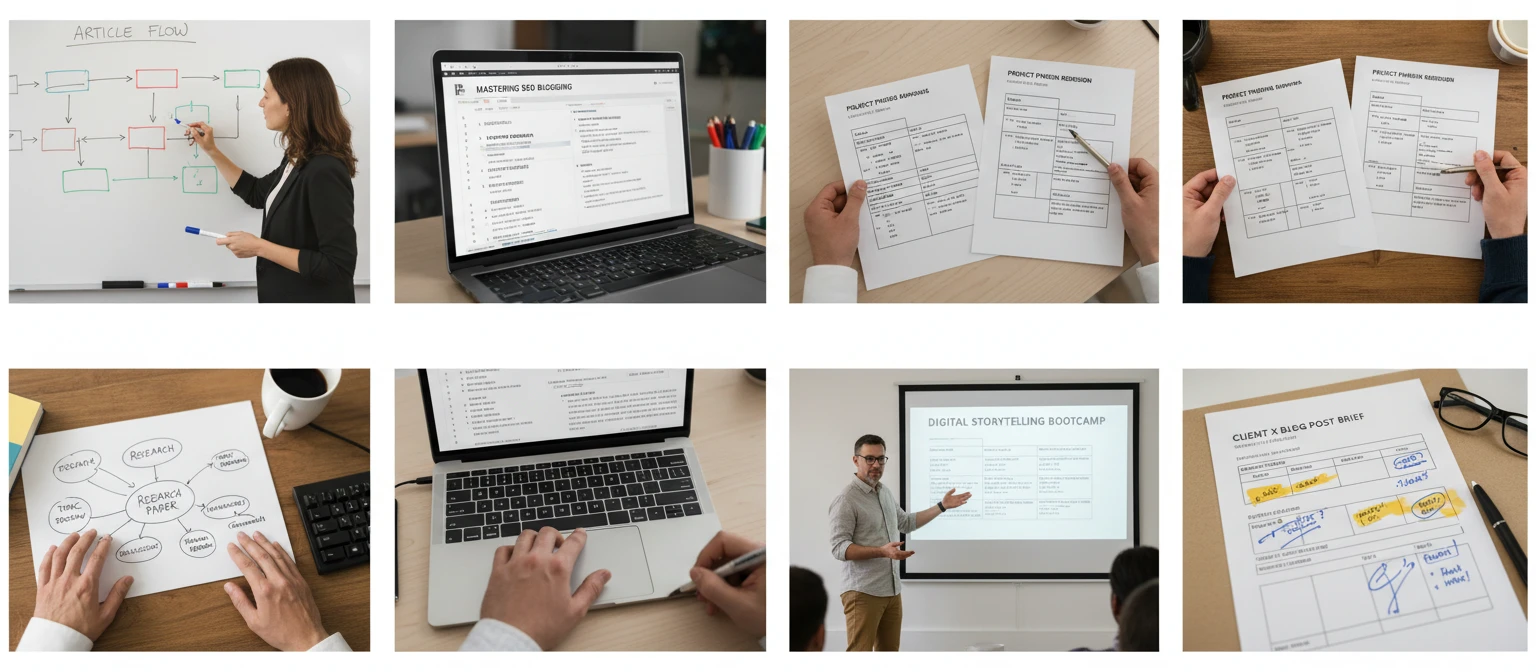
Outlining is the single most effective writing practice that most writers skip. Understanding why it works helps you use generated outlines more effectively.
Note: AI-generated outlines are a strong starting point. Adjust section titles, reorder sections, and add or remove sections to match your specific argument and content goals before writing.
Why Use It
Nine Content Types
Blog articles, essays, research papers, reports, presentations, online courses, books, video scripts, and podcasts — each with the structure appropriate to that format.
Three Depth Levels
High-level for planning, detailed for writing roadmaps, comprehensive for collaborative projects or pre-approval content planning.
Topic-Specific Sections
Section titles and purpose notes are specific to your topic — not generic "Introduction" and "Conclusion" placeholders.
Writing Strategy Included
Every outline includes key points to cover, the best opening approach, the structural logic, and which section to write first.
Frequently Asked Questions
What content types does it support?
Nine content types: blog article, essay, research paper, report, presentation, online course, book/book chapter, video script, and podcast episode. Each type generates an outline that follows the structural conventions of that format — not a generic numbered list applied to all types.
What is the difference between the three depth levels?
High-level generates 5–7 main sections with one-sentence purpose notes — useful for validating structure before writing. Detailed adds 2–4 subsections under each main section — a clear writing roadmap. Comprehensive adds bullet points under each subsection specifying the actual content to include — useful for collaborative projects or content that needs approval before writing begins.
How specific should my topic description be?
The more specific, the better. "Health benefits of exercise" produces a broad, generic outline. "The cognitive and metabolic benefits of daily walking for adults over 50, with practical implementation advice" produces a focused, specific outline with section titles and key points relevant to that exact angle. Include your main argument, the specific angle or perspective, and any key points you already know you want to cover.
Can I use the outline for academic writing?
Yes. The research paper type follows the standard academic structure (abstract, introduction, literature review, methodology, results, discussion, conclusion). Select the experts audience calibration for graduate-level work. Use the outline as a structural framework — you will still need to populate each section with your own research, argument, and evidence.
Can I generate an outline for a presentation I need to give?
Yes. Select "Presentation" as the content type. The outline will follow a structure suited for presentations: opening hook, agenda, main content sections (each with a clear audience takeaway), and a strong close with Q&A guidance. Pair with the business executives audience calibration for executive or board-level presentations.
Generate Your First Outline Instantly
Sign up free and get 100 credits instantly. Describe your topic, choose the content type and depth, and get a complete structured outline in seconds.
Disclaimer: This tool uses generative AI technology which may produce content that resembles copyrighted materials or that is inaccurate, incomplete, or out-of-date. It is provided for general information and educational purposes only and is not intended for illegal activities or to replace professional advice, diagnosis, or treatment. Users are solely responsible for how they use the generated content. If you plan to use AI-generated content commercially or publicly, we strongly recommend reviewing it for potential copyright issues and obtaining proper permissions where necessary. We accept no liability for copyright infringement or any other consequences resulting from the use of content generated by this tool.