Identify Any Hand Gesture with Its Meaning and Cultural Context
Upload any photo with hand gestures and get gesture names, finger configuration details, cultural meanings, and confidence scores for every hand detected.
Recognize a Gesture
AI Hand Gesture Recognition
Upload any photo containing hand gestures and instantly identify thumbs up, peace signs, pointing, counting, and many other hand poses. Get gesture names, meanings, cultural context, and confidence scores.
Upload a hand gesture photo
Works best with clear, well-lit images where hands are fully visible and in focus. Avoid shadows or motion blur for higher accuracy.
or drag and drop an image here
Results
AI Hand Gesture Recognition
AI Hand Gesture Recognition
Upload a photo on the left and click analyse to see the results.
- Gesture name and classification for every hand in the image
- Handedness: left hand, right hand, or both
- Finger configuration and visual description
- Primary meaning and cultural context by region
- Common use cases: approval, greeting, direction, counting, games
- Image quality and visibility assessment
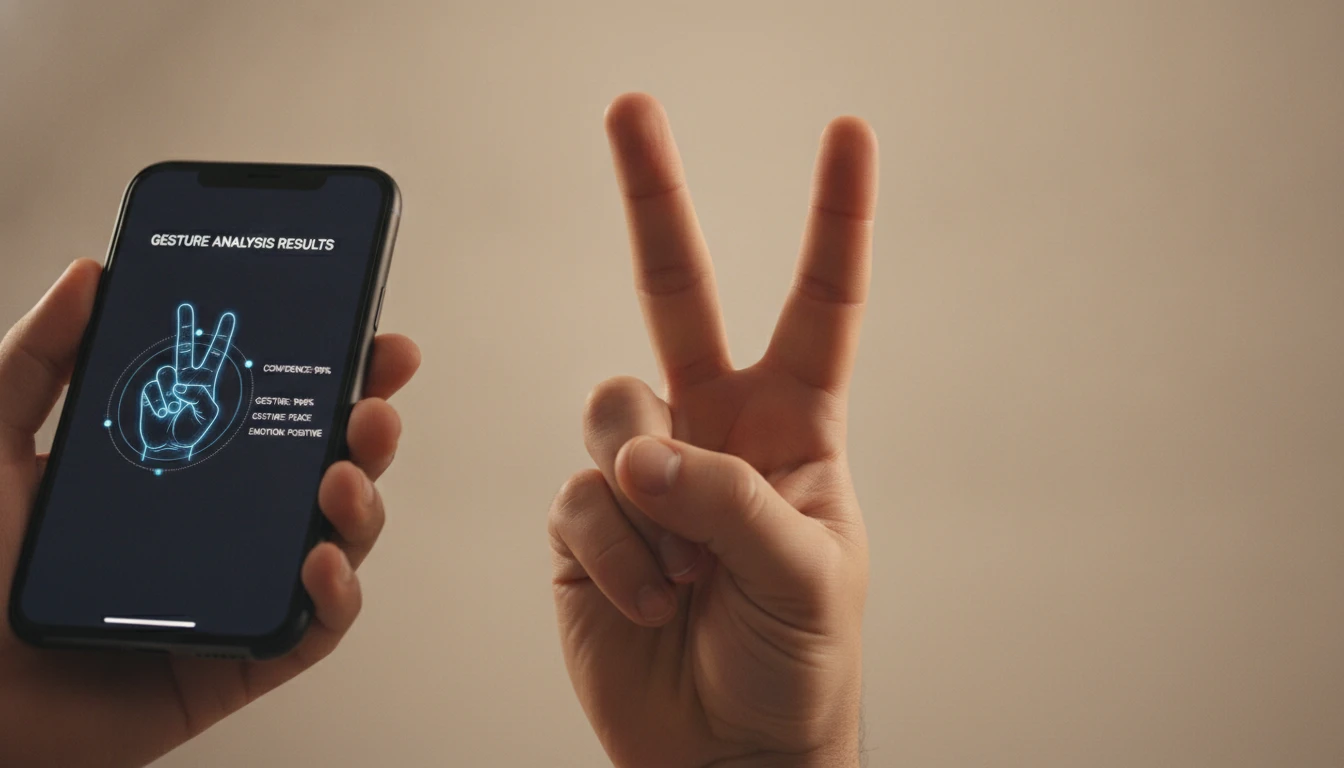
Instant Gesture Identification
Upload any image containing hands and the AI identifies every gesture present in the photo. Each identified gesture is named, its confidence level is rated, the hand's position in the frame is noted, and a visual description of the finger configuration is provided. Common gestures such as thumbs up, peace sign, OK sign, open palm, pointing, fist, wave, stop, and number counting are all recognised.
Recognize a Gesture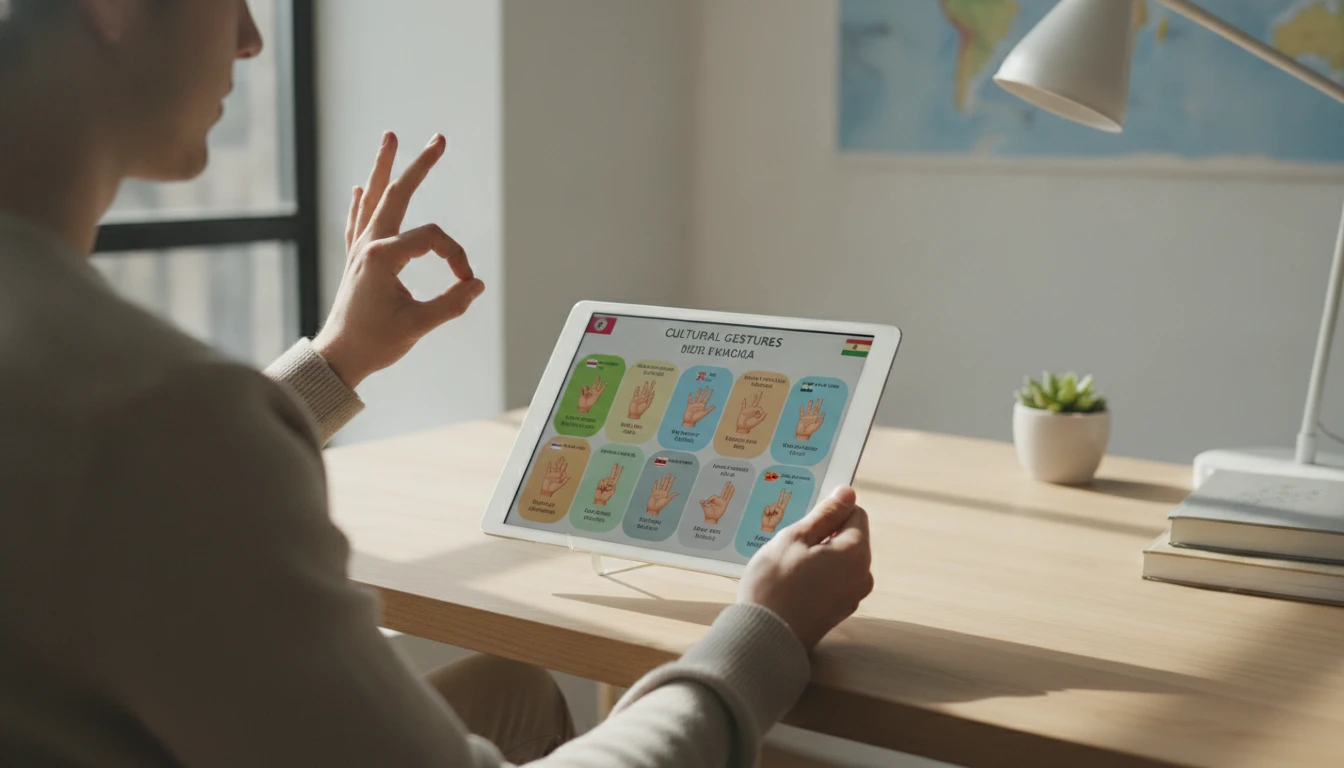
Meaning and Cultural Context
Every identified gesture includes its primary meaning in Western contexts plus a note on how the interpretation varies across different cultures and regions. Gestures that carry different or offensive meanings in certain countries are flagged. The analysis also tags common use cases for each gesture: approval, greeting, direction, counting, game play, sign language practice, and more.
See Gesture Meanings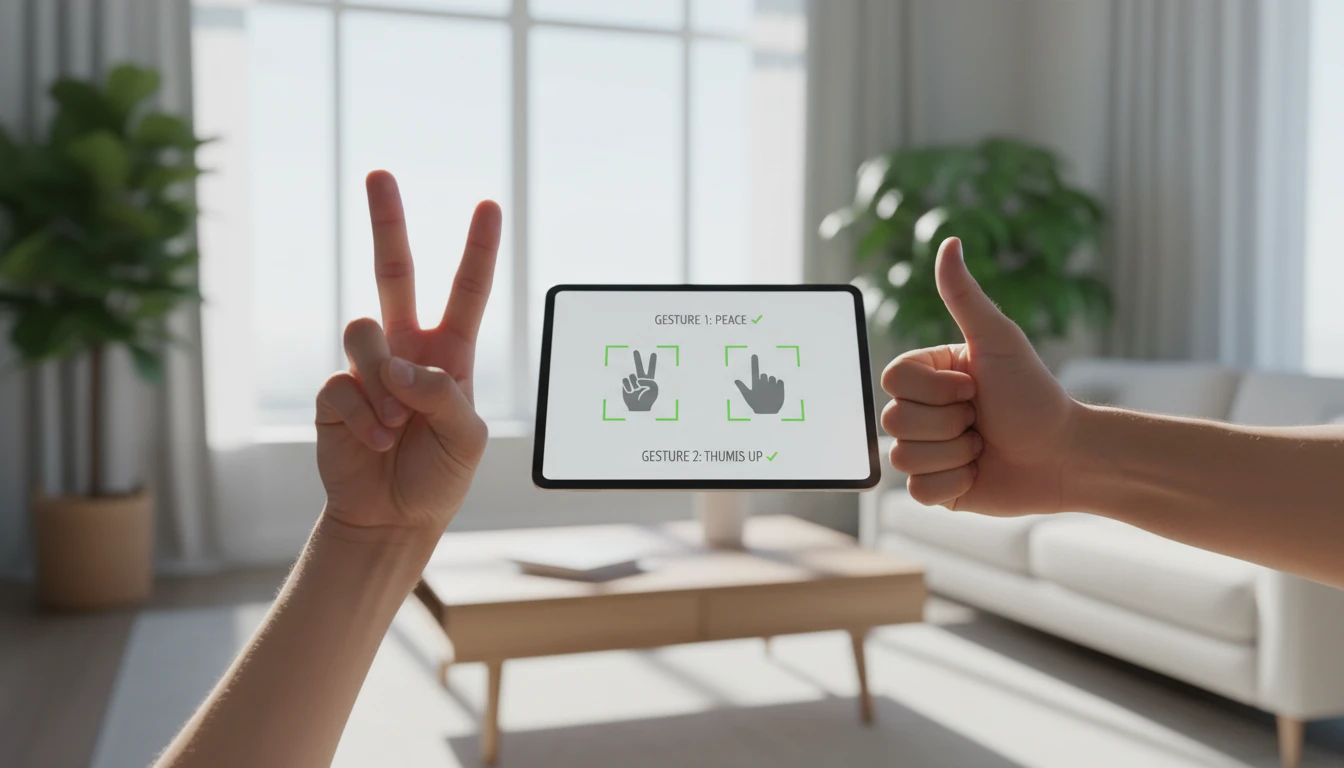
Image Quality and Multi-Gesture Analysis
The analysis covers every hand in the image, not just the most prominent one. Each result includes handedness (left, right, or both), the position of the hand within the frame, and individual confidence ratings. An overall summary assesses the image conditions: lighting quality, hand visibility, and any factors such as motion blur or partial occlusion that may affect recognition accuracy.
Try Multi-Gesture DetectionHow to Recognise Hand Gestures with AI
Upload a Photo with Hand Gestures
Upload any clear photo containing one or more hand gestures. Good lighting and fully visible hands produce the most accurate results. Both single-hand and two-hand images are supported.
AI Identifies Every Gesture
The AI analyses every hand in the image, identifying the gesture name, finger configuration, handedness, and position. It also assesses overall image quality conditions.
Get the Full Gesture Profile
Receive a complete report for each gesture: name, confidence, meaning, cultural context, common use cases, and practical application suggestions for the gestures detected.
Who Uses It
Sign Language Learning and Practice
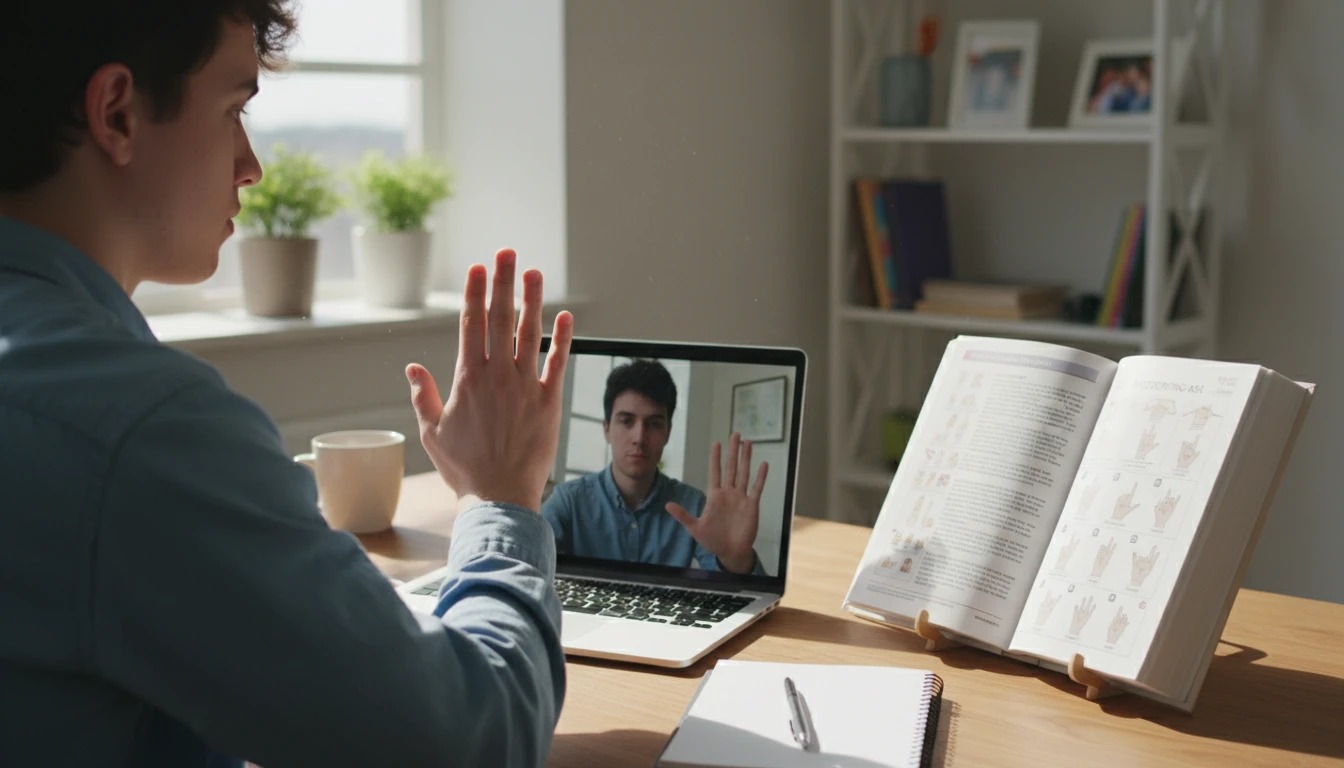
Students and educators learning or teaching sign language can upload practice photos to check gesture identification accuracy. The finger configuration descriptions help learners understand the exact hand shape required for each sign and compare their own gestures against recognised classifications.
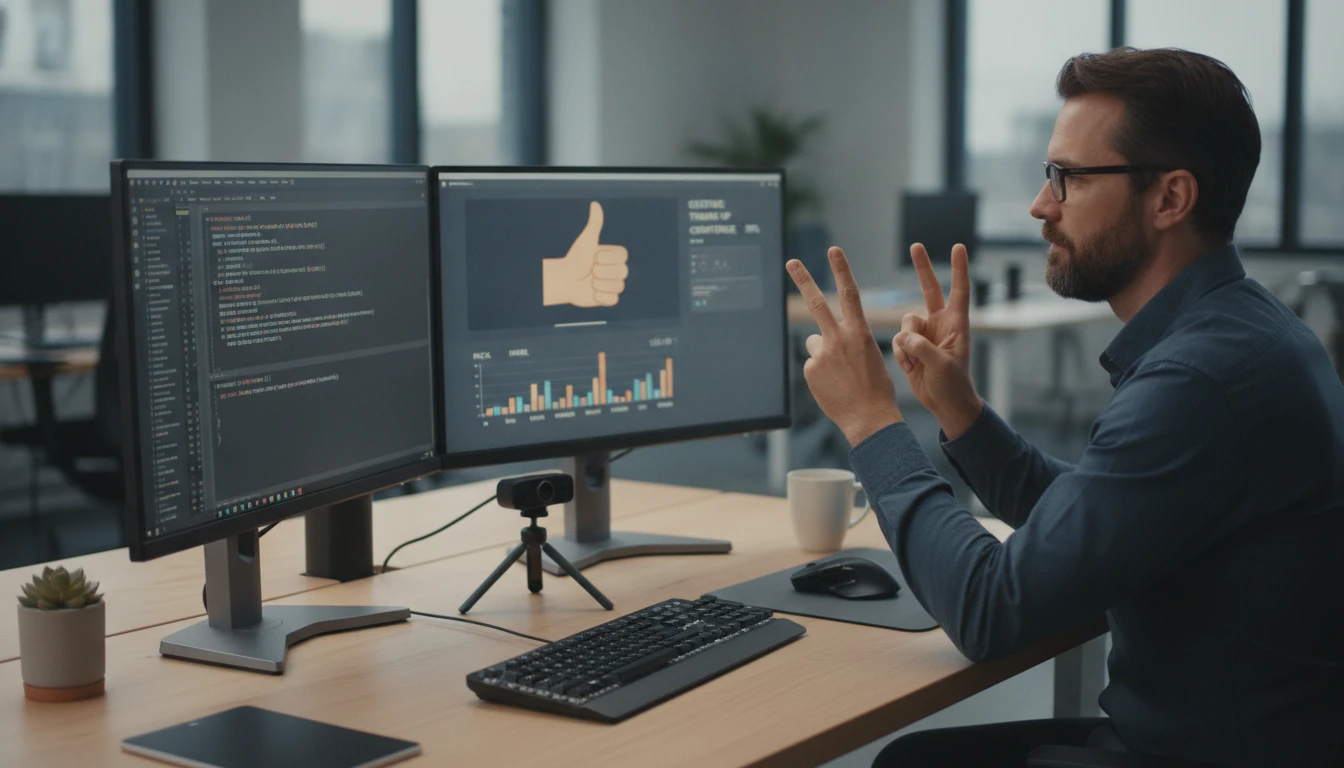
Developers and Interface Designers
Developers building gesture-controlled applications, touchless interfaces, or interactive kiosk systems can use the tool to validate gesture datasets, test edge cases, and generate labelled training examples. The structured output with position, handedness, confidence, and finger configuration provides clean reference data.

Research and Human-Computer Interaction Studies
Researchers studying gesture communication patterns, cultural differences in non-verbal communication, or building datasets for HCI studies can use the tool to annotate and classify gesture images quickly. The cultural variation notes are particularly useful for cross-cultural communication research.
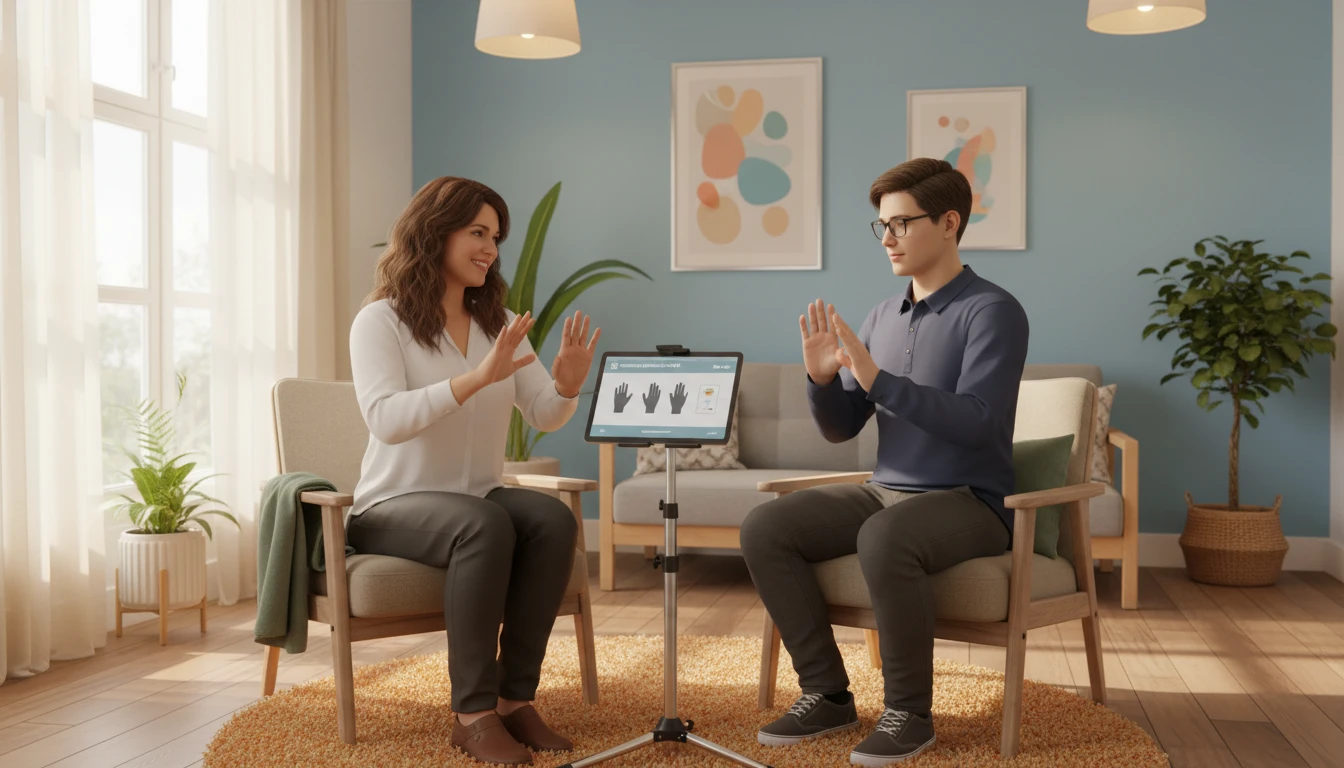
Accessibility and Assistive Technology
Teams building assistive communication tools for people who use gesture-based communication can use this tool to evaluate gesture clarity and test recognition accuracy before integrating more specialised models. The gesture applications section in each result suggests relevant assistive technology use cases.
Deep Dive
Hand Gesture Categories
Hand gestures span a wide range of categories from universal everyday signs to culturally specific signals and structured sign language alphabets. Understanding the category of a gesture helps clarify how widely it is understood and in which contexts it is appropriate to use.
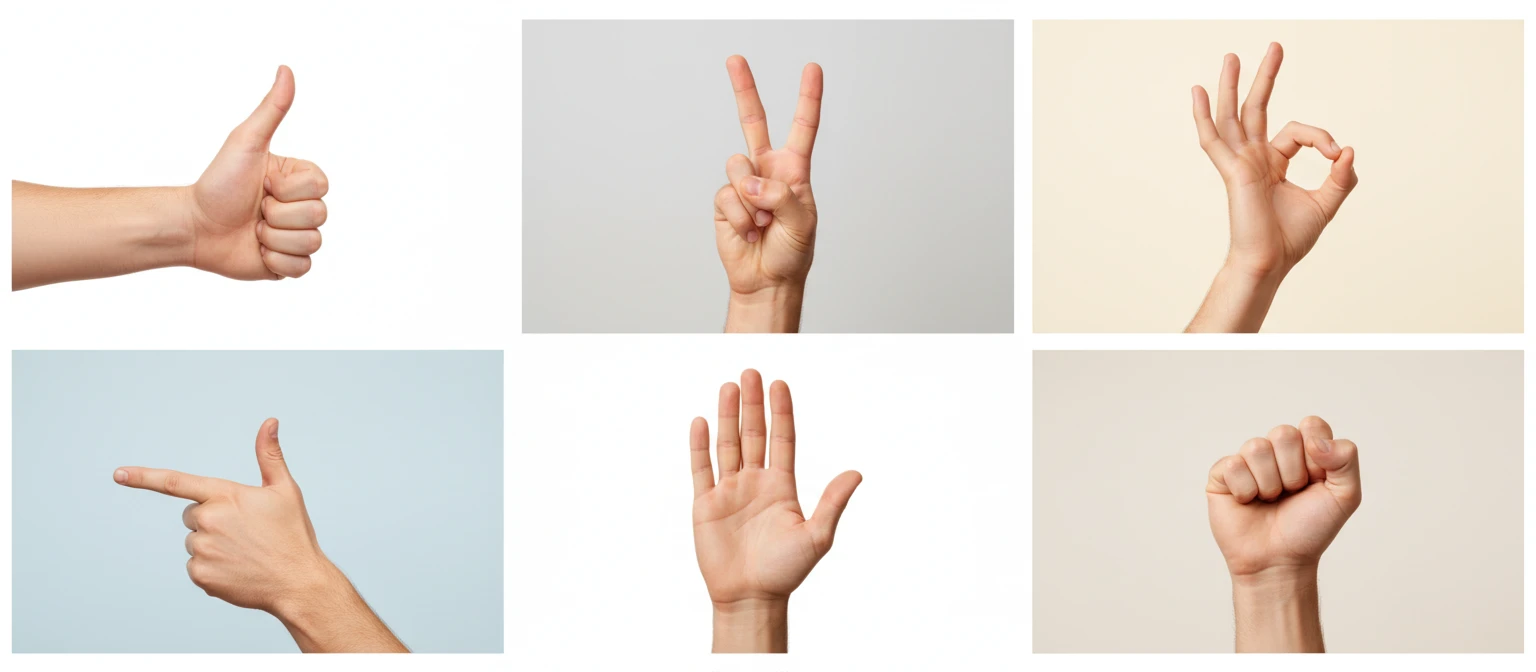
Note: Hand gesture recognition from photos works best with clear, well-lit images showing fully visible hands. Cultural context notes are general guidance only: specific meanings vary widely based on community, context, and intent.
Why Use It
Multi-Gesture Detection
Identifies every hand in the image simultaneously, with individual confidence ratings, handedness, and position for each gesture detected.
Cultural Context Included
Every gesture result includes how its meaning varies across different cultures and regions, including flags for gestures that carry different or potentially offensive meanings in certain countries.
Finger Configuration Detail
Each identified gesture includes a technical description of the finger configuration: which fingers are extended, curled, or spread, useful for sign language learning and developer datasets.
Image Quality Assessment
The analysis reports lighting conditions, hand visibility, and any factors such as motion blur or partial occlusion that affect accuracy, so you know how much to rely on each result.
Frequently Asked Questions
How does the AI Hand Gesture Recognition work?
You upload a photo containing one or more hand gestures and the AI analyses the hand shape, finger positions, orientation, and overall pose. It identifies each gesture by name, assesses confidence, determines handedness, notes the position in the frame, and provides the primary meaning along with cultural context and common use cases.
What types of hand gestures can it recognise?
The tool recognises a wide range of gestures including thumbs up and down, peace sign, OK sign, open palm, stop sign, fist, pointing index finger, wave, crossed fingers, number counting from one to ten, rock, paper, scissors, and many cultural hand signs. It also identifies sign language handshapes when clearly visible.
How accurate is the recognition?
Accuracy is highest for common, well-known gestures captured in clear, well-lit photos where the hands are fully visible and in focus. Each result includes a confidence rating: High, Moderate, or Low. Simple universal gestures like thumbs up or peace sign typically yield higher confidence than complex or culturally specific signs.
What image conditions work best?
Clear, well-lit images with good contrast between the hands and the background produce the most accurate results. Fully visible, in-focus hands without motion blur or heavy shadows are ideal. Both front-facing and side-view photos work, but clear finger definition is important for accurate recognition.
Can it identify multiple gestures in one photo?
Yes. The tool analyses every hand in the image and produces a separate result for each gesture detected. Two-hand images and photos with multiple people showing different gestures are all supported.
Can it help with sign language learning?
Yes. Upload practice photos of your hand signs and the tool will identify the gesture name, describe the finger configuration in detail, and note what the recognised shape corresponds to. This is useful for self-assessment and for educators creating labelled gesture examples for learning materials.
Is it useful for building gesture-controlled applications?
Yes. Developers can use the tool to validate gesture datasets, check recognition of specific hand poses, generate natural language descriptions and labels for training data, and explore practical application suggestions. The structured output with confidence, position, handedness, and finger configuration provides useful reference data for interface design work.
Recognise Any Hand Gesture Instantly
Sign up free and get 100 credits instantly. Upload any hand gesture photo and get a complete recognition report in seconds.
Disclaimer: This tool uses generative AI technology which may produce content that resembles copyrighted materials or that is inaccurate, incomplete, or out-of-date. It is provided for general information and educational purposes only and is not intended for illegal activities or to replace professional advice, diagnosis, or treatment. Users are solely responsible for how they use the generated content. If you plan to use AI-generated content commercially or publicly, we strongly recommend reviewing it for potential copyright issues and obtaining proper permissions where necessary. We accept no liability for copyright infringement or any other consequences resulting from the use of content generated by this tool.