Smaller Files, Better Compression — Convert AAC to Opus for Streaming and Web
Upload your AAC file and get an Opus that delivers better audio quality at the same bitrate for Discord bots, WebRTC pipelines, and HTML5 web audio — using a patent-free open codec that outperforms AAC at low-to-mid bitrates.
Convert Now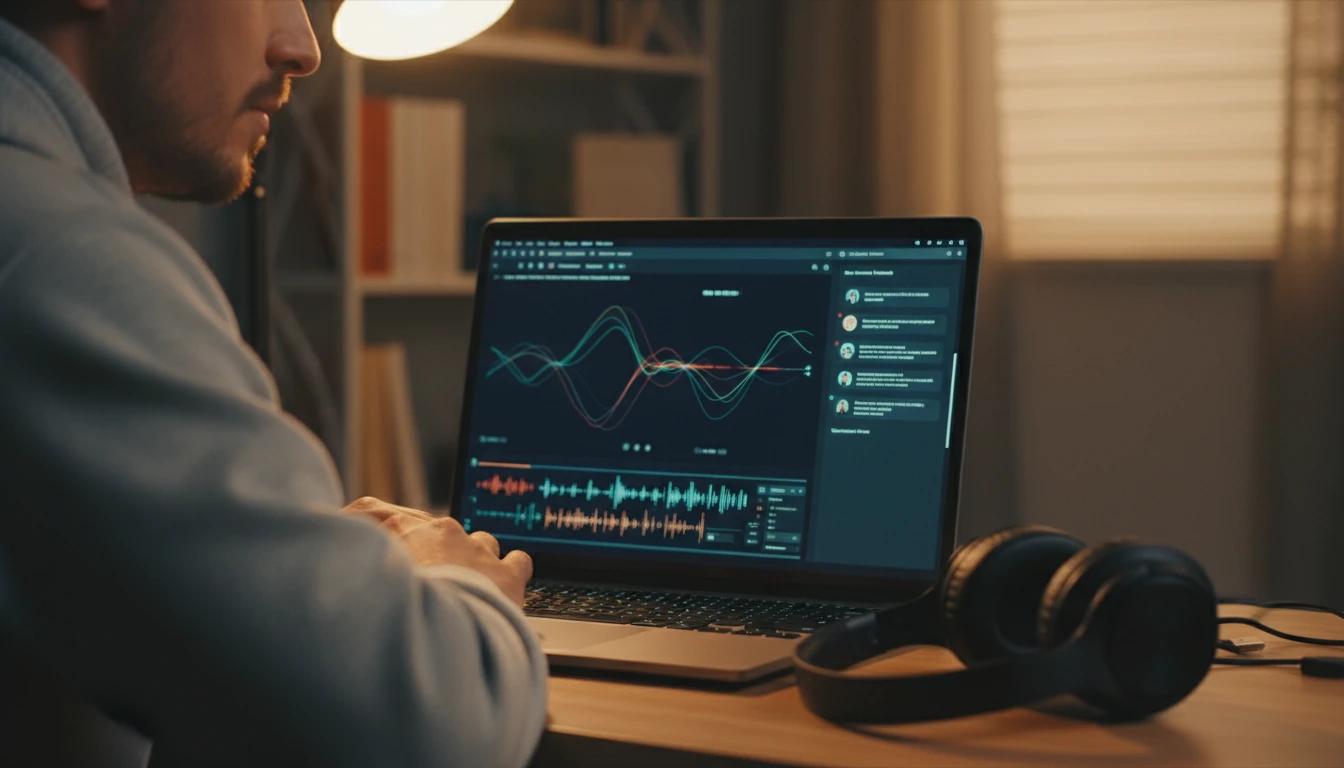
Audio Format Converter
Upload any audio file, choose an output format, and download the converted result. Supports MP3, WAV, FLAC, AAC, OGG, ALAC, WMA, Opus and M4A.
Drop your audio file here
or click to browse

Serve AAC-Sourced Audio in Discord Bots at Higher Quality for the Same Bandwidth
Discord transmits voice channel audio as Opus streams. Discord bots built with discord.js or discord.py that serve music or sound effects benefit from Opus audio encoded directly at the target bitrate — rather than converting AAC on the fly at playback time. Converting AAC assets to Opus in advance gives the bot pre-encoded files it can stream without a real-time decode-and-re-encode step, and Opus at 96 kbps matches the perceptual quality of AAC at 128 kbps.
Convert Now
Replace AAC with Opus in WebRTC and Web Audio Pipelines
Opus is the mandatory codec for WebRTC audio in Chrome, Firefox, and Edge. Web developers who hold pre-recorded audio in AAC and inject it into a WebRTC session or Web Audio API pipeline need Opus-encoded files for direct bitstream compatibility. Converting AAC to Opus produces files the Web Audio API and WebRTC media tracks can use natively without a browser-side decode-and-re-encode step.
Try It Now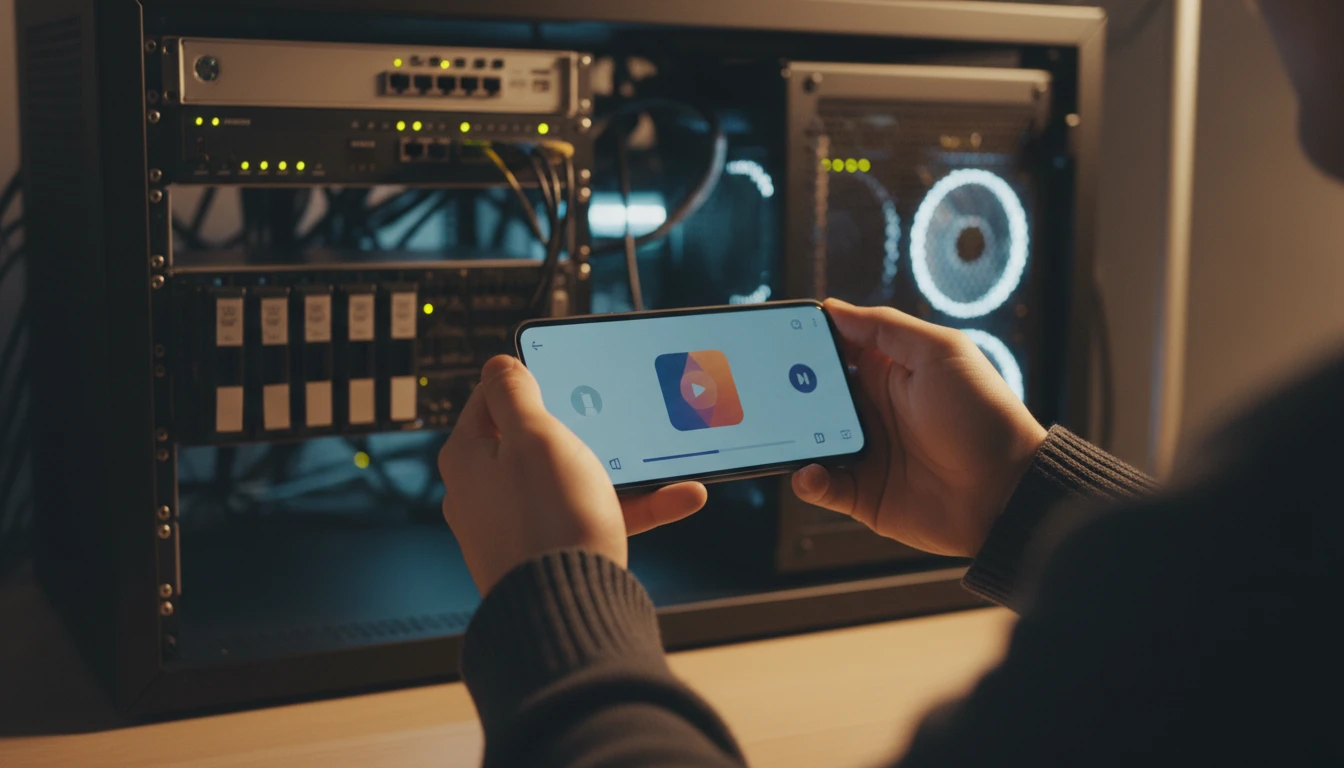
Cut Bandwidth on Self-Hosted Streaming Servers by Switching from AAC to Opus
Self-hosted music servers including Navidrome, Jellyfin, Airsonic, and Funkwhale transcode stored audio for streaming to mobile clients. Replacing stored AAC files with Opus allows the server to stream natively without a real-time transcode step, reducing CPU overhead. At 96 kbps, Opus delivers perceptual quality comparable to AAC at 128 kbps — a meaningful bandwidth saving across a large library.
See It in ActionThree steps to a more efficient Opus from your AAC source
Upload your AAC file
Drop your .aac or .m4a file onto the tool or click to browse. iTunes downloads, iPhone recordings, and any AAC audio file are accepted.
Convert to Opus
Click "Convert". FFmpeg decodes the AAC to PCM and re-encodes it as Opus — a single re-encoding pass from the decoded AAC audio.
Download your Opus file
Download your .opus file ready for Discord bots, WebRTC pipelines, web audio delivery, or self-hosted streaming servers.
Deep Dive
AAC to Opus: From Apple Standard to Open Streaming Codec
AAC is the dominant codec in the Apple ecosystem. Opus is the open standard engineered for internet streaming and real-time communication. Converting between them serves web, Discord, and WebRTC use cases where Opus's efficiency and patent-free status matter.

Our converter uses FFmpeg to decode the AAC and re-encode as Opus at a high quality setting.
Why Convert AAC to Opus
Better Quality at Lower Bitrates
Opus at 96 kbps matches AAC at 128 kbps perceptually. Delivering better audio with less bandwidth is a real advantage for streaming and mobile delivery.
Patent-Free Open Standard
Opus is completely royalty-free. Use it in open-source projects, Discord bots, and web applications without any codec licensing concerns.
Native in Browsers and Discord
Chrome, Firefox, and Edge support Opus in HTML5 audio and WebRTC natively. Discord voice streams Opus. No plugin or codec install required.
Fast Conversion
Most AAC files convert to Opus in under 30 seconds on dedicated FFmpeg servers.
Who Uses It
Who Converts AAC to Opus
Discord bot developers serving pre-encoded audio, WebRTC engineers injecting audio into live sessions, web developers building open audio applications, self-hosted streaming server operators optimizing library storage, and mobile app developers targeting bandwidth-efficient delivery.

Converts using FFmpeg on dedicated servers.
Frequently Asked Questions
Does Opus sound better than AAC at the same bitrate?
At low-to-mid bitrates (roughly 64 to 128 kbps), Opus generally produces better perceptual quality than AAC at the same bitrate in independent listening tests. Opus at 96 kbps is widely considered comparable to AAC at 128 kbps for music. At high bitrates (192 kbps and above), both codecs are effectively transparent for most listeners and the difference becomes negligible.
Will converting AAC to Opus reduce audio quality?
Yes, slightly. Both AAC and Opus are lossy codecs. Converting between them requires decoding the AAC to PCM and re-encoding it as Opus — two lossy passes. The quality of the Opus is capped by the original AAC encoding. At a high Opus bitrate the additional degradation is minimal and inaudible for most listeners. If a lossless source such as FLAC or WAV is available, converting from that always produces a better Opus file.
Is Opus supported on iPhone and in Safari?
Safari on iOS 11 and macOS High Sierra (10.13) and later supports Opus in HTML5 audio and the Web Audio API. Older Safari versions do not. For guaranteed cross-browser web compatibility including older iOS and macOS, serve an AAC or MP3 fallback alongside the Opus using the <source> element. For Discord and WebRTC, Opus support on Apple devices is handled by the native app or browser WebRTC stack.
Why does Discord use Opus for voice channels?
Discord chose Opus because it is optimized for low-latency real-time audio over the internet, covers both voice and music quality modes in a single codec, and is patent-free — simplifying licensing for a platform operating at scale. The Opus codec adapts its algorithm between speech and music content and supports variable bitrates from 6 kbps (voice) to 510 kbps (high-fidelity music), making it ideal for both voice chat and music bots.
What bitrate should I use when converting AAC to Opus?
For music, 128 kbps produces transparent quality for most listeners. 96 kbps is a strong choice for streaming where bandwidth matters — it matches AAC at 128 kbps perceptually. 64 kbps works well for voice, podcasts, and spoken word. Because the source is AAC (already lossy), the Opus encoder will work within the quality ceiling the original AAC set.
Is there a file size limit?
The upload limit is 100 MB per file. Most AAC audio files are well within this limit.
Ready to Convert Your AAC to Opus?
Upload your AAC file above and get a more efficient Opus in seconds.